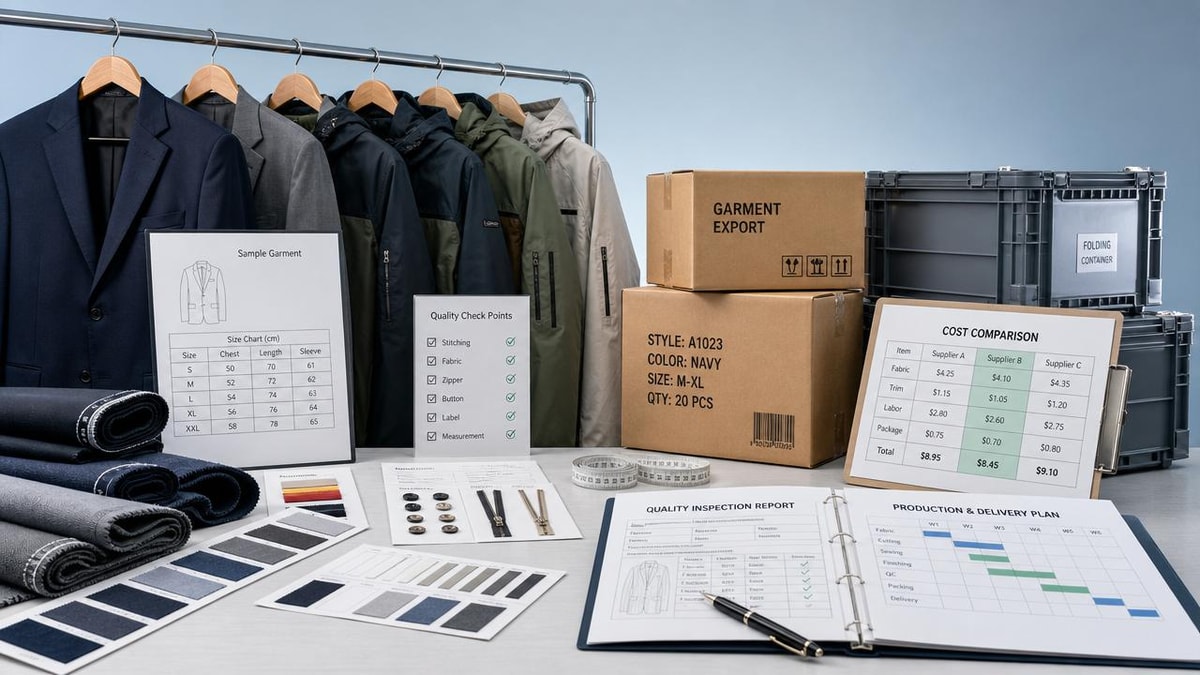
Fashion Industry Shifts That Could Reshape Sourcing Decisions

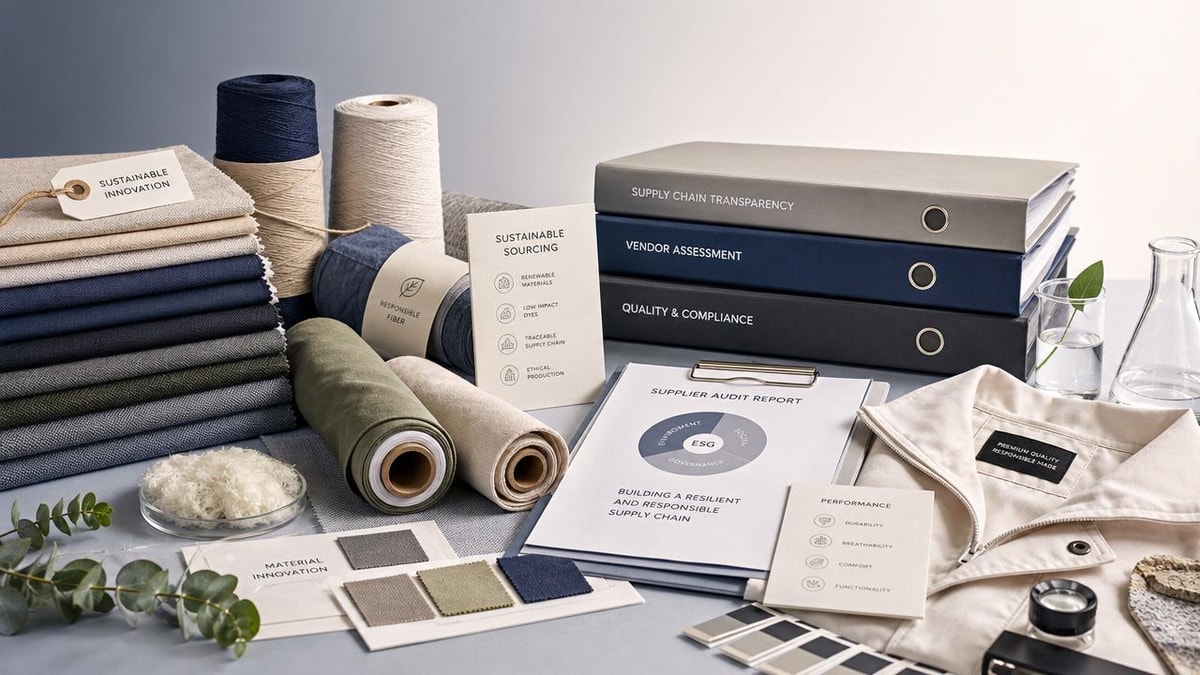
As the fashion industry navigates rising sustainability demands, shifting consumer expectations, and supply chain volatility, sourcing decisions are becoming far more strategic than transactional. For procurement professionals, the central question is no longer simply where to buy at the lowest cost. It is how to build a sourcing model that protects margin, supports compliance, responds to speed-to-market pressures, and keeps product quality consistent across changing global conditions.
The biggest shifts in the fashion industry are reshaping supplier evaluation in practical ways. Buyers now need to weigh traceability alongside price, supplier resilience alongside capacity, and material innovation alongside commercial viability. In many categories, the winning sourcing strategy is not a single low-cost country or a purely volume-based vendor model. It is a more diversified, data-informed, and risk-aware approach.
For procurement teams, this means reassessing old assumptions. A supplier that looked competitive two years ago may now create hidden costs through longer lead times, weak ESG documentation, or poor flexibility. At the same time, a slightly higher-cost partner may deliver better total value through faster replenishment, lower defect rates, and stronger transparency. Understanding these shifts is essential for making smarter sourcing decisions in today’s fashion industry.
What procurement teams are really trying to solve in today’s fashion industry
When buyers search for changes in the fashion industry, they are usually not looking for abstract trend reports. They want to know how market shifts will affect supplier selection, negotiation priorities, order allocation, and risk management. Their concern is practical: how to source products that meet brand expectations without exposing the business to cost overruns, delays, compliance issues, or quality failures.
For most procurement professionals, the top concerns are clear. First, they need dependable supply continuity in an environment shaped by geopolitical uncertainty, freight disruption, and raw material volatility. Second, they must respond to internal pressure for better sustainability performance and traceability. Third, they need speed and flexibility because demand is less predictable than before. Finally, they must still hit cost targets, even as sourcing complexity increases.
That is why sourcing in the fashion industry is increasingly a total-value exercise rather than a unit-price exercise. The most useful supplier is not always the cheapest factory on paper. The best sourcing partner is often the one that can consistently deliver acceptable cost, transparent processes, adaptable production planning, and the technical ability to support product evolution over time.
Why cost is no longer enough as a sourcing decision metric
Cost remains important, but its role has changed. In the past, many sourcing decisions were driven primarily by labor arbitrage and FOB comparisons. Today, that narrow view can be misleading. Procurement teams must account for a wider cost structure that includes quality claims, compliance risk, freight fluctuation, inventory carrying cost, markdown exposure, and delay-related revenue loss.
A lower quoted price may hide significant operational risk. If a supplier cannot provide stable fabric quality, maintain delivery windows, or document material origins, the total business impact can quickly outweigh the initial savings. This is especially true in fashion categories where missed selling windows reduce full-price sell-through and create markdown pressure.
As a result, more buyers are shifting toward total landed value analysis. That means comparing suppliers not only on price but also on lead time reliability, minimum order flexibility, testing performance, communication speed, and problem-solving capability. In the modern fashion industry, procurement decisions increasingly reward predictability and responsiveness, not just low bids.
This broader sourcing logic is also shaping how buyers consume industry intelligence. Portals such as 无 can be useful when procurement teams need cross-category visibility into materials, craftsmanship trends, and supplier-side manufacturing developments rather than isolated cost snapshots alone.
How sustainability is changing supplier qualification standards
Sustainability is no longer a branding side topic. It has become a sourcing filter. Procurement teams are now expected to verify environmental and social claims with more rigor, especially when working with international brands, large retailers, or regulated markets. This shift affects who gets shortlisted, how audits are structured, and what evidence suppliers must provide before orders are placed.
In practical terms, buyers are asking tougher questions. Can the supplier trace fiber origin? Are chemical inputs managed according to market requirements? Is there credible documentation for recycled content, wastewater practices, and labor standards? Can the mill or factory support reporting expectations from downstream customers? If the answer is unclear, the supplier may be commercially risky even if pricing is attractive.
Another major change is that sustainability now influences category strategy. Some brands are choosing sourcing partners based on their ability to support lower-impact materials, circular design goals, or waste-reduction initiatives. In apparel, that may involve recycled polyester, certified cotton, lower-impact dyeing, or process optimization. For procurement professionals, this creates a new balancing act between innovation readiness and commercial scalability.
The key point is that sustainability in the fashion industry is moving from marketing language to operational requirement. Buyers who fail to integrate it into vendor assessment may face restricted market access, reputational exposure, or costly supplier replacement later.
Why speed and flexibility are becoming as important as scale
Demand planning has become harder across the fashion industry. Consumer tastes shift quickly, trend cycles move faster online, and seasonal forecasting often carries greater uncertainty. In that environment, procurement teams are under pressure to source in ways that reduce commitment risk while preserving the ability to react when demand becomes clearer.
This is one reason flexible suppliers are gaining importance. Factories that can handle smaller runs, faster replenishment, or mixed-order complexity may offer more strategic value than larger but rigid vendors. A supplier’s willingness to collaborate on phased production, raw material reservation, or quick-turn restocking can materially improve inventory performance.
Lead time is also being examined more critically. Buyers are not only asking how long production takes, but where time is lost across development, approval, material sourcing, manufacturing, and shipping. A factory with a moderate price and shorter, more dependable lead time may outperform a lower-cost option that repeatedly creates schedule uncertainty.
For procurement teams, this means supplier scorecards should reflect agility. Capacity matters, but usable capacity matters more. In many cases, sourcing decisions are now favoring partners that can align with fast-moving business models rather than those optimized only for bulk efficiency.
The shift from single-country dependence to supply base diversification
One of the clearest changes in the fashion industry is the move away from overconcentration in a single sourcing geography. Rising geopolitical risk, policy changes, logistics disruption, and labor cost shifts have pushed many brands to diversify their manufacturing footprint. This does not necessarily mean abandoning established sourcing hubs. It means reducing vulnerability through a more balanced regional mix.
For procurement professionals, diversification should be strategic rather than reactive. The goal is not to add countries for appearance. It is to allocate product categories according to each sourcing location’s strengths in cost, craftsmanship, compliance maturity, infrastructure, and speed. Basic programs may remain in one region, while fashion-sensitive or replenishment-driven categories move closer to demand markets.
Supplier diversification also matters within countries. Relying too heavily on one factory group can create operational exposure if capacity tightens, audits fail, or ownership priorities shift. Building a layered supplier base with core, secondary, and development partners helps protect continuity and negotiation leverage.
The most effective procurement teams are creating sourcing maps based on risk-adjusted category logic. They are asking not only where a product can be made cheaply, but where it can be made reliably, compliantly, and at the right speed for its business role.
Material innovation is influencing sourcing strategy earlier in the process
Another important shift is that sourcing strategy is being shaped earlier by material direction. New fibers, performance finishes, recycled inputs, and alternative leather technologies are changing what buyers need from suppliers. Procurement is increasingly involved before final supplier nomination because material feasibility now affects cost, compliance, and production scalability from the start.
For example, a supplier may offer access to innovative fabrics that support sustainability targets or product differentiation. But procurement still needs to confirm whether those materials can be sourced consistently, tested reliably, and produced at commercial scale. Novel materials often come with MOQ constraints, certification complexity, or processing requirements that must be understood upfront.
This is particularly relevant for companies operating across apparel, footwear, home, and lifestyle categories, where material performance and craftsmanship quality can strongly affect brand positioning. Buyers who understand both aesthetic trends and manufacturing implications are better placed to prevent late-stage sourcing surprises.
In this context, the sourcing conversation in the fashion industry is becoming more cross-functional. Design, development, quality, compliance, and procurement must align earlier so that promising material choices do not create unmanageable delivery or margin problems later.
How to evaluate suppliers under the new sourcing reality
Given these market shifts, procurement teams need a more structured supplier evaluation framework. A useful model starts with five areas: commercial competitiveness, operational reliability, compliance transparency, technical capability, and strategic fit. This approach helps buyers compare vendors on the factors that now matter most in the fashion industry.
Commercial competitiveness still includes price, payment terms, and cost engineering willingness. Operational reliability covers on-time delivery, planning discipline, communication quality, and production continuity. Compliance transparency includes certifications, audit performance, traceability readiness, and document integrity. Technical capability looks at product development support, quality control systems, and handling of complex materials or constructions. Strategic fit assesses whether the supplier can support the brand’s speed, innovation, and regional sourcing goals.
Procurement teams should also test supplier resilience through scenario questions. What happens if demand spikes by 20 percent? How does the supplier manage a raw material shortage? Can they suggest alternative inputs without changing the product hand feel or compliance status? How quickly can they provide root-cause analysis when quality issues emerge? These questions reveal practical capability better than polished presentations do.
It is also wise to review the supplier’s ecosystem, not just the factory itself. In many cases, the true sourcing risk sits with fabric mills, trim providers, dye houses, or subcontractors. Visibility across the extended supply chain is becoming an essential part of responsible procurement.
What smart sourcing decisions look like in the next phase of the fashion industry
Looking ahead, successful sourcing in the fashion industry will depend on disciplined trade-off management. Procurement teams will need to choose when to prioritize cost, when to pay for flexibility, when to invest in supplier development, and when to diversify even if it increases short-term complexity. There is no universal model, but there are clear patterns behind stronger decisions.
First, leading buyers are reducing dependence on static vendor matrices and moving toward dynamic allocation based on category role and business risk. Second, they are using supplier scorecards that include ESG readiness, agility, and quality consistency rather than price alone. Third, they are engaging earlier with development and merchandising teams so sourcing constraints are understood before commitments are made.
They are also treating supplier relationships more strategically. In unstable markets, collaboration can unlock better outcomes than transactional buying. Vendors that understand a buyer’s planning logic, quality expectations, and sustainability roadmap are often better positioned to support urgent shifts or process improvements.
Even seemingly small market signals can influence future sourcing decisions. A change in consumer preference toward longer-lasting products, a new retailer traceability requirement, or advances in digital craftsmanship may alter supplier priorities faster than expected. For buyers tracking these transitions, occasional reference points such as 无 may help connect broad industry movement with category-level sourcing implications.
Conclusion
The major shifts in the fashion industry are changing sourcing from a price-led function into a strategic capability. For procurement professionals, the most important takeaway is that supplier selection now has to balance cost with resilience, sustainability, agility, technical competence, and long-term fit.
In practical terms, that means moving beyond simple quote comparisons. The best sourcing decisions will come from evaluating total value, diversifying thoughtfully, qualifying suppliers more rigorously, and aligning sourcing choices with real business needs by category. Buyers who adapt early will be better equipped to protect supply continuity, meet compliance expectations, and support profitable growth in a market that is only becoming more complex.
In short, the fashion industry is not just changing what products are made. It is changing how smart procurement teams decide who should make them, where, and under what sourcing model. That is the shift that will matter most in the years ahead.