Unique Handmade Gifts for Her: What Adds Real Value

For buyers, the real value of unique handmade gifts for her is not just originality. It comes from a balanced mix of design distinction, reliable craftsmanship, cultural relevance, pricing logic, and repeatable supply capability.
In crowded gift markets, products that merely look handmade rarely build lasting demand. What buyers need are items that tell a clear story, meet quality expectations, and translate artisanal appeal into commercial performance.
This is why sourcing decisions should go beyond surface aesthetics. The most successful handmade gift lines are the ones that combine emotional appeal with production discipline, giving brands both margin potential and market differentiation.
What buyers are really searching for when evaluating unique handmade gifts for her
When procurement teams search for unique handmade gifts for her, they are usually not looking for random inspiration. They want product categories that can convert attention into sales while supporting positioning in premium, boutique, or design-led channels.
The core search intent is commercial judgment. Buyers want to know which product features genuinely increase perceived value, which details justify higher pricing, and how to distinguish authentic craftsmanship from mass-produced imitation with a handmade label.
They also want practical sourcing guidance. Questions around consistency, supplier reliability, packaging suitability, compliance, and order scalability matter just as much as style, especially for importers, retailers, and private-label operators.
For this audience, the most useful content is not a generic list of gift ideas. It is a framework for identifying what makes a handmade product commercially stronger, emotionally relevant, and operationally safer to source.
Why handmade gifts still matter in a highly saturated market
Handmade gifts continue to perform because they answer a consumer need that industrial sameness cannot fully satisfy. Shoppers increasingly want products that feel personal, story-rich, and less interchangeable than standardized mass-market offerings.
For women’s gifting in particular, emotional resonance matters. A handmade object often suggests care, human touch, and thoughtful selection. That perceived intimacy can raise both gift desirability and willingness to pay.
From a retail perspective, this creates a strategic advantage. Handmade categories can help buyers build curated assortments, improve shelf storytelling, and escape direct price comparison with commodity products found on every marketplace.
However, not every artisanal-looking item creates value. Real commercial impact depends on whether the product delivers authenticity, durability, and presentation quality in a way the end consumer can immediately recognize.
What actually adds real value to a handmade gift
The first value driver is material integrity. Buyers should look for materials that feel intentional rather than decorative shortcuts. Natural fibers, responsibly sourced wood, hand-cast metal, ceramic, leather, or blended craft materials often create stronger premium cues.
Material choice matters because consumers can usually sense the difference between genuine tactile quality and staged rustic styling. If the base material feels cheap, even skilled hand-finishing will struggle to support a premium retail position.
The second value driver is visible craftsmanship. Clean stitching, balanced glazing, smooth edges, secure fittings, precise painting, or carefully finished surfaces are the details that convert “handmade” from a marketing phrase into a believable value proposition.
Importantly, handmade does not mean flawed. Small variations can communicate authenticity, but structural defects, poor alignment, color instability, or rough finishing reduce confidence. Buyers should separate artisanal uniqueness from preventable quality inconsistency.
The third driver is design originality. Truly valuable handmade gifts for her often reinterpret familiar themes through distinctive form, pattern, texture, or cultural symbolism. They should feel memorable without becoming too niche for the intended sales channel.
The fourth is emotional and cultural meaning. Products rooted in a specific craft tradition, local material heritage, or symbolic design language can create stronger storytelling. That narrative often becomes a decisive factor in gifting categories.
The fifth driver is use value. Gifts that are not only beautiful but also functional tend to perform better over time. Jewelry trays, textile accessories, candles in reusable vessels, handwoven bags, ceramic mugs, and crafted desk objects all benefit from daily relevance.
Finally, presentation adds measurable value. Packaging, labeling, insert cards, and artisan story tags influence whether a product feels premium enough for gifting. Even a strong item can lose market appeal if the unboxing experience feels generic.
How to tell whether uniqueness is commercially meaningful or just visually different
Buyers often confuse novelty with market value. A handmade gift can look unusual and still fail commercially if the design is too difficult to understand, too fragile to ship, or too detached from current gifting behaviors.
Commercially meaningful uniqueness usually has three traits. First, it is easy to notice within seconds. Second, it remains usable or giftable without explanation. Third, it supports a clear target customer or retail story.
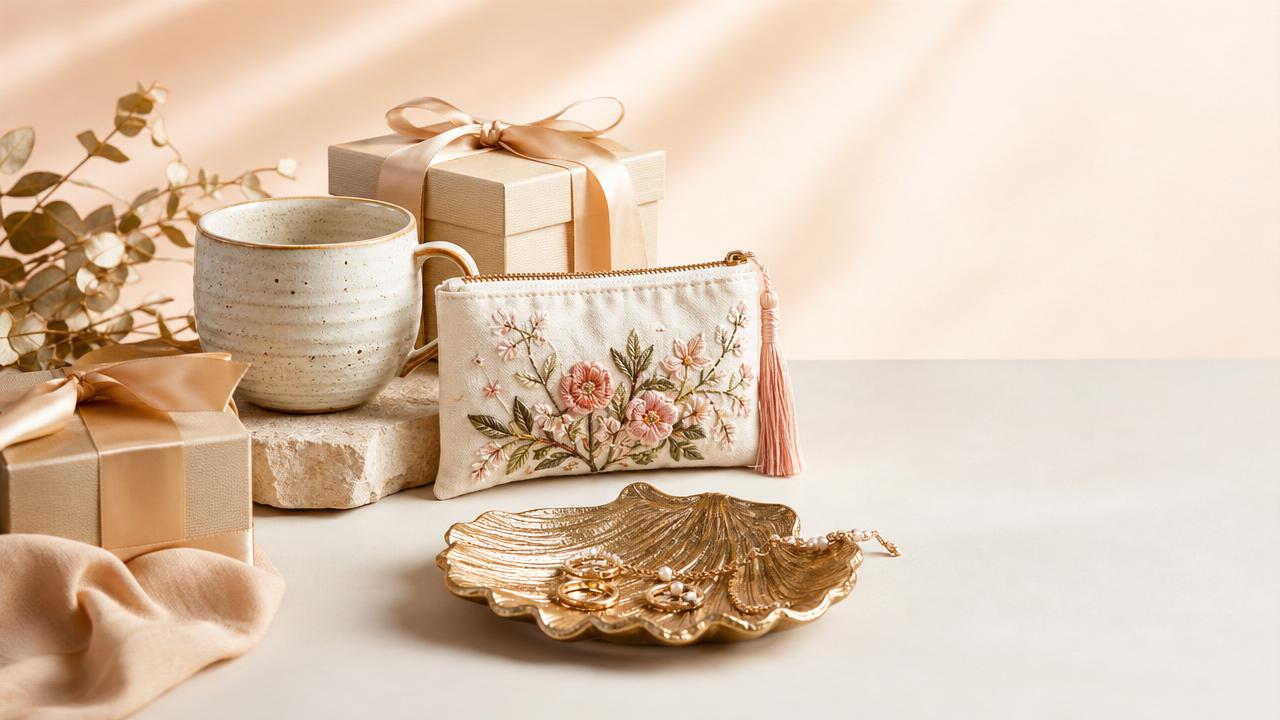
For example, a hand-embroidered pouch with refined color direction and practical dimensions may outperform a more experimental product because buyers can place it in multiple channels, from lifestyle retail to seasonal gifting collections.
In contrast, products that rely only on eccentric shape or overworked decoration often struggle. They may attract attention online but face lower conversion rates if consumers cannot quickly justify the purchase or imagine how to use them.
A good sourcing test is simple: can the value be communicated in one sentence? If the answer is yes, the product likely has stronger merchandising potential. If not, the uniqueness may be too abstract for broader retail success.
Which product categories usually carry the strongest perceived value
Not all handmade gift categories perform equally. Buyers should prioritize categories where craftsmanship is easy to see, easy to explain, and relevant to everyday or emotional gifting occasions. Visibility of labor is a major factor.
Handcrafted jewelry remains one of the strongest categories because consumers understand the value of detail, material choice, and individuality. It also works across price tiers, from accessible artisan pieces to premium limited collections.
Textile-based gifts are also highly effective. Handwoven scarves, embroidered accessories, quilted pouches, and artisan home textiles communicate touch and effort immediately. They fit well with the wider lifestyle and gift positioning of many brands.
Ceramics are another high-value category, especially when glaze, shape, and tactile finish are distinctive. Handmade mugs, candle holders, small vases, and serving pieces perform well because they combine giftability with visible production artistry.
Decorative-functional home accessories also deserve attention. Buyers increasingly favor items that sit between home decor and useful objects, such as trays, organizers, boxes, and small desk accessories with artisanal character.
Seasonal and symbolic gifts can be powerful too, but only when backed by strong finishing and packaging. A culturally inspired ornament, keepsake, or hand-painted object can be successful if it feels refined rather than souvenir-like.
How buyers should evaluate supplier capability behind handmade products
One of the biggest procurement mistakes is assuming that attractive samples guarantee production readiness. Handmade categories require a different sourcing lens because workshop skill, process control, and artisan training directly affect business outcomes.
Start by examining consistency across samples, not just one hero piece. Ask for several units from the same design batch. Variation in dimensions, color depth, stitching tension, or finish quality will reveal whether the supplier can deliver repeatable standards.
Next, review the workshop structure. Buyers should understand which steps are fully manual, which are semi-mechanized, and where bottlenecks appear. This matters for lead time planning, replenishment ability, and acceptable minimum order quantities.
Material traceability is equally important. If a supplier cannot clearly explain fabric source, glaze composition, wood treatment, metal plating, or dye process, the buyer faces higher quality and compliance risk later in the chain.
Packaging capability should also be checked early. Handmade gifts often need better protection and stronger presentation than ordinary products. If the supplier cannot support both secure transit packing and retail-ready packaging, total landed value declines.
In some cases, buyers may come across references integrated into broader sourcing discussions, such as 无. Even when product information is limited, the same evaluation standards still apply: craftsmanship visibility, consistency, and supply clarity.
What modern consumers expect from handmade gifts for her
Today’s consumers are more selective than they were a few years ago. They still appreciate uniqueness, but they increasingly expect handmade gifts to align with contemporary values such as sustainability, authenticity, and responsible production.
This means buyers should look beyond decorative craft appeal. Recycled or low-impact materials, plastic reduction in packaging, natural dye methods, small-batch transparency, and fair labor narratives can all strengthen product relevance.
At the same time, aesthetics matter more than ever. A handmade product may have ethical credibility, but if its color palette, proportions, or finish feel outdated, it will struggle in design-conscious gift markets. Values do not replace visual appeal.
Consumers also expect story clarity. They want to know who made the product, what makes it special, and why it belongs in a premium gifting context. The more easily a buyer can support that communication, the more sellable the item becomes.
In practical terms, this creates opportunities for handmade gifts that sit at the intersection of tradition and modern styling. Classic craft techniques paired with cleaner silhouettes often outperform products that lean too heavily on nostalgia alone.
How to price handmade gifts without losing competitiveness
Pricing handmade products is often difficult because labor intensity raises cost while market comparison remains aggressive. Buyers need a value-based approach rather than a simple markup formula based only on unit cost.
Start with perceived differentiation. If the product’s craftsmanship, material quality, and story are obvious at first glance, consumers are more likely to accept a premium. If those strengths are hidden, the price ceiling becomes lower.
Then compare replacement logic. Can the item be easily substituted by a machine-made alternative at half the retail price? If yes, the handmade premium must be justified through stronger design, better packaging, or a more compelling origin narrative.
Bundling can also improve price acceptance. Gift sets, complementary pairings, or seasonal capsules allow buyers to raise average order value without forcing a single item to carry the entire premium burden alone.
Margin planning should also account for breakage, rejects, and packaging upgrades. Handmade categories can generate healthy returns, but only if hidden operational costs are reflected early in the sourcing and merchandising strategy.
Common sourcing risks buyers should address before placing orders
The first risk is quality drift after sampling. A supplier may present excellent prototypes, then fail to maintain the same standard at volume. Clear specifications, approved golden samples, and in-line inspections are essential safeguards.
The second risk is over-romanticizing the handmade story. Buyers sometimes accept weak finishing because the product feels artisanal. End consumers are usually less forgiving, especially at premium retail prices. Authenticity should support quality, not excuse its absence.
The third risk is poor scalability. Some workshops produce beautiful work but cannot handle seasonal deadlines, packaging complexity, or repeat orders. Buyers should confirm realistic capacity before building important launches around small artisan suppliers.
The fourth risk is compliance oversight. Depending on category, materials may require testing related to dyes, coatings, flammability, heavy metals, or packaging standards. Handmade products are not exempt from technical requirements in target markets.
The fifth is weak storytelling execution. Even a strong product can underperform if retailers fail to communicate why it matters. Buyers should ensure that product pages, labels, inserts, and merchandising assets translate craftsmanship into consumer-facing language.
A practical framework for selecting high-value handmade gifts
A useful buying framework is to score each product across five dimensions: visual distinction, craftsmanship quality, practical use, story strength, and supply reliability. This keeps sourcing decisions grounded in commercial reality.
Visual distinction asks whether the item stands out quickly. Craftsmanship quality measures whether the handmade aspect is visible and well executed. Practical use checks if the recipient can enjoy the product beyond the initial gifting moment.
Story strength evaluates whether the product has a believable cultural, material, or artisan narrative. Supply reliability examines consistency, lead time, packaging readiness, and quality control. The best products usually score well across all five dimensions.
If a product is beautiful but weak in consistency, it may suit limited collections rather than core lines. If it is reliable but visually generic, it may need better design development before it earns a place in a premium assortment.
Another market signal to watch is whether similar products can be adapted for multiple occasions. The most resilient handmade gift concepts often move across birthdays, holidays, corporate gifting, and home lifestyle channels with minimal repositioning.
Why handmade value is strongest when design and manufacturing work together
The future of handmade gifting is not about choosing craft over industry. It is about linking artisan identity with better design development, material knowledge, and production discipline. That combination creates products with both soul and scalability.
For buyers, this is where long-term value emerges. Handmade products become more commercially powerful when workshops understand modern finishing standards, packaging expectations, and retailer requirements without losing their craft signature.
This design-to-manufacturing bridge is increasingly relevant across the wider gifts and lifestyle sector. It supports differentiated collections, fairer supplier relationships, and stronger responses to consumer demand for meaningful, design-led products.
Even when exploring scattered product references such as 无, procurement teams should return to the same principle: real value comes from the meeting point of authenticity, usability, and operational trust.
Conclusion: what adds real value to unique handmade gifts for her
For professional buyers, the best unique handmade gifts for her are not simply the most decorative or unusual. They are the products that combine material quality, visible craftsmanship, functional relevance, emotional storytelling, and dependable supplier execution.
In other words, real value is created when handmade appeal can be seen, felt, explained, and delivered consistently. That is what allows artisanal products to move from niche attraction to profitable, repeatable retail opportunity.
Buyers who assess handmade gifts through both aesthetic and operational lenses will make better sourcing decisions. They will be more likely to identify products that resonate with modern consumers and support genuine brand differentiation over time.