Eco-Friendly Gifts: Materials, Claims, and Hidden Risks

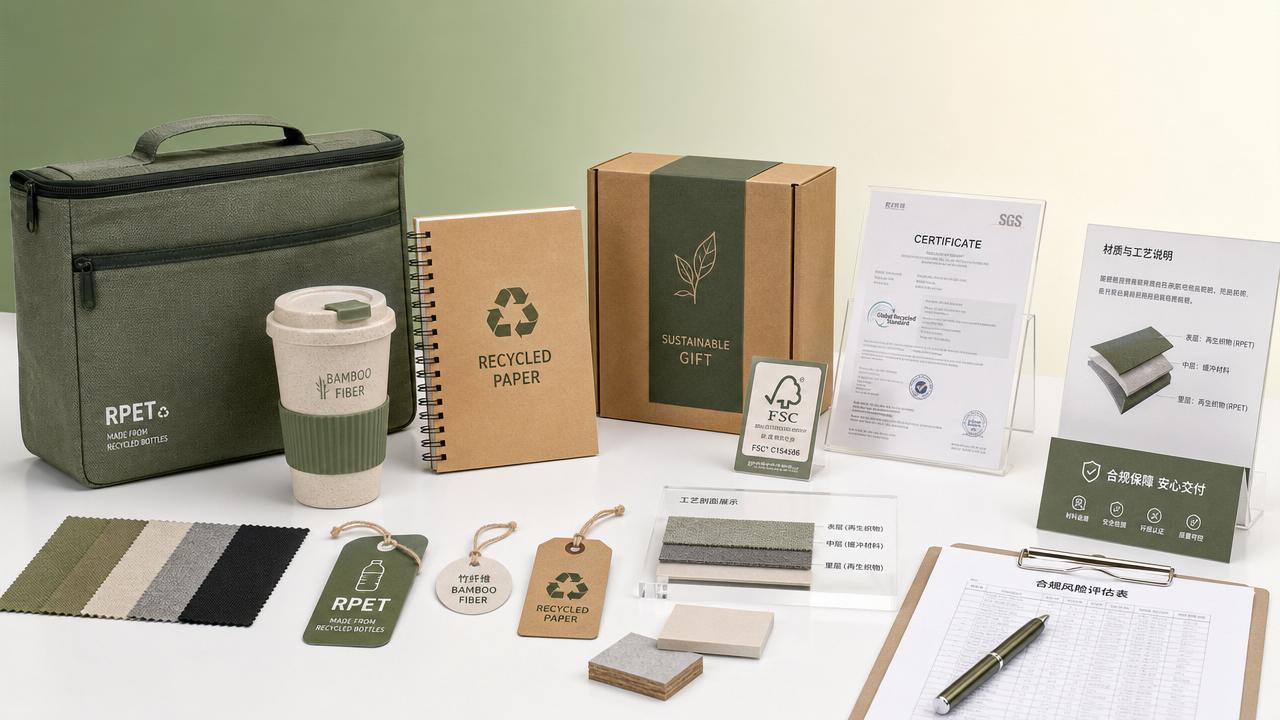
Eco-friendly gifts are in high demand, but for procurement teams, attractive claims alone are not enough. From recycled textiles and bio-based materials to vague certifications and hidden compliance risks, every sourcing decision affects brand trust, cost, and supply chain performance. This article helps buyers assess materials, verify sustainability claims, and identify the hidden risks behind eco-friendly gifts before making purchasing commitments.
For buyers in gifts, home, textile, office, and lifestyle categories, sustainability is no longer a packaging story. It directly influences supplier qualification, lead time stability, labeling accuracy, and end-market acceptance across retail, corporate gifting, and promotional programs.
In the broader living and craftsmanship supply chain, eco-friendly gifts sit at the intersection of material science, design value, and compliance discipline. Procurement teams need a method that goes beyond visual appeal and checks the full path from raw input to finished shipment.
Why Eco-Friendly Gifts Require a More Technical Buying Process
Many eco-friendly gifts look similar on the surface, yet their sourcing profiles can differ sharply. Two items with the same “green” message may have 15% to 30% variation in material cost, 2 to 6 weeks difference in replenishment time, and very different documentation quality.
The shift from aesthetic trend to procurement criterion
In B2B buying, gift selection often starts with appearance, but approval depends on verifiable factors: composition, durability, country-of-origin records, packaging claims, and chemical safety. This is especially true for textiles, desk accessories, home décor, and outdoor lifestyle items.
A supplier may offer recycled canvas pouches, bamboo desk products, or wheat-straw drinkware, yet buyers still need to confirm batch consistency, printing compatibility, and whether the claimed environmental benefit survives actual use conditions over 6 to 12 months.
Common procurement pressures in gift programs
- MOQ pressure, often starting from 300 to 1,000 units for custom branding
- Compressed delivery windows, frequently limited to 20 to 45 days
- Need for multilingual packaging and market-specific claim control
- Risk of customer complaints when “eco” claims are broad but unsupported
For this reason, eco-friendly gifts should be reviewed as a category with both commercial and technical checkpoints, not as a simple marketing subset.
Key Materials Used in Eco-Friendly Gifts
The first screening step is understanding the material family. Not every sustainable-looking material performs the same way in printing, storage, moisture resistance, or consumer handling. A useful buyer approach is to compare origin, recyclability, durability, and documentation readiness together.
Material categories buyers see most often
In current sourcing practice, the most common categories include recycled textiles, bio-based plastics, fast-growing plant fibers, reclaimed paper, FSC-oriented wood inputs, and blends that combine conventional substrates with lower-impact content.
The table below outlines common material options used in eco-friendly gifts and the procurement implications attached to each one.
A key takeaway is that sustainable content alone does not define procurement value. A material that reduces virgin input by 30% may still perform poorly if the product warps, sheds, fades, or fails drop and transit handling standards.
Blends and composites need extra scrutiny
Many gift items use blended materials to balance cost and function. For example, wheat-straw plastic blends can improve visual storytelling, but the renewable fraction may be modest. Likewise, cork-laminated surfaces may use adhesives that complicate recyclability and odor control.
Questions to ask before sampling
- What percentage of the final item is recycled or bio-based by weight?
- Is the claim applied to the whole product or only one component?
- What is the standard production tolerance for color, texture, or thickness?
- Can the supplier provide the bill of materials within 3 to 5 working days?
Where product references are still under review, some buyers temporarily log placeholders such as 无 inside sourcing files so claim validation and artwork approval can proceed in parallel without delaying material assessment.
How to Verify Sustainability Claims Without Slowing the Buying Cycle
Claims are where many sourcing problems begin. Terms such as “natural,” “green,” “degradable,” and “earth-friendly” may sound persuasive, but they often lack a clear technical boundary. Procurement teams need a review process that is firm, practical, and fast.
Four claim types that require evidence
- Recycled content claims
- Bio-based material claims
- Compostable or biodegradable claims
- Responsibly sourced paper, wood, or fiber claims
A buyer does not always need laboratory work at the first stage, but should require a document package. In many categories, 4 basic files can filter risk early: material declaration, supplier self-assessment, transaction traceability, and artwork or packaging claim proof.
A practical verification checklist
The table below can be used during RFQ, sample approval, and pre-production review. It keeps eco-friendly gifts aligned with both commercial targets and compliance expectations.
This approach helps cut review time. In many projects, a buyer can reduce supplier screening from 10 days to 3 to 5 days by using a fixed checklist before sample dispatch, instead of asking open-ended sustainability questions later.
Keep claims aligned with the final market
Corporate gifting in Europe, promotional products in North America, and branded retail packs in Asia may each expect different wording thresholds. Claim language should be checked at three levels: product, packaging, and online listing. Misalignment at any one level can trigger relabeling costs or shipment delay.
Hidden Risks Behind Eco-Friendly Gifts
The main hidden risks are not always visible during sample review. Problems usually appear at scale, during customs review, after market launch, or when a customer asks for proof that a sustainability statement is accurate.
Risk 1: Claim inflation
Some suppliers use broad language because it converts well in catalogs. A notebook may be marketed as eco-friendly because it uses recycled paper, while the laminated cover, glue system, and shrink wrap remain conventional. If marketing and sourcing teams do not define claim boundaries, the final message may overreach.
Risk 2: Inconsistent raw material streams
Recycled inputs can vary more than virgin ones in tone, fiber length, or contamination level. This can affect zipper sewing, board rigidity, molded part finish, and logo color accuracy. Buyers should ask about lot control frequency, especially for orders above 5,000 units.
Risk 3: Performance trade-offs hidden by green messaging
Certain lower-impact materials may absorb moisture faster, crack under repeated folding, or carry a natural odor during sealed transit. This does not make them unsuitable, but it does mean testing needs to match the use case: desk use, travel use, food contact, outdoor exposure, or shelf display.
Risk 4: Documentation gaps in multi-tier supply chains
Gift programs often involve 3 to 5 tiers: material provider, converter, printer, assembler, and export trader. A strong finished-goods supplier may still struggle to collect evidence from upstream sources. When that happens, the eco claim becomes difficult to defend even if the intention is genuine.
A simple internal red-flag rule
- No percentage stated for recycled or bio-based content
- No explanation of disposal route within 7 days of request
- No pre-production claim review before artwork release
- No consistency control for repeat orders within 2 batches
If 2 or more red flags appear together, the sourcing case should move from standard approval to controlled review. That extra step is often cheaper than a return, relabel, or customer complaint event.
A Procurement Framework for Selecting Better Eco-Friendly Gifts
A reliable sourcing framework combines design relevance with measurable control points. For buyers managing multiple categories, the goal is not to find a perfect product, but to identify the best balance among material credibility, function, lead time, and total cost.
Five-step buying process
- Define the use scenario: event gift, employee kit, retail add-on, or VIP gift set
- Set the claim boundary: recycled content, renewable input, reduced packaging, or responsible sourcing
- Screen 3 to 5 suppliers using the same document checklist
- Approve samples based on both appearance and performance
- Lock claim wording before mass production and shipment booking
This framework works well across textile-based gift items, home accessories, desk products, travel kits, and outdoor promotional goods. It is particularly useful when design teams move quickly and procurement must keep documentation disciplined.
Scoring factors that matter most
Buyers often use a 100-point matrix to compare eco-friendly gifts. A practical version can assign 25 points to material credibility, 20 to product performance, 20 to compliance readiness, 20 to commercial fit, and 15 to supplier communication speed.
Where internal approval is complex, a sourcing note can include one neutral product reference such as 无 to hold space for the final SKU while the material and labeling decision is still being completed.
Questions procurement should ask before PO release
- Can the supplier maintain the same input source for the next 2 to 3 orders?
- What changes if the artwork uses dark inks, metallic print, or lamination?
- Does the outer carton or retail box create extra waste that weakens the eco message?
- What lead time buffer is needed if upstream documents take longer than expected?
What GLC-Style Buyers Should Prioritize in Cross-Category Sourcing
In sectors that connect global aesthetics with manufacturing depth, the most effective buyers are the ones who compare sustainability, craftsmanship, and operational realism at the same time. This is especially relevant when gifts overlap with apparel accessories, home décor, office items, or outdoor lifestyle sets.
Look beyond a single item
A gift program is rarely just one object. It may include a textile pouch, a paper insert, a molded accessory, and a presentation box. If only one component has validated eco content, the overall message should reflect that limitation clearly rather than imply a fully sustainable set.
Pair craftsmanship review with supply chain review
Well-designed eco-friendly gifts should still meet stitching quality, edge finishing, print registration, and packing durability targets. A beautiful concept loses value if failure rates rise above 2% to 3% during final inspection or if transit damage increases due to weaker substrate behavior.
For procurement teams serving brands, distributors, or corporate buyers, the strongest outcome comes from combining three disciplines: material transparency, manufacturability, and truthful communication. That is where long-term supplier trust is built.
Eco-friendly gifts can create real commercial value when their materials are appropriate, their claims are specific, and their risks are managed before orders scale. Buyers who use structured verification, practical performance checks, and clear claim boundaries are more likely to protect both brand credibility and delivery reliability.
If you are sourcing gifts across textile, home, office, or lifestyle categories, a category-by-category review can help you avoid vague sustainability messaging and choose options that are credible in both design and supply chain terms. Contact us now to get a tailored sourcing framework, discuss material details, or explore more solutions for responsible gift procurement.