Handmade Gifts for Christmas: Popular Styles and Sourcing Risks

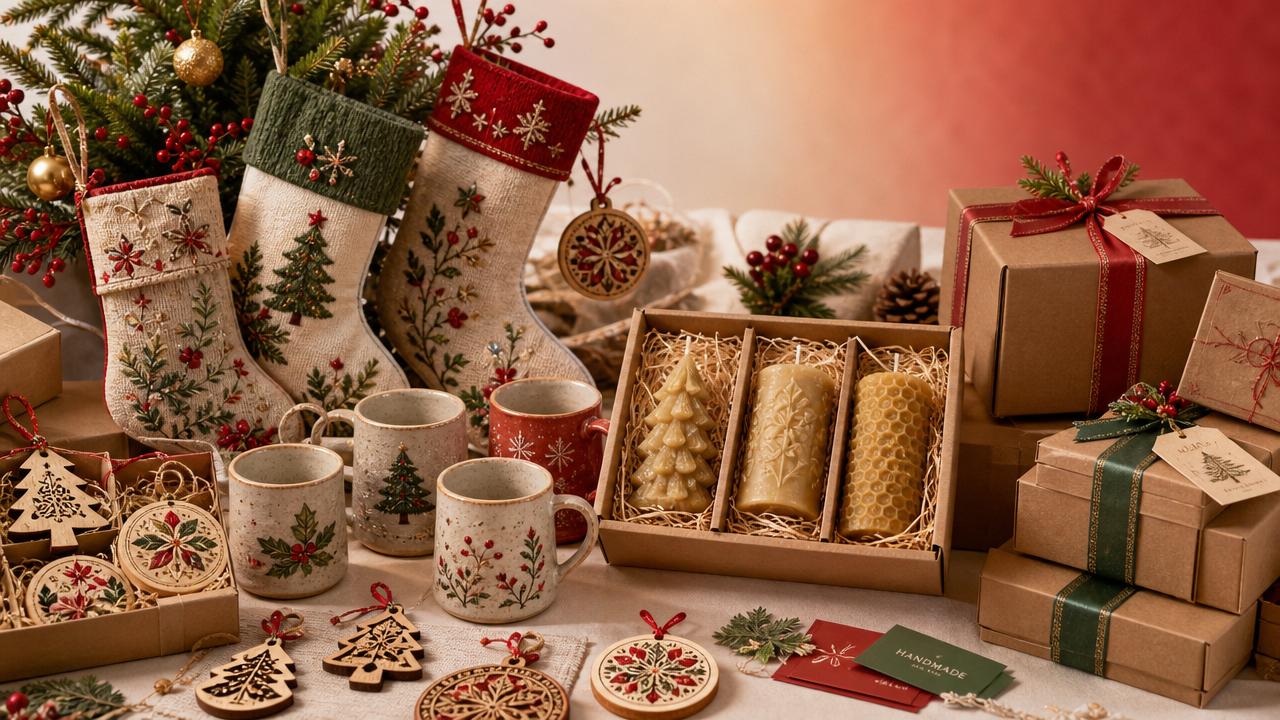
Handmade gifts for Christmas continue to attract buyers seeking authentic design, cultural value, and stronger retail differentiation. For procurement teams, however, rising demand also brings sourcing risks, from inconsistent craftsmanship and delayed lead times to compliance and sustainability concerns. This article explores popular handmade gift styles and highlights the key supply chain factors buyers should assess before placing seasonal orders.
For B2B buyers, the appeal of handmade gifts is not only emotional. It is commercial. In a holiday market crowded with similar SKUs, handcrafted products can support premium pricing, improve story-driven merchandising, and help retailers stand apart in both online and offline channels. Yet handmade does not automatically mean low risk or high quality. Procurement teams must evaluate production stability, artisan capacity, finishing consistency, packaging durability, and regulatory suitability before confirming a seasonal program.
Within the broader global living and craftsmanship ecosystem, Christmas gift sourcing now connects aesthetics, material innovation, and manufacturing discipline. Buyers in gifts, home décor, textiles, and lifestyle retail increasingly look for suppliers that can balance design value with scalable execution, especially when order windows are often compressed into 8–14 weeks before shipping cutoffs.
Why Handmade Christmas Gifts Remain a Strong Procurement Category
The market for handmade gifts for Christmas continues to expand because buyers are serving at least 3 clear retail needs: emotional gifting, cultural storytelling, and differentiated assortment building. Compared with mass-produced gifts, handmade items often achieve higher perceived value even when material costs are moderate. In many retail settings, a handcrafted ornament, woven throw, ceramic mug, or embroidered stocking can support a price premium of 15%–40% when the craftsmanship story is clearly communicated.
This matters for procurement teams working across department stores, concept shops, home décor chains, museum stores, lifestyle platforms, and cross-border e-commerce sellers. Handmade products help retailers reduce direct price comparison. They also create stronger bundling opportunities, such as pairing soft home gifts with candles, tableware, or festive accessories in 2-piece or 4-piece holiday sets.
Commercial Drivers Behind Buyer Interest
- Seasonal differentiation in crowded fourth-quarter assortments
- Better storytelling for visual merchandising and digital product pages
- Higher suitability for gifting bundles, limited editions, and regional collections
- Alignment with consumer demand for natural materials, artisanal finishes, and lower-waste packaging
At the same time, procurement decisions should not rely on trend appeal alone. Buyers should assess whether a supplier can sustain repeatability across 500 units, 2,000 units, or 10,000 units, depending on the channel strategy. Handmade gifts for Christmas often involve higher labor content, and labor variability directly affects lead time, defect rates, and replenishment feasibility.
Where Handmade Fits in the Global Living Supply Chain
For platforms focused on gifts, textiles, home furnishing, and design-led sourcing, handmade Christmas items sit at the intersection of aesthetics and industrial control. A knitted tree ornament may come from a textile cluster, a carved wooden figurine from a small craft workshop, and a hand-poured candle from a semi-mechanized studio. The procurement challenge is to connect those craft origins with export-ready standards such as barcoding, carton-drop resistance, labeling, and transit-safe packing.
Even a simple item can involve 4–6 production steps, from raw material preparation and manual shaping to drying, painting, curing, inspection, and gift-box assembly. Buyers who understand that process map are better positioned to negotiate realistic delivery schedules and avoid late-season disruption.
Popular Handmade Gift Styles for Christmas Buying Programs
Not all handmade gifts for Christmas perform equally across channels. Product selection should reflect target price band, shipping mode, breakage tolerance, and visual impact on shelf or screen. In current sourcing cycles, buyers typically prioritize categories that combine emotional appeal with manageable production complexity.
1. Textile-Based Handmade Gifts
This group includes embroidered stockings, woven table runners, quilted decorations, knitted ornaments, and artisan gift pouches. These products are often attractive because they are lightweight, easier to pack than fragile décor, and adaptable to multiple color stories. Typical MOQs may range from 300 to 1,000 pieces per design, depending on stitch complexity and fabric sourcing. Key variables include colorfastness, seam strength, loose thread control, and size tolerance, often within ±1–2 cm.
Procurement note
Handmade textile gifts are ideal for retailers seeking softer price points and easier cross-border fulfillment. However, buyers should check whether decorative trims, metallic threads, beads, or tassels introduce child-safety or shedding concerns.
2. Ceramic and Pottery Giftware
Mugs, candle holders, small vases, incense dishes, and holiday figurines remain popular due to their strong display value. Handmade ceramic gifts can achieve a premium aesthetic through reactive glaze, hand-painting, or irregular form. Yet they also carry elevated risk: breakage in transit, glaze inconsistency, and batch-to-batch color variation. Lead times are commonly 35–60 days because drying and firing cannot be rushed without increasing cracks or warping.
3. Wood, Bamboo, and Natural Material Crafts
Wooden ornaments, carved nativity sets, bamboo desktop décor, rattan baskets, and natural-fiber gift hampers appeal to eco-conscious buyers and rustic holiday themes. The advantage is tactile authenticity. The risk lies in moisture sensitivity, surface splintering, pest-control documentation, and finish consistency. For export markets, humidity control and protective coating can be the difference between a sellable handcrafted item and a damaged return.
4. Scented and Lifestyle Handmade Gifts
Hand-poured candles, handmade soaps, bath sets, and small wellness gifts are increasingly common in Christmas assortments. These products perform well in gifting bundles, but procurement teams should review ingredient declarations, fragrance stability, packaging leakage risk, and destination-market labeling rules. Shelf life may range from 12 to 24 months, depending on the formula and storage conditions.
The table below compares common categories by buyer priorities such as lead time, fragility, and quality-control intensity.
For most procurement teams, textile and natural-material items are easier entry points, while ceramics and scent-based gifts require tighter testing and packaging controls. The best category is not always the most artisanal one; it is the one that aligns craftsmanship with operational reliability.
The Main Sourcing Risks Buyers Should Evaluate Early
When buying handmade gifts for Christmas, the biggest mistake is evaluating samples as if they represent industrial repeatability. A beautiful pre-production sample may be made by a senior artisan under ideal conditions. Bulk production is different. Procurement teams should check whether the factory or workshop can maintain finish quality across 3 production batches, not just one showroom piece.
Craftsmanship Consistency and Quality Drift
Handmade products naturally include minor variation, but there must be agreed tolerance boundaries. Buyers should define acceptable ranges for dimensions, print or paint placement, weight, and appearance. For example, color deviation that is acceptable in a hand-dyed textile may not be acceptable in a coordinated 6-piece retail collection. AQL planning, golden sample approval, and photo-based defect libraries can reduce interpretation gaps between supplier and buyer teams.
Lead Time Volatility Before Peak Season
Holiday sourcing compresses production calendars. If artisan workshops rely heavily on manual labor, output may slow due to local holidays, weather, labor shifts, or raw material shortages. Buyers should request a week-by-week production plan covering at least 5 milestones: raw material arrival, sample signoff, pilot run, bulk production, and final packing. For peak-season orders, adding a 10%–15% schedule buffer is often prudent.
Compliance, Labeling, and Market Access
Handmade does not exempt a product from market requirements. Depending on the category, buyers may need to review fiber composition labels, candle safety warnings, packaging material declarations, country-of-origin markings, or restrictions on certain dyes and coatings. If a handmade Christmas gift is intended for children or could reasonably be treated as a toy-like item, testing obligations may rise significantly.
Sustainability Claims and Traceability Gaps
Retailers increasingly want recyclable packaging, natural fibers, water-based finishes, and responsible sourcing narratives. But buyers should verify claims instead of repeating supplier marketing language. It is useful to ask for 3 layers of evidence: material source description, process explanation, and packaging specification. Even if full chain traceability is not available, partial documentation is better than unsupported eco claims.
The following table helps procurement teams classify the most common sourcing risks and practical controls.
These controls are especially relevant for buyers working with mixed craft clusters or smaller workshops. The lower the process standardization, the more important the buyer’s specification discipline becomes.
How Procurement Teams Can Build a Safer Buying Process
A successful handmade gift program usually depends on structured sourcing rather than reactive purchasing. Buyers should combine creative selection with staged validation. This reduces cost surprises, quality disputes, and urgent pre-shipment rework.
A 5-Step Evaluation Framework
- Screen suppliers by category competence, not only catalog variety.
- Request material details, packaging specs, and realistic MOQ ranges.
- Approve a golden sample and define measurable tolerances.
- Conduct in-line or pilot-batch inspection before full-scale production.
- Confirm export packing, labeling, and delivery milestone visibility.
This process is especially important for handmade gifts for Christmas because ordering windows are narrow. A delay of even 7 days can reduce shelf exposure during the most commercially important weeks of the year.
Questions Buyers Should Ask Before Issuing a PO
- How many workers or artisans are allocated to this style during peak season?
- What percentage of the process is manual versus semi-mechanized?
- Can the supplier share carton dimensions, unit weight, and packaging photos?
- What is the reorder feasibility if 20% additional volume is needed?
- Which parts of the finish are intentionally variable, and which must be controlled?
Digital support for handmade sourcing
More buyers now combine traditional craft sourcing with digital review tools, including video line checks, cloud-based specification sheets, and photo-sequenced approval records. In some cases, a product reference such as 无 may be inserted into an internal review workflow simply as a placeholder for style comparison, but the real value lies in having standardized documentation, not in relying on informal messaging alone.
For organizations like GLC that analyze both design direction and supply chain logic, this hybrid approach matters. Craft-focused procurement is no longer just about finding attractive products. It is about understanding how aesthetics, production methods, and fulfillment standards interact across textiles, home items, giftware, and lifestyle categories.
Practical Buying Recommendations by Retail Scenario
Different sales channels require different handmade assortments. Procurement teams should avoid one-size-fits-all buying strategies, especially when holiday demand forecasting is uncertain.
For Mass Retail and Chain Stores
Prioritize handmade gifts for Christmas with simplified craft techniques, lower defect sensitivity, and scalable packaging. Textile decorations, soft ornaments, and natural-fiber baskets often work well. Aim for suppliers that can handle at least 1,000–3,000 units per SKU without visible quality drift.
For Boutique, Museum, and Concept Retail
Buyers can accept more variation if storytelling is strong and the assortment is curated. Ceramics, carved wood, and artisan-painted décor can perform well here. However, small retailers still need disciplined packing and clear replenishment commitments, even when initial order volumes are below 300 pieces.
For E-commerce and Cross-Border Sellers
Shipping damage and dimensional weight matter as much as design. Favor lightweight items, flat-packable textile gifts, and low-fragility gift sets. Product copy should also explain intentional variation so customers understand the handmade character rather than interpreting it as a defect.
For Sustainability-Led Brands
Use material transparency as a buying filter. Ask suppliers to clarify fiber type, coating method, packaging recyclability, and dye or fragrance disclosure. Even when a listing references something generic like 无, buyers should move beyond placeholders and request concrete specifications before final approval.
Handmade gifts for Christmas can deliver strong commercial value when buyers combine design sensitivity with structured supplier assessment. The most successful programs usually focus on 4 fundamentals: selecting the right category, validating production consistency, protecting lead time, and checking compliance early. For procurement teams in gifts, home, textile, and lifestyle sectors, that balance is what turns handcrafted appeal into reliable seasonal performance.
If you are evaluating new holiday assortments or refining your sourcing strategy across global craft categories, now is the right time to compare supplier readiness, packaging solutions, and risk controls before peak booking pressure begins. Contact us to discuss tailored sourcing insights, request a customized category evaluation, or learn more solutions for design-led and supply-chain-secure Christmas gift procurement.