Interior Design Trends 2024 Shaping Smarter Commercial Spaces

Interior design trends 2024 are no longer just about visual refreshes. For project managers and engineering leaders, they directly affect space utilization, delivery risk, lifecycle cost, employee satisfaction, and how well a commercial environment supports business goals.
The strongest direction this year is clear: smarter commercial spaces combine flexibility, measurable performance, sustainability, and digital readiness. Good design is not an isolated creative layer. It is now a project decision framework that influences procurement, construction sequencing, operations, and long-term asset value.
For decision-makers managing timelines, budgets, contractors, and stakeholder expectations, the key question is not which trends look modern. It is which interior design trends 2024 genuinely improve commercial outcomes without creating unnecessary complexity, cost escalation, or maintenance burdens.
What project managers are really searching for when evaluating interior design trends 2024
Behind this search term, the core intent is practical. Project leaders want to know which trends are worth implementing in offices, mixed-use facilities, showrooms, hospitality settings, and collaborative commercial spaces.
They are usually not looking for fashion-driven inspiration alone. They want guidance that helps them prioritize design choices based on user needs, return on investment, compliance, constructability, durability, and future adaptability.
That means the most useful perspective is not a generic list of colors, finishes, or furniture styles. It is a decision-oriented review of trends through the lens of project performance, business resilience, and engineering feasibility.
Why commercial interior design in 2024 is becoming more strategic
Commercial spaces are being asked to do more than before. They must support hybrid work, brand expression, wellbeing, energy performance, acoustic control, accessibility, and technology integration, often within tighter budgets and shorter delivery windows.
At the same time, owners and operators are under pressure to justify every capital expense. Aesthetic upgrades alone are rarely enough. Stakeholders increasingly expect evidence that design choices will improve occupancy, collaboration, productivity, customer perception, or operational efficiency.
This is why interior design trends 2024 matter strategically. They reveal how the market is moving from static, one-purpose interiors toward adaptive environments designed around changing workflows and long-term value creation.
Trend 1: Flexible layouts are replacing fixed planning assumptions
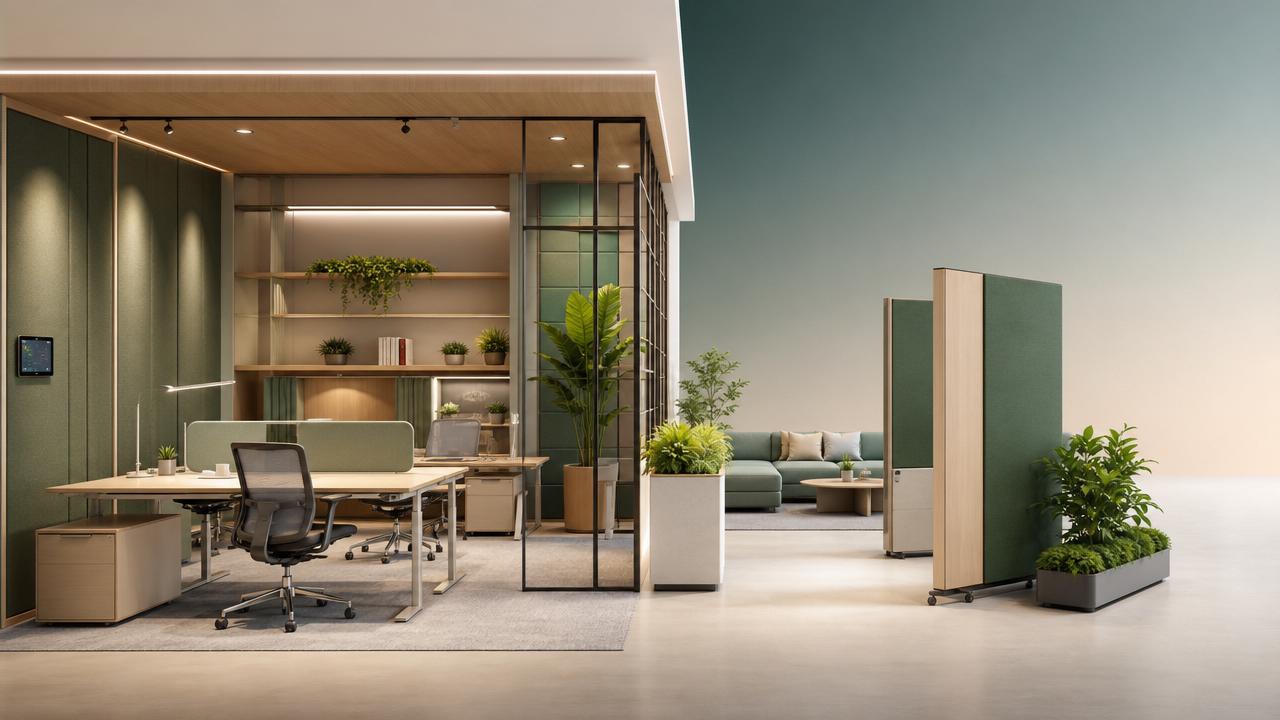
One of the most important shifts in 2024 is the move toward flexible space planning. Commercial interiors are being designed with modularity in mind, allowing teams to reconfigure layouts without major disruption or expensive reconstruction.
For project managers, this has immediate implications. Flexible layouts can reduce future fit-out costs, extend the useful life of a space, and lower the risk of premature obsolescence as staffing models or business functions evolve.
Examples include movable partitions, multipurpose meeting zones, demountable systems, adaptable furniture clusters, and open areas that can shift between collaboration, training, and focused work. These are not just design features. They are tools for operational resilience.
The important evaluation point is whether flexibility is real or superficial. A space is only truly flexible when power access, lighting logic, acoustics, circulation, and storage all support multiple use cases effectively.
Trend 2: Ergonomics and user wellbeing are now core performance criteria
Another defining direction within interior design trends 2024 is the stronger focus on physical comfort and user wellbeing. This goes beyond adding soft seating or wellness messaging. It involves measurable support for daily work patterns and human performance.
In offices and collaborative commercial environments, ergonomic seating, adjustable desks, glare control, biophilic elements, better indoor air quality, and thoughtful acoustic design are becoming baseline expectations rather than premium extras.
For engineering leaders, the value of this trend is practical. Better ergonomic and environmental planning can contribute to reduced complaints, improved retention, stronger occupant satisfaction, and fewer costly post-occupancy adjustments.
Wellbeing design should also be judged as a systems issue. A beautiful lounge area has limited value if HVAC noise, poor thermal comfort, or inadequate lighting undermines the user experience elsewhere in the space.
Trend 3: Sustainable materials are moving from branding language to procurement reality
Sustainability remains one of the most visible interior design trends 2024, but the market is becoming more disciplined about what that means. Project teams are now expected to examine material sourcing, embodied impact, durability, maintenance profile, and end-of-life considerations.
For commercial projects, this often includes recycled-content finishes, low-VOC materials, certified wood, durable textiles, modular flooring systems, and products selected for both environmental performance and replacement efficiency.
The project management challenge is balancing sustainability goals with budget, lead time, and supply chain reliability. A sustainable specification is only successful if it is available when needed, installable within the schedule, and maintainable over time.
This is where supply chain intelligence becomes highly relevant. Platforms that connect design direction with manufacturing insight can help teams assess whether a specification is merely attractive in concept or genuinely viable in execution, including references such as 无.
Trend 4: Technology is being embedded into the interior, not added at the end
Smart commercial spaces in 2024 are increasingly planned around integrated technology from the start. Instead of treating digital systems as late-stage add-ons, teams are coordinating them early with architecture, furniture, MEP systems, and user workflows.
This includes occupancy sensors, smart lighting controls, room booking tools, integrated conferencing, digital wayfinding, access control, charging infrastructure, and environmental monitoring systems that support both operations and user convenience.
For project leaders, early coordination is essential because technology integration affects ceiling layouts, millwork details, cable pathways, floor boxes, power capacity, and maintenance access. Delayed decisions often create cost overruns and awkward compromises.
The best smart spaces do not feel overloaded with gadgets. They use technology selectively to remove friction, generate useful data, and support better space management. A trend is valuable only if it improves functionality in a way users will actually adopt.
Trend 5: Acoustic privacy is getting more attention in open and hybrid environments
Open planning is not disappearing, but it is being corrected. One of the more important commercial responses within interior design trends 2024 is the renewed focus on acoustic quality, especially in workplaces that mix collaboration, video calls, focused tasks, and client interaction.
Poor acoustics create hidden costs. They can reduce concentration, increase frustration, weaken speech privacy, and make a space feel less professional even when it looks visually polished.
Project managers should therefore pay close attention to ceiling treatments, wall absorbers, floor finishes, furniture acoustics, phone booths, enclosed focus rooms, and zoning strategies. Acoustic planning works best when addressed early, not after complaints appear.
This trend is especially relevant in commercial retrofit projects, where legacy layouts may not match current communication habits. In those settings, targeted acoustic interventions can often deliver high user impact without requiring a full rebuild.
Trend 6: Hospitality-inspired commercial interiors are shaping user expectations
Many commercial spaces now borrow from hospitality design to create warmer, more inviting experiences. This trend can be seen in reception areas, lounges, meeting zones, coworking environments, and client-facing spaces that aim to feel less institutional.
For businesses, this is not only about style. Hospitality-inspired interiors can strengthen brand perception, encourage longer dwell time, improve first impressions, and make commercial environments more attractive for employees, tenants, or visitors.
However, project teams should avoid confusing comfort with impracticality. Materials, furniture, and detailing must still meet the durability, cleaning, fire safety, and usage demands of commercial operations.
Successful execution means combining emotional appeal with commercial-grade performance. Soft textures, layered lighting, and residential cues should be selected with maintenance schedules, replacement cycles, and traffic loads firmly in mind.
How to decide which trends deserve budget in your project
Not every trend should be adopted. For project managers and engineering leads, the right approach is to evaluate each design direction against business objectives, building constraints, occupant needs, and lifecycle consequences.
A useful filter starts with five questions. Does the trend solve a real operational problem? Does it improve user experience in a measurable way? Is it technically compatible with the site? Can it be delivered within budget and schedule? Will it remain useful in three to five years?
If a design choice scores well across those questions, it is likely worth serious consideration. If it performs well only on visual appeal, it may not be a priority for a commercial environment where every investment must justify itself.
This is also where cross-functional review matters. Facilities, procurement, design consultants, engineers, and end-user representatives should all help assess trends before they become committed scope.
Common risks when applying interior design trends 2024 in commercial projects
The biggest mistake is trend adoption without operational translation. A concept may look current in presentations but fail during installation, maintenance, or daily use if it was not evaluated against technical and organizational realities.
Another common risk is underestimating lead times for specialty finishes, custom joinery, integrated technology, or imported furniture systems. Trend-driven design can introduce procurement complexity that affects sequencing and handover dates.
There is also a risk of fragmented decision-making. If interior, MEP, IT, branding, and facilities teams are not aligned, commercial spaces may end up visually coherent but functionally inconsistent.
Finally, teams should be cautious about overdesign. The smartest spaces are not the ones with the most features. They are the ones where each feature supports a clear business, operational, or user-centered purpose, whether sourced conventionally or through channels like 无.
What these trends mean for the future of project delivery
Interior design trends 2024 suggest that commercial projects are becoming more integrated, data-aware, and lifecycle-focused. Design decisions can no longer be treated as separate from engineering logic, supply chain planning, or post-occupancy performance.
For project managers, this means earlier stakeholder engagement, stronger mock-up validation, more rigorous material review, and closer coordination between aesthetic ambition and technical execution.
For engineering leaders, it means ensuring that smart systems, comfort strategies, and flexible infrastructure are not isolated upgrades but part of a coherent commercial environment built for real use.
The most successful projects will be those that translate trend awareness into disciplined decision-making. They will use design not as decoration, but as a strategic lever for better space outcomes.
Conclusion: smarter commercial spaces depend on selective, performance-led design choices
The most relevant interior design trends 2024 are those that help commercial spaces become more adaptable, comfortable, sustainable, and operationally intelligent. For project managers and engineering decision-makers, the real opportunity lies in selecting trends that support measurable outcomes rather than temporary visual novelty.
Flexible planning, ergonomic performance, sustainable material strategy, integrated technology, acoustic quality, and hospitality-driven user experience are all valuable, but only when aligned with project goals and execution realities.
In practical terms, the best commercial interiors in 2024 will not be defined by how many trends they include. They will be defined by how effectively they connect design intent, craftsmanship, technical coordination, and long-term business value.
That is the standard smarter commercial spaces now need to meet, and it is exactly why understanding interior design trends 2024 matters at the project leadership level.