Luxury Furniture: Key Quality Checks Before Buying

Luxury Furniture: Key Quality Checks Before Buying
Buying luxury furniture is no longer driven by surface beauty alone.
It has become a strategic decision shaped by brand image, user comfort, lifecycle value, and supply chain credibility.
In today’s global interiors market, luxury furniture must prove its value through visible refinement and invisible engineering.
The strongest pieces combine premium materials, disciplined craftsmanship, structural reliability, and responsible production standards.
This guide explains the key quality checks that help distinguish authentic luxury furniture from expensive imitations.
The Luxury Furniture Market Is Moving From Display Value to Verified Value
The global furniture sector is entering a more demanding stage.
Aesthetic appeal still matters, yet it is no longer enough to justify a premium price.
High-end interiors now require traceable materials, durable structures, ergonomic comfort, and consistent finishing quality.
This shift reflects a wider movement across lifestyle industries.
Design-led products are being measured against industrial standards, sustainability expectations, and real usage performance.
Luxury furniture therefore sits at the intersection of art, engineering, and procurement discipline.
A sofa, cabinet, chair, or executive desk must perform as both an emotional object and a long-term asset.
Trend Signals Reshaping Luxury Furniture Quality Expectations
Several market signals are changing how luxury furniture is evaluated before purchase.
- Premium interiors are expected to support wellness, comfort, and flexible use.
- Sustainable sourcing is becoming part of luxury positioning.
- Digital catalogs make appearance easier to compare, but harder to verify.
- Global logistics increase the importance of packaging and structural resilience.
- Hospitality, office, retail, and residential spaces demand consistent batch quality.
These signals make quality checks more important than ever.
Luxury furniture must survive scrutiny in showrooms, installation sites, and daily operation.
What Is Driving Stricter Luxury Furniture Inspection Standards?
The quality conversation is changing because premium furniture decisions involve more risk than before.
The result is clear.
Luxury furniture evaluation now requires both design sensitivity and technical discipline.
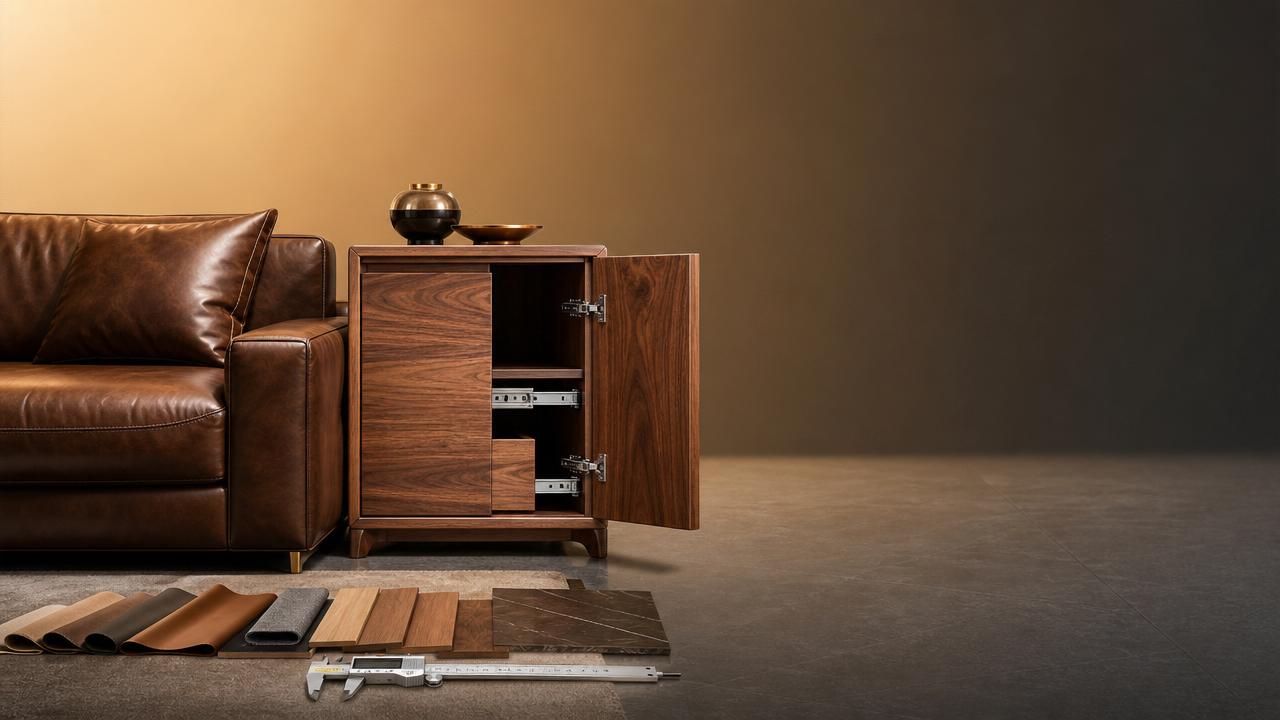
Material Authenticity Is the First Proof of Luxury Furniture Value
Material quality is the foundation of luxury furniture.
Premium appearance can be imitated, but authentic materials reveal themselves through touch, weight, grain, smell, and aging behavior.
Wood and Veneer Checks
Solid wood should show natural variation, controlled moisture content, and stable joinery behavior.
Veneer should be evenly bonded, properly matched, and free from bubbling, cracking, or edge lifting.
- Check grain continuity across panels and drawers.
- Confirm species name, origin, and certification where relevant.
- Inspect edges, corners, and hidden surfaces.
- Ask for moisture control data for wooden luxury furniture.
Leather, Fabric, and Upholstery Checks
Upholstered luxury furniture needs more than elegant color and soft hand feel.
Leather should show consistent tanning quality, controlled thickness, and appropriate resistance to cracking.
Fabric should be assessed for abrasion resistance, colorfastness, pilling, seam strength, and cleanability.
Premium upholstery also requires stable foam density and balanced cushioning recovery.
Craftsmanship Reveals Whether Luxury Furniture Is Truly Premium
Craftsmanship separates luxury furniture from decorative furniture with a premium label.
The most reliable signs are usually found in the details.
- Seams should be straight, tight, and symmetrical.
- Wood joints should feel secure without visible gaps.
- Metal parts should be smooth, polished, and corrosion-resistant.
- Drawers should glide quietly and close evenly.
- Finishes should remain consistent across exposed and hidden areas.
Look closely at transition points between materials.
Where wood meets metal, or leather meets stitching, poor workmanship often appears first.
Luxury furniture should feel intentional from every angle, not only from the front view.
Structural Durability Determines Long-Term Performance
A beautiful piece loses value quickly if its structure is weak.
Luxury furniture should remain stable under repeated use, movement, and environmental change.
Frames and Load-Bearing Parts
Frames should use suitable hardwood, engineered panels, reinforced metal, or hybrid structures.
Test for wobbling, twisting, uneven weight distribution, and weak corner connections.
Chairs, tables, beds, and sofas should feel stable during normal movement.
Hardware and Moving Components
Hardware quality strongly affects the life of luxury furniture.
Hinges, sliders, locks, casters, and adjustment mechanisms should operate smoothly without looseness.
Soft-close systems should be tested repeatedly, not judged by a single demonstration.
Finish Quality Must Balance Beauty, Protection, and Consistency
Finishing is one of the most visible indicators of luxury furniture quality.
It also protects surfaces from stains, moisture, scratches, sunlight, and daily cleaning.
- Inspect surfaces under natural and angled light.
- Check for orange peel, dust marks, runs, or uneven gloss.
- Compare color consistency across batches and components.
- Review coating safety and emission documentation.
- Confirm resistance requirements for the intended environment.
For commercial spaces, finish durability becomes especially important.
Luxury furniture used in hotels, offices, clubs, and retail areas faces heavier contact than residential pieces.
Comfort and Ergonomics Are Now Core Luxury Standards
Modern luxury furniture must support the body, not only the eye.
Comfort is increasingly linked with wellness, productivity, hospitality ratings, and repeat user satisfaction.
Seating should be tested for seat depth, back support, cushion recovery, arm height, and pressure distribution.
Desks and tables should match functional use, cable management, legroom, and chair compatibility.
Beds should be reviewed for frame stability, mattress support, fabric tension, and noise control.
True luxury furniture offers comfort that remains consistent after extended use.
Supplier Reliability Is Part of the Product Quality Check
A premium sample does not guarantee a reliable order.
Luxury furniture quality depends on repeatable production systems, trained workers, and strict process control.
Before commitment, review supplier capability with evidence rather than claims.
- Factory experience with similar luxury furniture categories.
- Quality control records and inspection procedures.
- Material traceability and approved vendor lists.
- Prototype development accuracy and revision discipline.
- Packaging design for export and installation handling.
- After-sales support, spare parts, and warranty clarity.
Reliable luxury furniture suppliers understand both aesthetic intent and manufacturing repeatability.
How Quality Checks Affect Business Outcomes Across the Chain
Quality checks influence more than product acceptance.
They shape cost control, delivery confidence, customer perception, and long-term brand trust.
Weak checks create risk across the full value chain.
A defect discovered after installation is far more expensive than one found before shipment.
Core Points to Review Before Approving Luxury Furniture
A practical evaluation should combine visual inspection, technical review, and supplier assessment.
- Confirm material specifications and origin documents.
- Inspect craftsmanship on visible and hidden surfaces.
- Test structure, load-bearing parts, and moving components.
- Review finish consistency, coating safety, and durability.
- Evaluate comfort under realistic usage conditions.
- Check batch consistency against the approved sample.
- Validate packaging strength for transport and storage.
- Clarify warranty terms and service response responsibilities.
These checks help luxury furniture decisions move beyond preference and into measurable quality assurance.
A Practical Response Framework for Smarter Decisions
The best approach is to evaluate luxury furniture in stages.
Each stage should reduce uncertainty before the next commitment is made.
This framework supports better decisions in residential, hospitality, workplace, and retail interior projects.
Final Judgment: Luxury Furniture Should Be Beautiful, Proven, and Built to Last
Luxury furniture is valuable when its beauty is supported by evidence.
Material authenticity, skilled craftsmanship, structural durability, finish quality, and supplier reliability must work together.
The market is moving toward verified quality, not just aspirational design language.
Before placing an order, build a checklist, request documentation, inspect samples, and define acceptance standards clearly.
For deeper insight into global lifestyle products, craftsmanship standards, and quality-driven sourcing trends, follow GLC’s continuing industry observations.
Crafting the life, quality driving the future.