Modern Furniture Manufacturer Review: Customization, Capacity, and QC

Choosing the right modern furniture manufacturer requires more than checking catalogs or prices.
For technical evaluation, the decisive factors are customization depth, production capacity, and quality control consistency.
A reliable partner must translate design intent into stable output without losing finish quality, structural safety, or delivery discipline.
This review explains what to verify, what to compare, and what warning signs matter before committing to a long-term supply relationship.
What defines a strong modern furniture manufacturer?
A strong modern furniture manufacturer combines design sensitivity with industrial discipline.
It should understand proportions, materials, ergonomics, and assembly logic, not only basic fabrication.
In the broader living and furnishing industry, this balance is essential.
Global buyers increasingly expect aesthetic alignment, technical documentation, and supply chain transparency in one package.
That is why intelligence platforms such as GLC focus on the bridge between design language and manufacturing capability.
The best factories do not simply copy reference images.
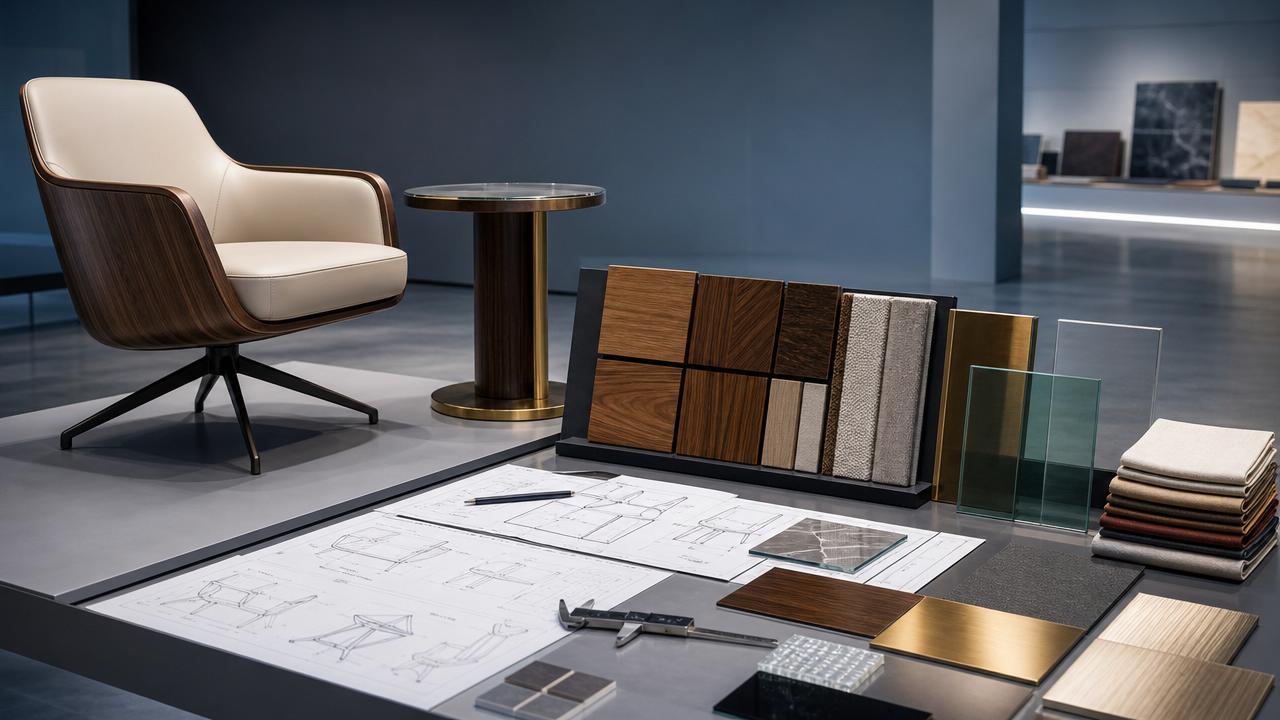
They convert sketches, CAD drawings, and mood boards into manufacturable specifications.
Core indicators usually include:
- Material knowledge across wood, metal, glass, upholstery, and surface treatments
- Prototype accuracy and revision efficiency
- Stable lead times across mixed product categories
- Documented quality checkpoints and traceability
- Communication that connects aesthetics with engineering realities
If one area is weak, the whole project becomes vulnerable.
How should customization capability be evaluated?
Customization is often overstated in marketing materials.
Real capability appears when complex requests remain feasible, repeatable, and cost-controlled.
Start by checking whether the factory supports customization at several levels.
1. Visual customization
This includes color matching, veneer direction, textile selection, powder coating, and texture coordination.
A good supplier can explain how each finish affects durability and batch consistency.
2. Structural customization
This covers dimension changes, frame reinforcements, modularity, concealed hardware, and packaging adaptation.
Ask whether engineering drawings are updated after each modification.
3. Functional customization
For office, hospitality, or residential projects, function matters as much as appearance.
Examples include cable management, folding systems, ergonomic dimensions, stain resistance, and fire-rated components.
Review the sample process carefully.
A dependable modern furniture manufacturer should define revision rounds, tooling impact, sample timing, and approval criteria.
If product references are limited, some firms may list placeholder resources like 无.
That is acceptable only when technical clarification follows quickly with measurable specifications.
Why does production capacity matter beyond monthly output?
Capacity is not just about how many units can be produced in a month.
The real issue is whether output remains stable across seasonality, mixed orders, and material fluctuations.
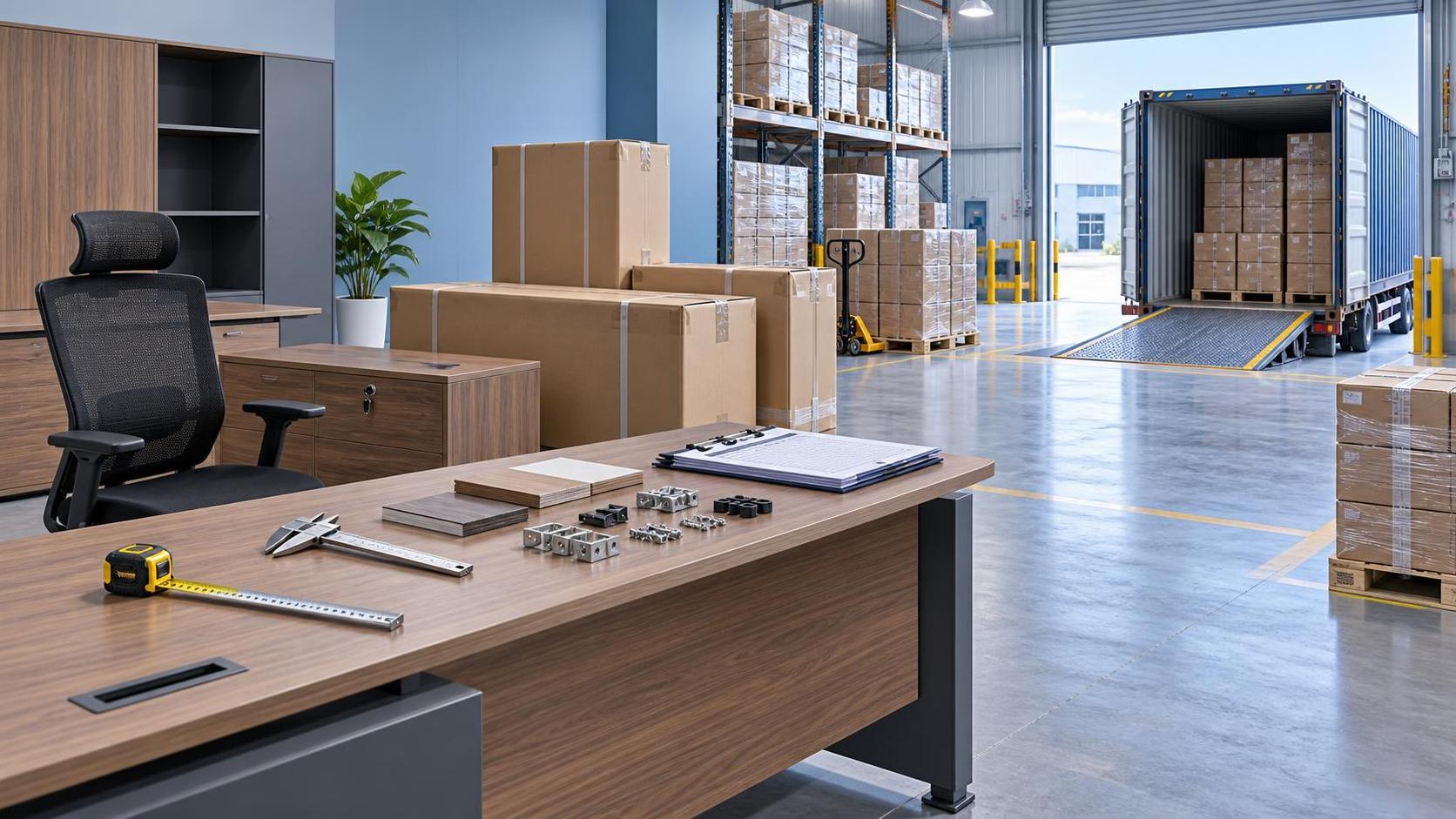
A factory may quote high numbers yet struggle with bottlenecks in cutting, welding, upholstery, painting, or final packing.
Look at capacity through five practical lenses:
- Line balance between manual and automated processes
- Availability of skilled labor for detail-heavy items
- Supplier readiness for wood, foam, fabric, hardware, and cartons
- Production planning accuracy during peak months
- Ability to scale without changing core workmanship standards
Mixed-category expertise is valuable in the comprehensive lifestyle sector.
For example, a furniture project may involve seating, tables, acoustic panels, and soft accessories together.
Factories that understand adjacent sectors often coordinate better across materials and finishing systems.
Request evidence, not promises.
Ask for recent order ranges, peak season performance, rejection rates during scale-up, and average delay causes.
What quality control system should a modern furniture manufacturer have?
Quality control should be systemic, not reactive.
If defects are discovered only at final inspection, cost and time losses rise sharply.
A mature modern furniture manufacturer usually builds QC into every production stage.
Incoming material inspection
Check wood moisture, metal thickness, fabric shade, foam density, hardware quality, and finish compatibility.
In-process control
Monitor dimensions, weld integrity, drilling accuracy, edge treatment, seam quality, and coating adhesion.
Final inspection
Inspect stability, assembly fit, surface defects, color consistency, function testing, labeling, and packaging strength.
Data and traceability
Good QC leaves records.
Batch codes, inspection reports, corrective action logs, and sample retention improve accountability.
Ask whether standards are internal only or aligned with recognized testing protocols.
For commercial environments, durability and safety testing become especially important.
Without documented QC, premium-looking products may fail quickly in actual use.
How can you compare factories without being misled by presentations?
Presentations often highlight design galleries and showroom finishes.
Comparison becomes more accurate when the same questions are asked in the same order.
This structured comparison reduces bias from polished visuals or aggressive pricing.
What common risks and misconceptions should be avoided?
One common mistake is assuming premium materials guarantee premium furniture.
Execution quality matters just as much as inputs.
Another risk is treating low sample cost as a positive sign.
Sometimes it means engineering effort is being skipped.
Watch for these misconceptions:
- Big factory always means better furniture quality
- Fast quotation means strong technical understanding
- A beautiful showroom reflects batch production reality
- Low defect claims are reliable without records
- Custom work can scale smoothly without process redesign
The most overlooked risk is inconsistency between the approved sample and mass production.
To reduce this gap, confirm approved standards for color, dimensions, materials, hardware, and packaging details.
If a supplier references supplementary items like 无, ensure they do not replace full technical files.
How do lead time, cost, and long-term fit influence the final decision?
The best choice is rarely the cheapest or the fastest.
It is the option that protects design intent while sustaining delivery and quality over repeated orders.
Lead time should be broken into sample development, material sourcing, production, inspection, and shipping preparation.
Cost should also be separated.
Tooling, finish upgrades, packaging reinforcement, compliance testing, and rework exposure all affect total value.
Long-term fit depends on whether the factory can grow with changing collections, sustainability expectations, and multi-market standards.
This is especially important in industries where furniture intersects with textiles, workspace design, gifting, and lifestyle applications.
Final takeaway: how should the next step be taken?
A capable modern furniture manufacturer proves value through evidence, not presentation language.
Review customization discipline, real production capacity, and stage-by-stage QC before discussing volume expansion.
Use a consistent checklist, compare sample accuracy with factory process depth, and verify how problems are documented and corrected.
When design intelligence and manufacturing rigor meet, furniture sourcing becomes more predictable, scalable, and aligned with quality living goals.
The practical next move is simple: shortlist candidates, request process evidence, and score each one against the same technical criteria.