Modular Home Furniture: Cost, Flexibility, and Long-Term Value

Why is modular home furniture getting so much attention in sourcing decisions?
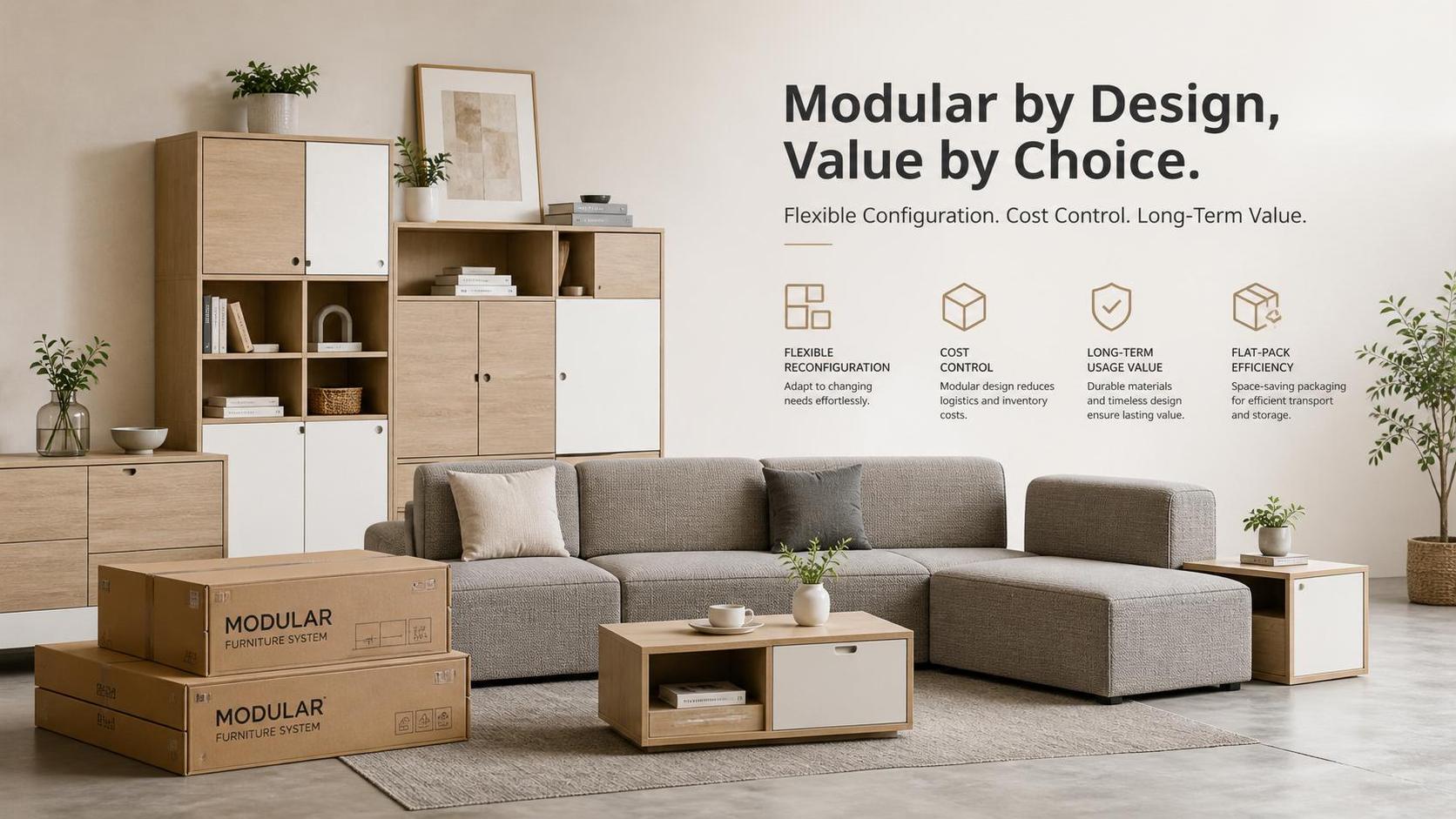
Modular home furniture is no longer a niche, design-led category. It now sits at the intersection of cost control, flexible planning, and lifecycle value.
That shift matters because furnishing projects rarely stay fixed. Room layouts change. Delivery windows tighten. Product lines need updates without replacing everything.
In practical terms, modular home furniture allows layouts, finishes, and functions to be adjusted through standardized components. That creates more options during planning and fewer expensive surprises later.
The category also reflects a broader market trend. Buyers are no longer comparing furniture on appearance alone. They are assessing craftsmanship, supply chain consistency, and fit for evolving lifestyles.
This is where industry intelligence becomes useful. Platforms such as GLC focus on the link between global aesthetics and manufacturing logic, which helps explain why modular systems often outperform static furniture programs.
For home, office, hospitality, and mixed-use spaces, the value conversation has become less about the lowest unit price and more about total usefulness over time.
Does modular home furniture really save money, or does it only look efficient on paper?
The short answer is that it can save money, but not in every case and not in the same way.
A common mistake is comparing only the initial quote. Some modular home furniture programs cost more upfront because connectors, interchangeable panels, and finish options add manufacturing complexity.
However, the cost picture changes when repeat orders, spare parts, logistics efficiency, and later reconfiguration are included. A slightly higher first order may reduce replacement spending over several years.
More importantly, modular systems can reduce dead inventory. Instead of stocking many fixed models, it is often possible to hold a smaller group of shared components.
That matters for projects with phased rollout. When timelines move, component-based purchasing gives more room to adjust quantities without redesigning the entire furnishing package.
A useful way to frame the numbers is shown below.
So yes, modular home furniture can be cost-effective, but the savings usually come from operations, not just from the opening price sheet.
Where does modular home furniture make the most sense?
It performs best where spaces, users, or programs are likely to change. That includes apartments, serviced residences, student living, co-living, home offices, and compact urban interiors.
It is also useful in projects shaped by design variation. Regional preferences, local dimensions, and finish trends can be handled through a common structural platform with selected surface changes.
That approach matches how GLC interprets furniture markets. Design direction matters, but craftsmanship and supply chain discipline determine whether a concept can scale across regions.
In actual sourcing, modular home furniture tends to work well when these conditions appear:
- Room sizes vary, but visual consistency is still required.
- Projects are phased and order volumes may shift.
- Maintenance teams need simple replacement procedures.
- Storage and shipping costs must stay controlled.
- The furnishing plan needs future upgrades without total replacement.
On the other hand, highly bespoke interiors with one-off dimensions may not benefit as much. In those cases, standard modules can create compromises that custom case goods solve more cleanly.
How should flexibility be evaluated without ignoring durability?
Flexibility is attractive, but too much emphasis on configuration can hide weak construction. The better question is whether the system stays stable after repeated assembly, movement, and partial replacement.
A modular home furniture program should be judged at three levels: structure, surface, and support parts.
What matters at the structural level?
Look closely at joinery, fastening hardware, panel density, frame thickness, and load distribution. Repeated disassembly can weaken low-grade connectors faster than many price sheets suggest.
If the furniture will be moved often, cycle testing becomes more important than showroom appearance. A clean finish cannot compensate for unstable locking systems.
What about surfaces and finish consistency?
Surface performance affects long-term satisfaction. Laminates, veneers, powder-coated metal, upholstery fabrics, and edge treatments need to align with the end-use environment.
GLC often emphasizes this cross-disciplinary view. Textile performance, interior design intent, and production standards should be assessed together rather than in separate decisions.
Why are spare parts so important?
Because long-term value often depends on small parts. If a handle, leg, bracket, or panel cannot be reordered in matching finish, the modular promise breaks down quickly.
A flexible system is only truly flexible when replacement parts are documented, coded, and available within a realistic lead time.
What risks do buyers often miss when comparing modular home furniture suppliers?
The most frequent risk is assuming every modular range is equally standardized. In reality, some collections look modular but rely on unstable dimensions or inconsistent accessory fit.
Another issue is underestimating finish variation across batches. If future extensions are likely, color continuity and material sourcing discipline need early confirmation.
Packaging quality is also easy to overlook. Modular home furniture often travels as multiple parts, so weak cartons, missing labels, or unclear assembly instructions create avoidable field problems.
The table below helps organize a more realistic review.
More often than not, the best supplier is not the one with the broadest catalog. It is the one that can explain system logic, material control, and after-order support with evidence.
How can long-term value be measured before placing an order?
A good starting point is to move from item pricing to lifecycle pricing. That means asking what the furniture costs to own, adjust, maintain, and expand over time.
For modular home furniture, long-term value usually comes from five measurable areas:
- Lower replacement rates because damaged sections can be swapped individually.
- Better space utilization in compact or changing interiors.
- Reduced redesign costs when layouts or functions evolve.
- Simpler expansion into new sites with the same component family.
- Stronger environmental value when service life is extended responsibly.
This last point is increasingly relevant. Green supply chains and responsible sourcing now influence specification standards, especially where brand positioning and compliance are linked.
That is also consistent with GLC’s broader view of craftsmanship. Quality living is not only about trend alignment. It depends on durable materials, fair production logic, and products that remain useful longer.
If a modular system supports repair, repeatability, and stable finish control, its long-term value is easier to defend internally and operationally.
So what should be checked before moving forward?
By the time modular home furniture reaches final comparison, the decision should be grounded in more than style boards and sample rooms.
A practical next step is to build a short evaluation sheet covering dimensions, hardware cycles, finish consistency, spare-part policy, packaging logic, and reorder continuity.
It also helps to separate short-term savings from strategic savings. A lower quote may still create higher replacement frequency, more damaged deliveries, or poor future compatibility.
In many projects, the stronger choice is the modular home furniture program that balances aesthetic relevance with manufacturing discipline. That balance is where real value tends to appear.
The most reliable path is simple: define the use scenario clearly, compare systems rather than single items, and confirm whether long-term support is built into the offer from the start.
When those checks are in place, modular home furniture becomes more than a flexible furnishing option. It becomes a more controllable decision across cost, performance, and future change.