How to Compare Office Furniture Prices Without Overpaying

Why Office Furniture Price Comparison Matters More Than It Seems
For project teams, office furniture price is never just a line item. It affects fit-out quality, supplier coordination, employee comfort, and long-term operating cost.
A lower quote may look attractive at first. In practice, it can hide weak materials, longer lead times, limited warranty coverage, or expensive installation changes.
That is why comparing office furniture price needs a structured approach. You are not buying desks and chairs alone. You are buying consistency, timing, usability, and risk control.
From recent market shifts, one signal is clear. Buyers now evaluate office furniture price together with ergonomic value, supply resilience, and lifecycle performance.
This also means the best decision rarely comes from the cheapest bid. It comes from the quote that matches project goals without creating hidden downstream costs.
Start With a Clear Scope Before Comparing Office Furniture Price
Many pricing mistakes begin before the first quote arrives. If the scope is vague, vendors will price different assumptions, and comparison becomes unreliable.
Define every furniture category first. Include workstation size, storage type, meeting tables, lounge pieces, acoustic elements, and task seating specifications.
Then identify project constraints. Delivery windows, lift access, floor loading, assembly sequence, and building regulations can all change office furniture price.
A useful pre-quotation checklist should cover:
- Exact quantities by item and zone
- Required dimensions and finish options
- Performance needs, including ergonomics and durability
- Compliance standards and fire rating needs
- Delivery, installation, and post-install support expectations
When the brief is consistent, office furniture price comparison becomes much more meaningful. You stop comparing assumptions and start comparing actual solutions.
Break Office Furniture Price Into Comparable Cost Buckets
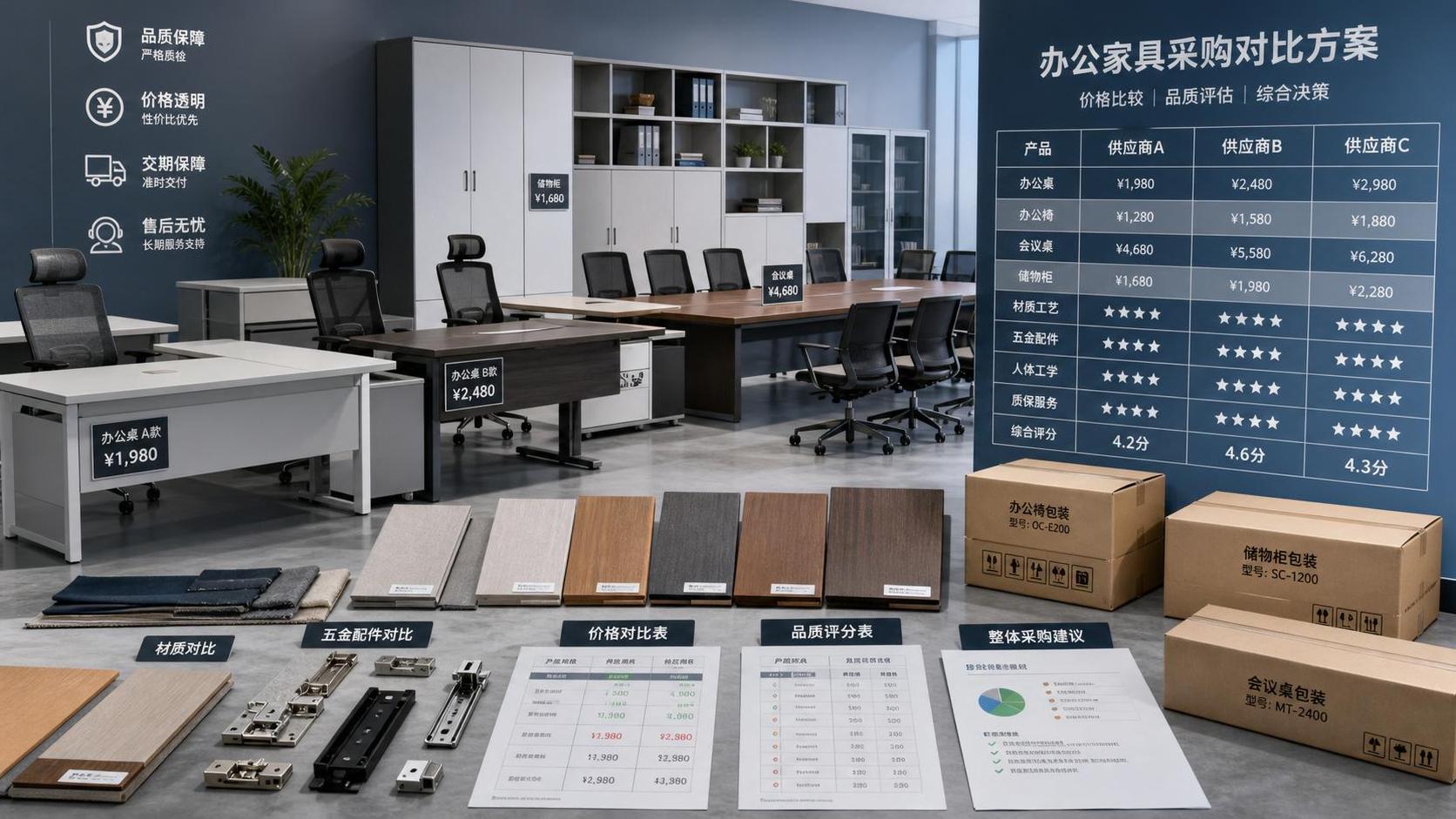
A single total number tells you very little. To avoid overpaying, break each quote into cost buckets that can be reviewed side by side.
Most office furniture price proposals should be separated into:
- Base product cost
- Material or finish upgrades
- Freight, packaging, and customs if applicable
- On-site delivery and installation
- Design adaptation or customization charges
- Warranty, maintenance, and spare parts support
This step often reveals why one quote looks much lower. Sometimes the supplier excluded installation. Sometimes cable management, edge protection, or accessories were removed.
In real procurement work, hidden exclusions are a major reason office furniture price looks inconsistent across bids. A structured cost matrix prevents that confusion.
Check the Quality Drivers Behind the Price
Not all office furniture price differences are unreasonable. Some reflect real value. The key is knowing which quality drivers truly matter for your project.
Focus first on material construction. Steel thickness, board density, laminate quality, edge banding, fabric grade, foam resilience, and mechanism reliability all affect durability.
Next, review ergonomic performance. Adjustable seating, sit-stand desks, monitor support, and posture-friendly dimensions can raise office furniture price but improve long-term usability.
Then assess finish consistency. For large office rollouts, visual alignment matters. Uneven colors or mismatched textures create rework, complaints, and replacement costs.
Ask suppliers for proof in these areas:
- Material specifications and test reports
- Warranty duration and coverage details
- Load, cycle, or abrasion performance data
- Reference projects with similar scale
A smart buyer compares office furniture price against measurable quality indicators, not marketing language. That is where real value becomes easier to judge.
Watch for Hidden Cost Drivers That Inflate Total Spend
Even when product pricing looks fair, total project spend can rise fast. Hidden cost drivers often appear after purchase approval, when change becomes expensive.
Common cost risks include:
- Non-standard dimensions that require site modification
- Long lead items that force phased installation
- Damage rates caused by weak packaging
- Limited local service for replacement parts
- Low-cost chairs with high failure frequency
This is especially important in multi-zone or fast-track projects. A low office furniture price can become expensive if it creates delays for MEP coordination or occupancy readiness.
One practical move is to ask every bidder for a risk note. Require them to state exclusions, assumptions, and possible variation triggers in writing.
Use a Weighted Evaluation Model Instead of Price Alone
When the decision is important, a weighted model creates better discipline. It keeps office furniture price central without letting it dominate every other requirement.
A simple model can score suppliers across price, quality, lead time, service capability, compliance, and design fit. Each area receives a clear percentage weight.
For example, office furniture price might hold 35%. Quality might carry 25%. Delivery reliability could take 15%, with the rest split across support and flexibility.
This kind of model is useful because it turns office furniture price comparison into a documented decision, not just a negotiation outcome.
Compare Suppliers by Procurement Reality, Not Catalog Promise
Catalog visuals can be polished, but procurement reality is different. What matters is whether the supplier can deliver at the expected office furniture price without execution gaps.
Review their manufacturing capacity, subcontracting dependence, quality control process, and regional delivery footprint. These factors shape reliability more than brochures do.
If possible, request mock-ups or sample units. A sample often exposes details that pricing sheets miss, such as wobble, finish flaws, or weak moving parts.
Useful supplier questions include:
- What is the average lead time by product family?
- Which components are imported or outsourced?
- How are defects handled after installation?
- Can the quoted office furniture price hold during project phasing?
These questions help you compare commercial stability, not just product appearance. That makes final pricing decisions much safer.
Negotiate Office Furniture Price Without Damaging Value
Good negotiation is not about squeezing every line item. It is about improving office furniture price while protecting function, quality, and supplier accountability.
Start with specification alignment. If three suppliers are quoting different standards, negotiate scope normalization before asking for price reductions.
Then explore cost-efficient adjustments. Standard finishes, modular sizes, bundled logistics, and phased production can reduce office furniture price without reducing usability.
Smart negotiation levers often include:
- Volume consolidation across departments or sites
- Alternative finishes with similar performance
- Reduced customization where visual impact is limited
- Extended warranty included at the same rate
- Spare units added for future maintenance flexibility
This approach keeps office furniture price discussions practical. It also reduces the chance of late-stage quality downgrades hidden behind a lower number.
Make the Final Decision With Total Value in Mind
The best office furniture price is the one that supports project success over time. It should fit budget targets, meet design intent, and reduce operational friction.
Before approval, review the full picture one more time. Confirm specification consistency, delivery plan, installation scope, warranty terms, and change-order exposure.
In many projects, the winning option is not the absolute lowest office furniture price. It is the bid that stays stable, performs well, and avoids expensive surprises.
That is where informed sourcing becomes a competitive advantage. Better comparison methods lead to better workplace outcomes and stronger capital efficiency.
If you want to avoid overpaying, compare office furniture price through scope, quality, risk, and lifecycle value together. That is how smart purchasing decisions hold up after installation day.