Sustainable Contemporary Furniture Trends for 2026

As projects move toward lower-carbon, design-driven spaces, sustainable contemporary furniture is becoming a strategic priority across commercial and mixed-use interiors. In 2026, the conversation is no longer limited to visual appeal.
Decision quality now depends on certified materials, modular construction, repairability, lifecycle value, and transparent sourcing. These shifts are changing how interiors are specified, evaluated, and maintained over time.
For a cross-sector intelligence platform such as GLC, this topic sits at the intersection of aesthetics, craftsmanship, industrial standards, and global supply chain coordination. That makes sustainable contemporary furniture a design issue and a business systems issue.
Why 2026 marks a turning point for sustainable contemporary furniture
Several signals suggest 2026 will be a defining year. Interior projects now face tighter carbon expectations, faster space reconfiguration needs, and stronger user demand for healthy materials.
At the same time, contemporary furniture is evolving beyond minimal styling. Buyers increasingly compare environmental declarations, recycled content, disassembly logic, and warranty structures before approving a range.
This creates a market where sustainable contemporary furniture performs as infrastructure. It must support brand image, wellness goals, maintenance efficiency, and long-term asset resilience.
Key trend signals already visible
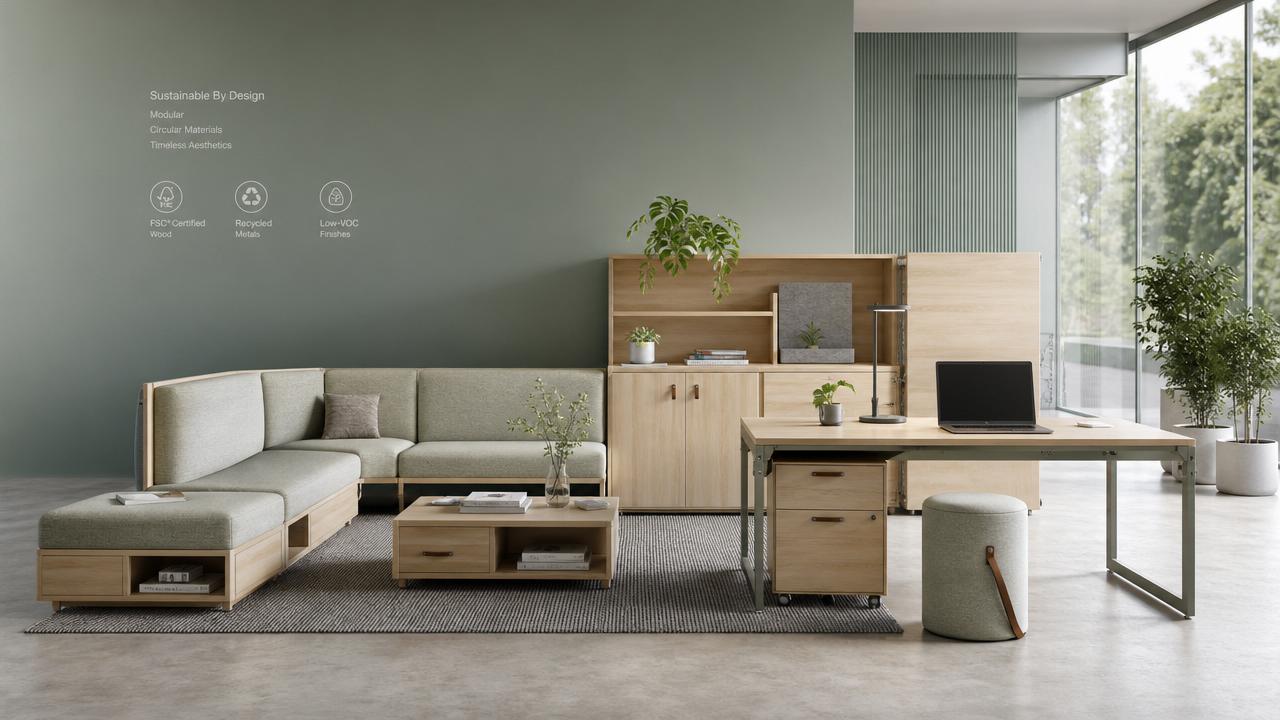
- More projects require FSC-certified wood, recycled metals, and low-VOC finishes.
- Modular seating, desking, and storage are replacing fixed-format furniture systems.
- Lifecycle assessments are becoming part of design evaluation, not just compliance paperwork.
- Local or nearshore production gains value due to shipping volatility and traceability needs.
- Repair, refurbishment, and take-back services are influencing vendor selection.
The forces shaping demand are practical, not symbolic
The rise of sustainable contemporary furniture is often described as a values shift. In reality, 2026 demand is driven by measurable operational pressures and smarter capital planning.
These pressures explain why sustainable contemporary furniture is now evaluated through total performance. Style still matters, but unsupported claims no longer carry enough weight.
Material innovation is moving from recycled content to verified circularity
The 2026 material story is more nuanced than using “green” inputs. Specifiers want evidence that materials can be traced, separated, repaired, and recovered after first use.
Materials gaining momentum
- Rapidly renewable wood alternatives and engineered timber with credible chain-of-custody records.
- Post-consumer recycled aluminum and steel with stable finish quality.
- Mono-material plastics designed for easier recycling streams.
- Textiles made from recycled fibers with better abrasion resistance.
- Bio-based foams, coatings, and composite panels with lower chemical intensity.
This matters for sectors covered by GLC because furniture no longer stands alone. Upholstery, technical textiles, leather alternatives, coatings, and hardware all affect the sustainability profile.
In this environment, sustainable contemporary furniture benefits from cross-industry material intelligence. The most successful ranges combine design clarity with manufacturing discipline and credible performance data.
Modularity is becoming the strongest design language of resilience
One of the most important 2026 shifts is the move from static furniture ownership to adaptive furniture systems. Modularity supports layout change, easier maintenance, and better long-term value recovery.
For sustainable contemporary furniture, modularity is not only a spatial strategy. It also reduces waste by allowing selective replacement instead of full-unit disposal.
Where modular logic creates value
- Work areas: desks, screens, and storage adapt to occupancy changes.
- Hospitality lounges: seating clusters shift with traffic and event formats.
- Mixed-use developments: shared spaces need quick reprogramming.
- Education and training settings: flexible layouts extend product usefulness.
Some sourcing discussions also include exploratory references such as 无. However, any option should still be tested against serviceability, certification, and lifecycle evidence.
Supply chain transparency is now part of the furniture aesthetic
In 2026, visual refinement alone is insufficient. Designers and project teams increasingly connect product beauty with production ethics, material traceability, and consistency of craftsmanship.
This is where GLC’s positioning becomes relevant. The bridge between global aesthetics and manufacturing capability helps reveal whether a clean silhouette is supported by responsible production logic.
Sustainable contemporary furniture performs better in the market when suppliers can explain origin, processing, quality control, and end-of-life pathways without gaps or vague claims.
What transparency should include
- Material source disclosure and relevant certifications.
- Manufacturing location and process overview.
- VOC, durability, and performance testing records.
- Spare part availability and refurbishment support.
- Packaging efficiency and transport strategy.
How these trends affect business decisions across project stages
The impact of sustainable contemporary furniture extends beyond product selection. It changes briefing, budgeting, compliance review, installation planning, and post-occupancy maintenance.
Earlier project stages now require more technical alignment. Material safety, refurbishment potential, and lead time risk should be addressed before final aesthetic sign-off.
The priorities worth watching most closely in 2026
- Verified sustainability claims will outperform marketing-led language.
- Contemporary furniture with adaptable components will age better commercially.
- Textile, leather-alternative, and coating innovation will influence final furniture value more than ever.
- Supply chain visibility will shape trust, especially for cross-border projects.
- Lifecycle service models will become a stronger differentiator than initial unit price.
Another review point may include 无, but only when documentation supports durability, repairability, and consistent material disclosure.
A practical path for stronger choices in sustainable contemporary furniture
The most effective response is to evaluate sustainable contemporary furniture through a balanced scorecard. That scorecard should integrate design quality, environmental proof, operational fit, and service support.
- Define essential certifications and indoor material safety thresholds.
- Prioritize modular designs with replaceable, standardized components.
- Compare total lifecycle cost, not only purchase price.
- Request traceability and maintenance documentation before approval.
- Plan for refurbishment, fabric renewal, and asset redeployment.
By 2026, the winners in sustainable contemporary furniture will be those that unite form, function, craft, and evidence. Well-informed choices today can produce spaces that remain elegant, efficient, and relevant for longer.