Workspace Solutions That Actually Improve Daily Focus

In today’s fast-changing work environment, workspace solutions are no longer just about furniture or layout—they directly shape focus, comfort, and daily efficiency. For researchers and industry observers, understanding how design, ergonomics, and smart space planning work together reveals why some offices support better concentration while others create constant distraction. This article explores practical insights behind workspace solutions that truly improve everyday focus.
Why scenario differences matter when evaluating workspace solutions
Not every workplace loses focus for the same reason. In one office, noise may be the core issue. In another, poor seating posture, harsh lighting, or fragmented team flow may be the real cause. That is why effective workspace solutions should never be judged only by appearance, price, or trend value. They need to be assessed by use case: who works there, what tasks are repeated daily, how often collaboration interrupts deep work, and how physical space supports or weakens attention.
This scenario-based view is especially relevant in modern industries connected to office furniture, space architecture, craftsmanship, and workplace design. From executive rooms and research zones to hybrid collaboration areas and small creative studios, the same product category can produce very different outcomes depending on layout logic and human behavior. For information researchers, this is where workspace solutions become more than a procurement topic; they become a practical lens for understanding productivity, design value, and space efficiency.
The most common focus-related workplace scenarios
To understand which workspace solutions actually improve concentration, it helps to break the topic into typical environments. Focus problems often appear in predictable patterns, and each pattern requires a different response.
1. Open-plan offices with frequent interruptions
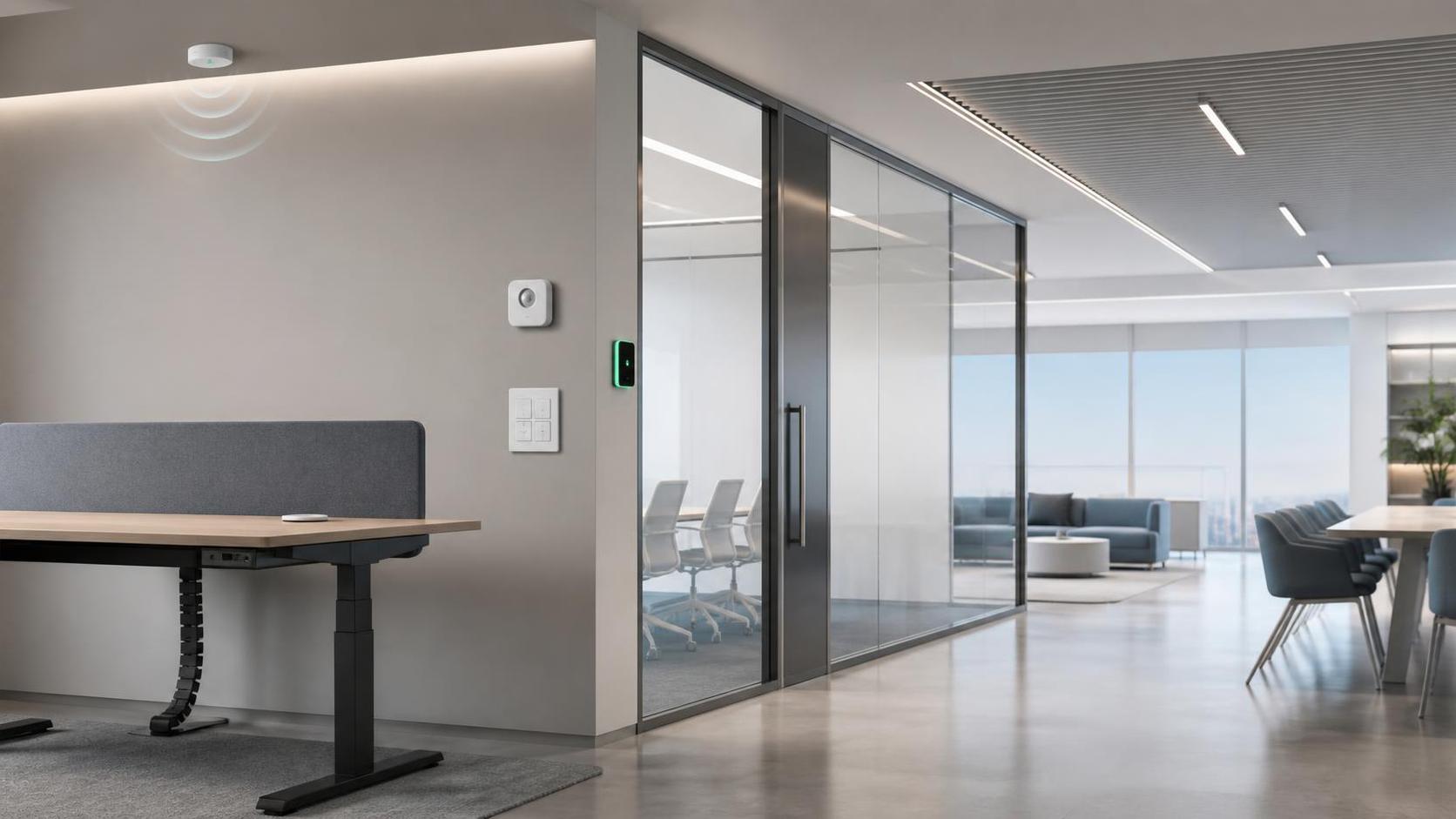
Open-plan environments are designed for communication and efficient use of floor area, but they often reduce sustained attention. Conversations, movement in peripheral vision, phone calls, and ad hoc discussions all compete for mental bandwidth. In this scenario, workspace solutions should emphasize acoustic control, visual zoning, and flexible quiet areas rather than simply adding more desks.
2. Hybrid offices balancing solo work and team sessions
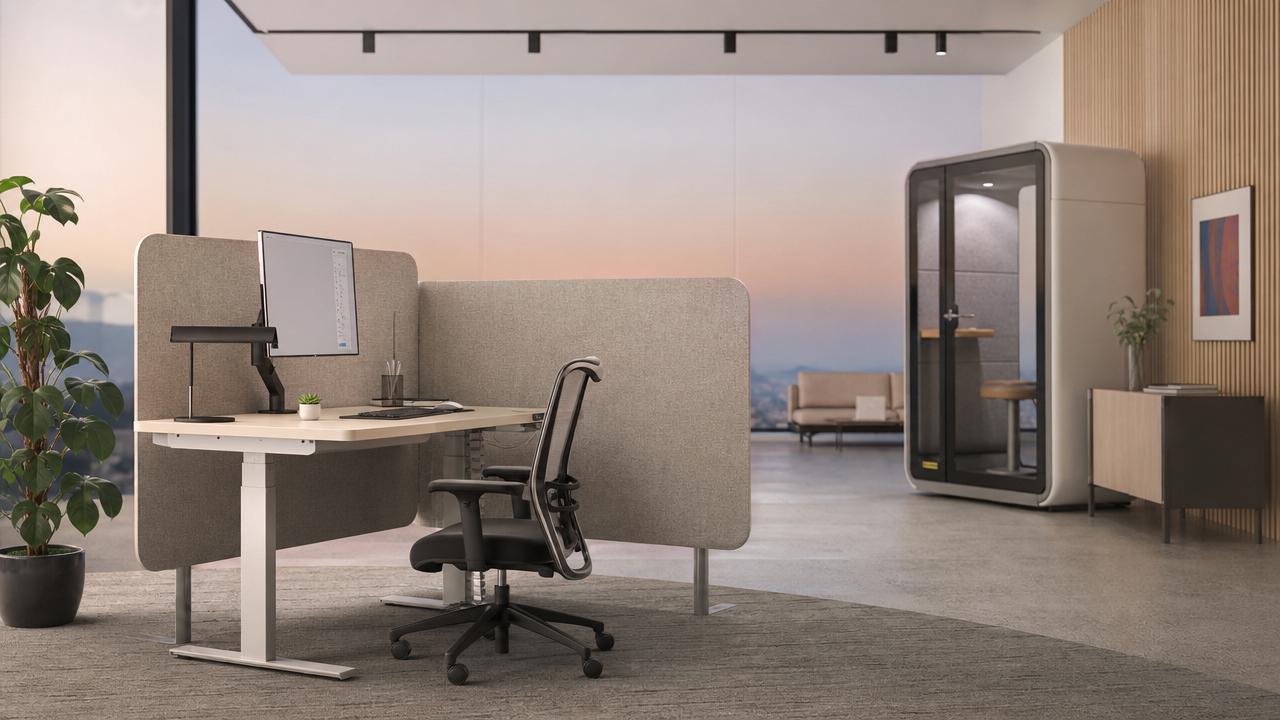
Hybrid work has created a dual-purpose office. Some people come in for meetings, while others need deep-focus time away from home distractions. Here, workspace solutions must support rapid mode switching. Spaces should transition smoothly from collaborative use to concentrated work through movable partitions, reservable pods, adaptable seating, and clearly separated sound zones.
3. Executive and managerial spaces requiring private decision time
Leaders often need confidentiality, quiet analysis, and short, high-value interactions. Workspace solutions for this group should prioritize privacy, controlled access, comfortable posture for long review sessions, and integrated technology that does not create visual clutter. Focus here is less about isolation alone and more about reducing decision fatigue.
4. Creative teams needing both stimulation and control
Design, branding, and content teams often benefit from energetic settings, but too much stimulation can undermine completion work. Effective workspace solutions in this context combine shared ideation surfaces, pin-up walls, and collaborative tables with retreat zones for editing, writing, and detail review. The best environment allows creative expansion without making every task public and noisy.
5. Small businesses with limited floor space
Smaller companies often assume focus problems are unavoidable because space is tight. In reality, compact environments can perform well if workspace solutions are selected by task priority. Multi-functional furniture, vertical storage, cable discipline, and clear traffic paths usually matter more than expensive full-scale renovation.
A practical comparison table for scenario-based selection
The table below shows how focus needs change across common workplace scenarios and what decision-makers should examine first.
What different users should look for in workspace solutions
A strong office environment serves different user groups without forcing everyone into one working style. When evaluating workspace solutions, it helps to identify the main user profile first.
Researchers and analysts
These users need long periods of uninterrupted concentration. They benefit most from lighting consistency, low-noise zones, supportive seating, monitor positioning, and minimal foot traffic. For this group, even a visually attractive office can fail if the environment produces constant micro-distractions.
Sales and client-facing teams
Their focus needs are linked to responsiveness. They often need fast access to communication tools, small meeting areas, and brief reset zones between calls. Workspace solutions should support quick transitions without exposing every conversation to the full office.
Designers and product developers
This group usually requires more surface area, visual reference space, and room for materials or prototypes. The ideal workspace solutions provide both display-friendly collaboration areas and calm refinement spaces for technical detailing.
Administrators and operations staff
Operational teams often lose focus through repetitive interruptions and document handling. Their environment benefits from workflow mapping: storage near task points, easy-access filing, ergonomic repetition support, and circulation that prevents bottlenecks.
The design factors that most influence daily concentration
Across industries, several physical and operational variables repeatedly determine whether workspace solutions truly improve focus.
Acoustics
Sound control is often the fastest route to better concentration. Soft surfaces, partitions, ceiling treatment, enclosed call areas, and distance between active and quiet functions all matter. A common mistake is investing in premium furniture while ignoring the acoustic profile of the room.
Ergonomics
Poor posture drains focus gradually. Adjustable chairs, proper desk height, screen alignment, and sit-stand flexibility reduce fatigue and help users maintain attention over longer sessions. In sectors tied to office and space architecture, this is where craftsmanship quality and functional design directly meet user outcomes.
Lighting
Focus improves when lighting supports the task rather than dominating it. Glare, dim corners, and uneven brightness contribute to eye strain. Good workspace solutions consider daylight orientation, screen reflection, layered task lighting, and color temperature matched to work intensity.
Layout logic
The strongest layouts reduce unnecessary movement and unplanned interruption. People should not have to cross quiet zones to reach printers, coffee points, or collaboration corners. Focus is easier to protect when circulation is designed with behavior in mind, not only visual symmetry.
Common misjudgments when choosing workspace solutions
Many projects fail because the wrong problem is being solved. The following errors appear often in office upgrades and furniture selection.
- Assuming open visibility always improves teamwork, when it may actually increase distraction.
- Treating ergonomic chairs as a complete answer while ignoring lighting, acoustics, and workflow friction.
- Copying large-company design trends into small offices without considering occupancy density and task type.
- Purchasing beautiful modular elements that do not match actual work routines.
- Evaluating space only during quiet periods instead of peak interruption times.
In some sourcing discussions, teams may briefly review general product references such as 无, but the stronger approach is to translate every option into real-use conditions before comparing materials, finishes, and cost.
How to match workspace solutions to business scale and operational reality
Business size changes what “good focus support” looks like. A startup may need adaptability above all else. A mature company may need consistent standards across departments. A research-driven organization may prioritize quiet specialization over visual branding.
For smaller firms, the best workspace solutions are often phased rather than fully built at once. Start with the highest-friction points: noise, seating discomfort, cable disorder, or lack of private call space. For medium-sized companies, zoning strategy becomes more important because different teams begin to compete for the same environment. For larger organizations, governance matters: booking systems, behavioral rules, acoustic protocols, and maintenance standards become part of the solution, not an afterthought.
This is also where the broader industry perspective matters. Platforms that connect global aesthetics, craftsmanship, office furnishing intelligence, and manufacturing logic help decision-makers evaluate not just design trends but also durability, ergonomic credibility, and long-term usability. That connection between beauty and function is central to sustainable workspace planning.
A simple checklist before making a workspace decision
Before selecting workspace solutions, confirm these questions:
- Which tasks require deep work, and when do they happen?
- Where do interruptions originate most often: people, devices, layout, or noise?
- Do different teams need different space behaviors, or is one standard enough?
- What can be improved quickly through zoning and furniture, without full renovation?
- How will success be measured: fewer interruptions, longer focus time, less fatigue, or better occupancy flow?
FAQ: practical questions researchers often ask about workspace solutions
Are workspace solutions mainly about furniture?
No. Furniture is only one layer. Effective workspace solutions combine ergonomics, acoustics, lighting, movement paths, and behavior rules. A good chair cannot compensate for a disruptive layout.
Which scenario benefits most from immediate intervention?
Open-plan offices with recurring noise issues usually show the fastest gains from targeted changes. Even modest acoustic and zoning improvements can noticeably improve concentration.
Can small offices use the same workspace solutions as larger companies?
They can use the same principles, but not always the same products or layouts. Small offices need compact, high-efficiency answers tailored to real task patterns.
Final takeaway: focus improves when the space fits the work
The most effective workspace solutions are not the most expensive or the most visually impressive. They are the ones that align space with actual work behavior. For researchers, buyers, and workplace planners, the right question is not “What is trending?” but “Which scenario are we solving, for whom, and under what daily conditions?”
If you are comparing workplace design directions, start by mapping your dominant focus barriers, user groups, and operating patterns. Once those are clear, workspace solutions become easier to judge, easier to prioritize, and far more likely to deliver measurable improvements in concentration, comfort, and everyday efficiency.