Outdoor Clothing Brands Compared by Durability and Weather Protection

For technical evaluators, outdoor clothing brands are judged by measurable performance, not slogans. Durability and weather protection depend on fabric denier, membrane quality, seam sealing, DWR stability, and long-term field behavior.
This guide compares outdoor clothing brands through a practical FAQ structure. It helps clarify which labels perform best in rain, abrasion, cold exposure, and repeated use across outdoor and lifestyle applications.
What makes outdoor clothing brands truly durable?
Durability starts with material engineering. Face fabric weight, yarn structure, ripstop grids, and reinforcement zones determine resistance to tearing, scuffing, and pack abrasion.
Construction quality matters equally. Strong seam allowances, bartack reinforcement, smooth zipper integration, and stable lamination all extend product life under stress.
Among outdoor clothing brands, durability leaders often include Arc'teryx, Fjällräven, Patagonia, and Rab. Each approaches toughness differently, balancing technical fabrics with intended use.
- Arc'teryx emphasizes precise patterning, strong laminates, and clean seam execution.
- Fjällräven is known for hard-wearing G-1000 fabrics and repair-friendly design.
- Patagonia often balances recycled materials with reliable long-term wear.
- Rab focuses on mountain-driven construction for rough, repeated exposure.
Not all durable garments feel heavy. Some outdoor clothing brands use lightweight textiles with advanced weave density, creating strong shells without excessive bulk.
Which outdoor clothing brands offer the best weather protection?
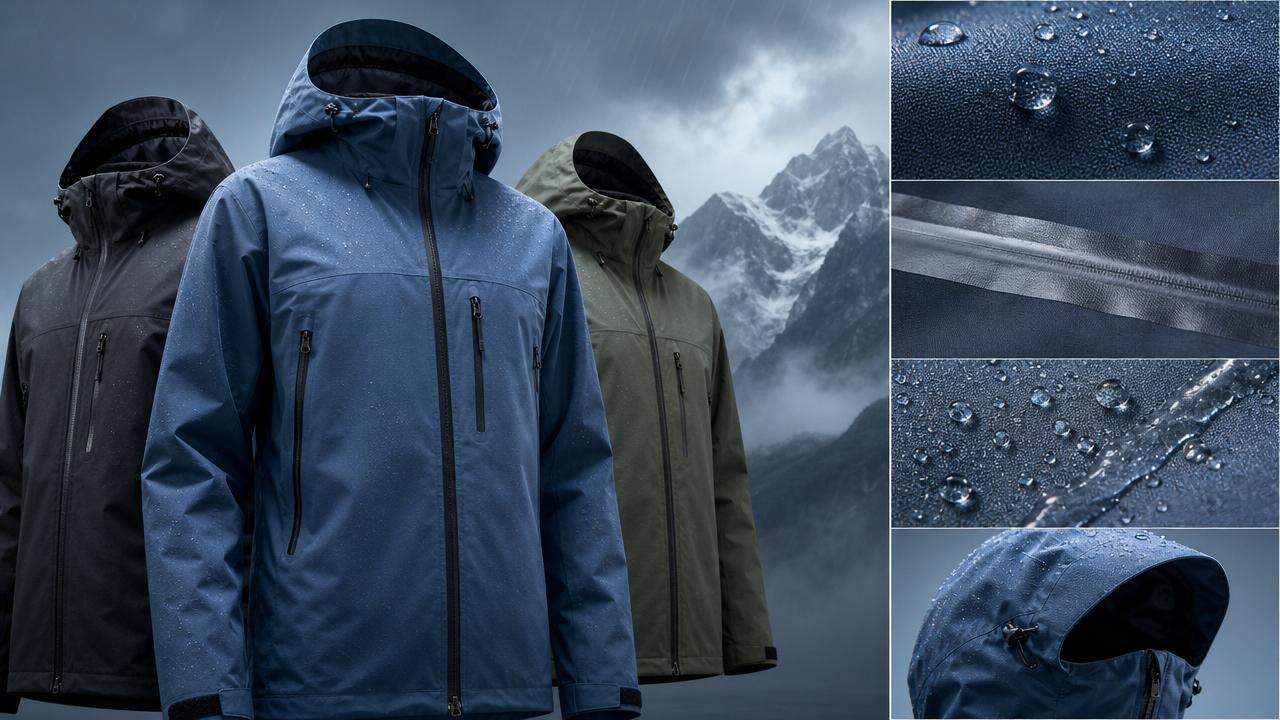
Weather protection depends on more than waterproof ratings. Real performance includes hydrostatic resistance, wind blocking, seam sealing reliability, hood coverage, and moisture vapor management.
For severe wet conditions, Arc'teryx, Norrøna, Mountain Equipment, and Patagonia are often strong references. Their premium shells usually combine proven membranes with thoughtful storm-oriented construction.
In mixed weather, outdoor clothing brands using hybrid systems can be more practical. Softshells, waxed fabrics, or mechanical stretch weaves may outperform rigid rain shells during active movement.
Weather protection should be matched to exposure type. Constant rain, dry snow, alpine wind, and intermittent drizzle require different fabric strategies and garment architecture.
How should outdoor clothing brands be compared across different use scenarios?
The best outdoor clothing brands vary by scenario. A jacket for city commuting in wet weather is not judged the same way as one used for climbing or multi-day trekking.
For backpacking, weight-to-protection ratio matters. Rab, Patagonia, and Mountain Hardwear often score well when packability and weather defense must coexist.
For rugged trekking and repeated contact with rock, brush, or camp equipment, Fjällräven and Arc'teryx usually rank strongly due to fabric toughness and stable construction.
For lifestyle crossover use, outdoor clothing brands like Patagonia, The North Face, and Helly Hansen often offer broader styling while retaining practical rain and wind performance.
Cold-weather performance also differs. Some brands excel in insulated layering systems, while others focus on shell-only architecture for flexible thermal management.
Scenario-based comparison points
- Urban rain: prioritize comfort, quiet fabric, moderate waterproofing, simple care.
- Mountain use: prioritize seam integrity, hood design, harness compatibility, abrasion resistance.
- Travel use: prioritize packability, wrinkle control, quick drying, repair support.
- Work and field logistics: prioritize lifespan, easy maintenance, and replacement consistency.
What are the biggest differences between premium and mid-range outdoor clothing brands?
Premium outdoor clothing brands usually invest more in pattern engineering, membrane licensing, laboratory testing, and precision manufacturing. This often improves mobility, sealing consistency, and long-term reliability.
Mid-range brands can still perform very well. Columbia, Marmot, and Helly Hansen often deliver practical protection for moderate exposure at a more accessible price.
The gap becomes clear under repeated stress. Premium shells generally retain weather resistance and structural stability longer after abrasion, compression, and washing cycles.
However, expensive does not always mean better for every task. If use is occasional, some mid-range outdoor clothing brands offer stronger value than elite alpine-focused products.
What mistakes happen when evaluating outdoor clothing brands?
A common mistake is overvaluing a single specification. A high waterproof number means little if seam tape fails, fit restricts layering, or vents are poorly positioned.
Another mistake is ignoring maintenance. Many outdoor clothing brands rely on correct washing and reproofing to preserve breathability and water beading.
Some comparisons also confuse toughness with protection. Heavy canvas-like fabric may resist abrasion but offer limited waterproof performance during sustained rainfall.
Brand reputation should not replace use-case matching. The right product depends on climate, activity level, repair expectations, and lifecycle cost.
Quick risk reminders
- Do not compare insulated jackets directly with shell jackets.
- Do not judge outdoor clothing brands only by online ratings.
- Do not ignore repair programs and spare-part availability.
- Do not assume sustainable materials always reduce durability.
How can outdoor clothing brands be assessed for long-term value?
Long-term value combines purchase cost, service life, maintenance needs, and functional consistency. The cheapest option can become the most expensive after repeated replacement.
Outdoor clothing brands with repair support often create better lifecycle economics. Patagonia and Fjällräven are frequently recognized for product care and longevity programs.
Value also includes versatility. A shell that works across commuting, hiking, and travel may outperform a specialized garment used only twice a year.
From an industry perspective, GLC encourages evaluation that connects aesthetics, craftsmanship, and material standards. Good design should not be separated from dependable manufacturing logic.
When comparing outdoor clothing brands, focus on evidence from fabric construction, weather testing, wear cycles, and maintenance demands. The strongest choice is the one aligned with actual exposure, not marketing intensity.
Use this framework to shortlist options, review technical specifications, and test fit and layering compatibility. Better decisions come from linking performance claims with craftsmanship reality and long-term value.