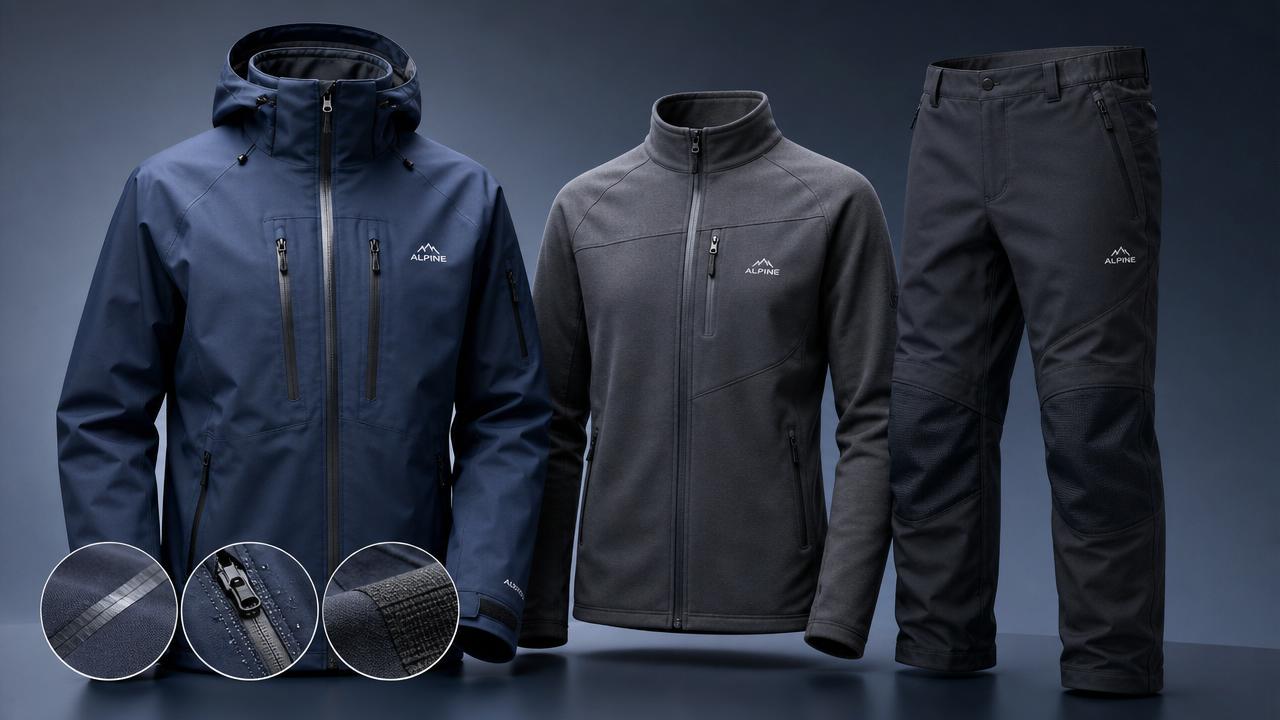
Waterproof Outdoor Clothing: What Performance Specs Really Matter

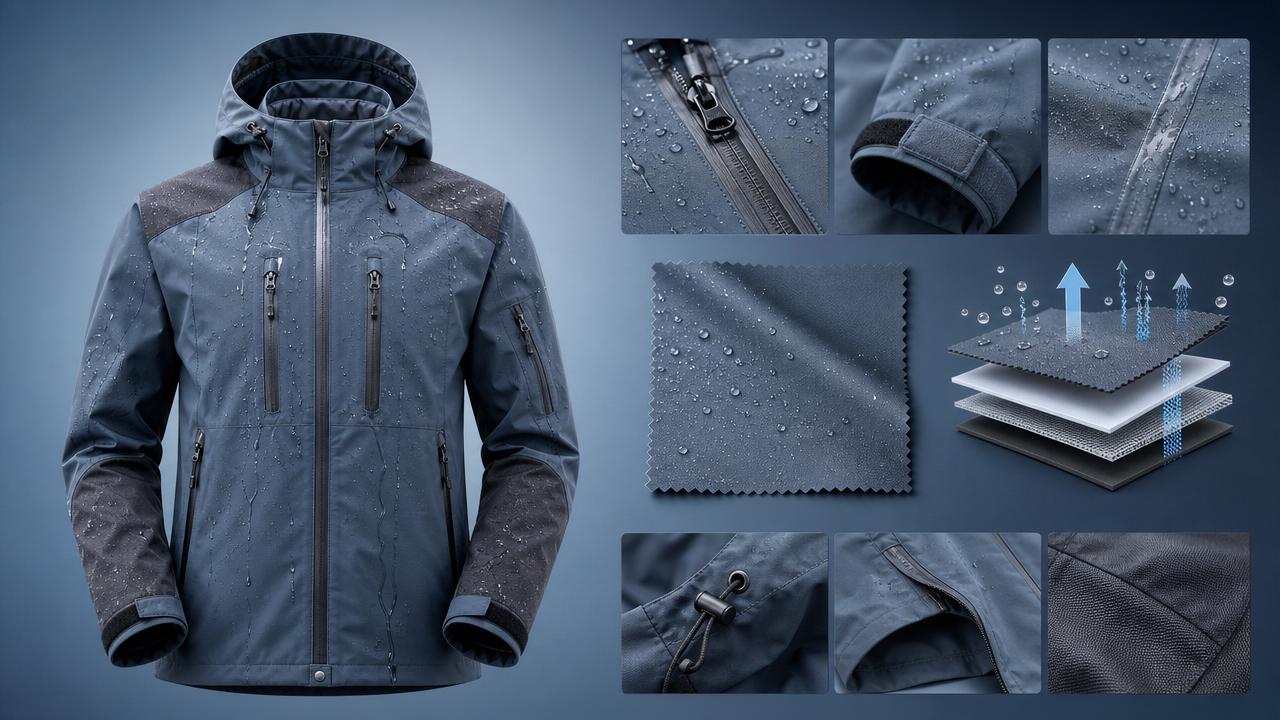
When evaluating waterproof outdoor clothing, headline claims rarely tell the full story. A jacket marked “waterproof” may still fail under pack pressure, wet out after abrasion, or trap moisture during movement. Real comparison depends on measurable specifications: hydrostatic head, moisture vapor transfer, seam construction, durable water repellent performance, and the stability of face fabrics over time. Understanding these indicators helps reduce sourcing risk and match garments to true outdoor-use demands.
Why a Checklist Matters for Waterproof Outdoor Clothing
Technical outerwear sits at the intersection of textile science, product design, and field performance. In the broader lifestyle and soft-goods market, appearance influences selection, but lab-backed function determines long-term value.
A checklist approach prevents decisions based on one attractive number. High hydrostatic head alone does not guarantee comfort. Strong breathability alone does not guarantee storm protection. Durable waterproof outdoor clothing must balance protection, comfort, mobility, and service life.
It also creates a common evaluation language across apparel development, sourcing, testing, and market positioning. That matters in an industry where technical fabrics, coatings, laminates, trims, and construction quality all affect final performance.
Core Checklist: Performance Specs That Really Matter
Use the following checklist to compare waterproof outdoor clothing beyond marketing language and surface-level feature lists.
- Check hydrostatic head first. Confirm whether the fabric resists standing water pressure at realistic levels, especially for kneeling, shoulder load, and prolonged rain exposure.
- Verify breathability with test method details. Compare MVTR or RET values only when the same standard is used, because cross-method results can mislead selection.
- Inspect seam sealing quality. Even strong membrane fabrics fail if tape width, adhesion, seam density, or stitch consistency are poorly controlled.
- Evaluate face fabric denier and abrasion resistance. Surface damage often drives early failure in waterproof outdoor clothing, especially in hiking, worksite, and mixed-use garments.
- Review DWR durability, not just initial repellency. A garment that beads water on day one but wets out after several washes loses real weather performance fast.
- Confirm membrane or coating type. PU coatings, ePTFE laminates, polyester membranes, and hybrid systems differ in breathability, care requirements, and long-term stability.
- Assess construction zones under pressure. Hoods, shoulder panels, cuffs, front plackets, and pocket openings often reveal whether design supports actual outdoor use.
- Measure air permeability where relevant. Some active-use shells intentionally allow limited airflow, balancing weather resistance with better thermal and moisture management.
- Check weight against use case. Ultralight fabrics improve packability, but heavier textiles may deliver better puncture resistance and lifespan in rough environments.
- Confirm care-cycle retention. Reliable waterproof outdoor clothing should maintain key performance after repeated washing, drying, and moderate contamination exposure.
How to Read the Main Specs Correctly
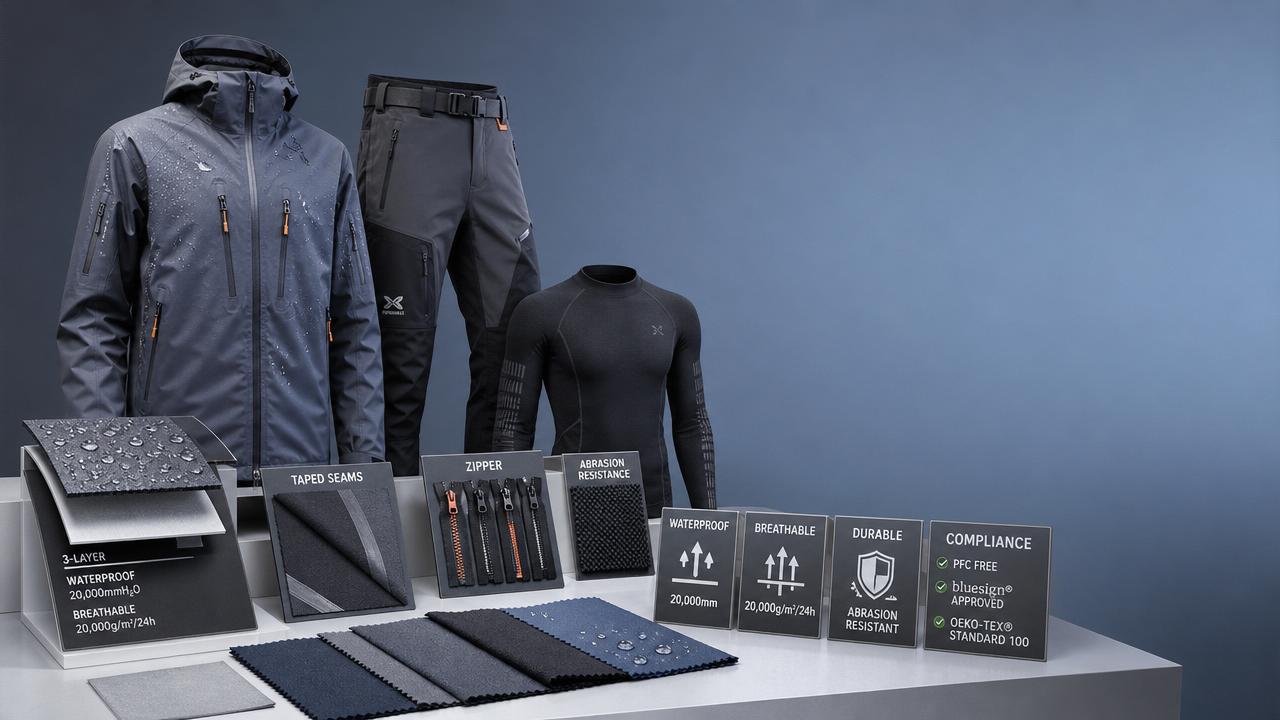
Hydrostatic head is usually expressed in millimeters. Entry rainwear may perform around 5,000 mm, while more protective shells often target 10,000 mm to 20,000 mm or higher. For sustained mountain rain, seated pressure, or backpack friction, lower figures can become inadequate.
Breathability needs careful interpretation. MVTR is often shown as grams per square meter per 24 hours, while RET measures evaporative resistance. Higher MVTR is generally better; lower RET is generally better. However, these values are only comparable within matching test conditions.
Seam sealing is non-negotiable in true rain protection. Critical-seam sealing may suit limited exposure, but fully taped seams are expected in serious waterproof outdoor clothing. Tape delamination, skipped sections, and poor adhesive bonding are frequent weak points.
Face fabric durability shapes the user experience more than many spec sheets admit. Once the outer fabric abrades or wets out heavily, perceived breathability drops, the garment feels colder, and drying time increases.
Scenario-Based Guidance for Different Outdoor Uses
Hiking and Trekking
For hiking, balance matters more than extreme lab numbers. Look for waterproof outdoor clothing with reliable hydrostatic head, solid seam taping, and enough breathability for uphill movement. Shoulder abrasion resistance is especially important because of pack contact.
Ventilation features also matter here. Pit zips, two-way front zippers, and adjustable cuffs can compensate when membrane breathability alone cannot keep pace with high exertion.
Camping and Leisure Outdoor Use
Camping garments often face intermittent rain, campfire smoke, dirt, and repeated packing. In this case, durable DWR, easy-care construction, and moderate abrasion resistance may be more valuable than chasing the highest possible breathability score.
Comfort details deserve attention. Hood adjustability, fabric hand feel, lining stability, and quieter face fabrics improve practical satisfaction in broader outdoor lifestyle applications.
Marine, Water Sports, and Heavy Wet Exposure
These environments demand stronger waterproof margins. Spray, wind, and contact pressure raise performance requirements. Prioritize high hydrostatic head, corrosion-resistant trims, robust seam sealing, storm flaps, and secure cuff closures.
In such conditions, waterproof outdoor clothing with weak seam execution or unstable coatings may fail even if the advertised membrane rating looks impressive on paper.
Urban Commute and Cross-Category Lifestyle Wear
Not every rain shell needs expedition-level protection. For commuter and lifestyle use, evaluate appearance retention, wrinkle resistance, noise level, and wash durability alongside waterproof performance.
This is where design and craftsmanship become commercially important. Technical credibility must coexist with wearable aesthetics, especially in cross-over apparel categories connecting outdoor function with everyday use.
Commonly Overlooked Risks
Ignoring test standards: A 20,000 g MVTR result from one method may not outperform a lower result from another method. Always confirm the standard before comparing fabrics.
Confusing water resistance with waterproofing: Some products repel light rain but cannot withstand prolonged exposure or pressure. That distinction matters in all serious waterproof outdoor clothing assessments.
Overvaluing membrane branding: A premium membrane does not guarantee premium garment performance. Pattern design, seam work, zipper protection, and finishing quality remain decisive.
Neglecting DWR maintenance: Even a waterproof laminate can feel compromised after the face fabric wets out. End-use care guidance is part of performance, not an afterthought.
Missing durability trade-offs: Lightweight shells can benchmark well in lab tests but underperform in rough, repeated, or abrasive real-world use.
Practical Execution Advice
- Start with the use case. Define rain intensity, movement level, wear duration, and abrasion risk before reading any fabric data.
- Compare only aligned test results. Group hydrostatic head, MVTR, RET, and abrasion figures by method and sample condition.
- Request construction details. Ask for seam map, tape specification, zipper type, DWR chemistry, and wash-retention information.
- Review the full garment, not just fabric swatches. Performance failures often come from patterning, components, and assembly execution.
- Run simple field checks. Test shoulder wet-out, hood coverage, cuff leakage, and post-wash repellency under realistic conditions.
In integrated textile and outdoor product development, the strongest decisions come from combining laboratory data, craftsmanship review, and real-use simulation. That approach aligns functional claims with market credibility and long-term product value.
Conclusion and Next Steps
Waterproof outdoor clothing should never be judged by a single headline number. The most reliable assessment combines hydrostatic head, breathability method, seam sealing quality, face fabric durability, DWR retention, and use-specific construction details.
Use this checklist to separate real technical performance from surface-level claims. Then match each specification to the intended environment, from hiking and camping to marine exposure and urban outdoor lifestyle use.
The next practical move is simple: build a comparison sheet with standardized test methods, construction notes, and post-wash performance data. That single step makes waterproof outdoor clothing evaluation more accurate, more defensible, and far more useful in real product decisions.