
Apparel Supply Chain Risks That Disrupt Cost and Delivery

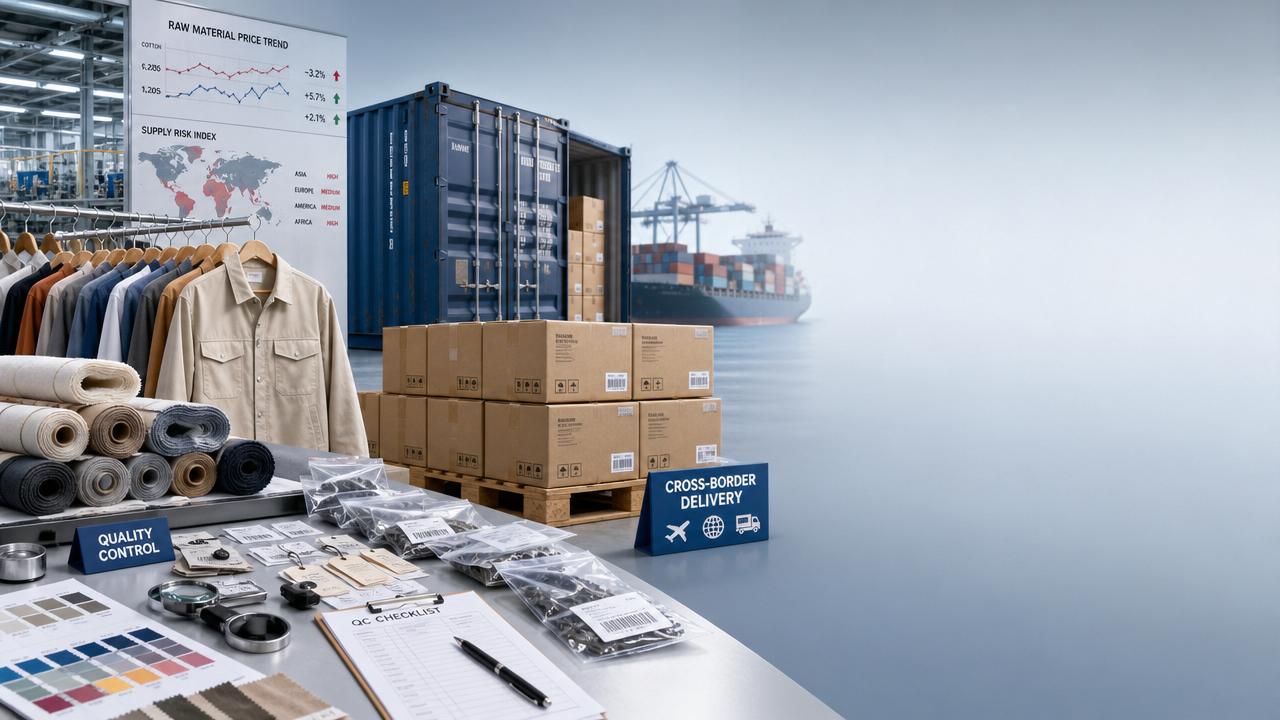
Apparel Supply Chain Risks That Disrupt Cost and Delivery
In today’s volatile market, apparel supply chain disruptions can quickly erode margins, delay delivery, and weaken brand trust.
For teams managing timelines, suppliers, and cross-border execution, small gaps often become expensive problems.
The good news is that most apparel supply chain risks are visible early, if the right signals are tracked.
This article breaks down the main pressure points and shows practical ways to protect cost, speed, and delivery reliability.
Why the Apparel Supply Chain Breaks More Easily Than Expected
The apparel supply chain looks simple from a distance. In reality, it is a layered system with many weak links.
Fabric mills, trim suppliers, dye houses, factories, freight partners, and customs teams all affect delivery.
A delay in one stage often spreads across every later milestone.
This is especially true for seasonal programs, promotional launches, and short replenishment cycles.
In practical terms, apparel supply chain resilience depends on visibility, flexibility, and fast decisions, not just low unit cost.
The Biggest Apparel Supply Chain Risks Behind Cost Overruns
1. Raw Material Price Volatility
Cotton, polyester, wool, and specialty fibers rarely stay stable for long.
Energy prices, crop conditions, and petrochemical fluctuations can change fabric costs within weeks.
When forecasting is weak, margin pressure appears long before production starts.
2. Single-Source Dependency
Many apparel supply chain programs rely on one factory, one mill, or one region.
That works until labor shortages, power limits, policy changes, or local disruptions hit.
Then the business discovers that low cost came with hidden concentration risk.
3. Weak Demand Planning
Forecast errors distort every stage of the apparel supply chain.
Overbuying creates excess inventory, markdown risk, and cash pressure.
Underbuying forces rush orders, air freight, and overtime production.
4. Quality Failure and Rework
Shade variation, shrinkage, stitching defects, and trim mismatch can destroy schedule discipline.
Rework is expensive because it affects inspection, packing, shipping, and customer commitments at the same time.
5. Freight and Port Instability
Ocean capacity, port congestion, customs checks, and trucking delays still create major uncertainty.
Even when production finishes on time, the apparel supply chain can still miss delivery windows during transit.
Delivery Risks That Quietly Damage Service Performance
Cost issues are visible fast. Delivery risk often grows more quietly.
A missed approval, a delayed lab dip, or late fabric booking may seem minor at first.
More often than not, those small slips consume the schedule buffer.
Once that buffer disappears, every issue becomes urgent and more expensive.
- Late sample approvals slow bulk production start dates.
- Incomplete tech packs create repeated factory questions.
- Trim shortages hold finished goods at packing stage.
- Poor milestone tracking hides schedule drift until recovery becomes difficult.
In a complex apparel supply chain, delay is rarely caused by one dramatic event. It is usually the sum of unmanaged small issues.
How Compliance and Sustainability Risks Affect Cost and Delivery
Compliance is no longer a side topic in the apparel supply chain.
Chemical restrictions, traceability rules, labor standards, and origin documentation now influence shipment readiness.
When records are incomplete, goods may be delayed, relabeled, retested, or rejected.
That creates extra cost and weakens confidence across the supply base.
Sustainability adds another layer. Recycled inputs, certified fibers, and low-impact processing are valuable, but they require control.
Without verified chain-of-custody data, sustainability claims can become a commercial and reputational risk inside the apparel supply chain.
A Practical Risk Control Framework for the Apparel Supply Chain
The most effective response is not one tool. It is a working system.
A strong apparel supply chain framework combines planning discipline, supplier governance, and real-time escalation.
Build Earlier Visibility
Track raw material booking, sample approval, lab testing, production start, inspection, and vessel cutoff in one view.
If one milestone moves, the impact on later dates should be visible immediately.
Segment Suppliers by Risk
Not every supplier should be managed the same way.
Critical apparel supply chain partners need deeper review of capacity, financial health, compliance, and lead-time stability.
Create Dual Sourcing Where It Matters
Dual sourcing does not need to cover every item.
Start with core fabrics, strategic trims, and high-volume programs where disruption cost is highest.
Use Exception-Based Reviews
Weekly status meetings often waste time when everything receives equal attention.
A better apparel supply chain approach is to review only exceptions, root causes, owners, and recovery dates.
Warning Signals Worth Tracking Every Week
From recent market shifts, the clearest signal is speed of change.
That means weekly monitoring matters more than static quarterly reviews.
These signals help teams act before apparel supply chain disruption turns into missed revenue.
How to Reduce Apparel Supply Chain Risk Without Slowing the Business
The goal is not to remove every risk. That is impossible.
The goal is to make the apparel supply chain faster at seeing, absorbing, and recovering from disruption.
- Map the full supply chain, including mills, trim vendors, subcontractors, and logistics handoffs.
- Define critical path milestones with clear owners and non-negotiable review dates.
- Set threshold alerts for delays, quality drift, testing issues, and booking changes.
- Maintain backup options for key materials and urgent freight decisions.
- Review post-season failures and convert them into sourcing and planning rules.
This also means using better industry intelligence.
Platforms like GLC help connect design direction, manufacturing capability, and supply-side change in one business view.
That matters because an apparel supply chain decision is rarely just operational.
It often affects product positioning, sustainability goals, factory relationships, and brand timing all at once.
Final Takeaway
Apparel supply chain risk is not only about disruption. It is about readiness.
The strongest teams do not wait for late shipments, cost spikes, or audit failures to react.
They build visibility early, diversify where needed, and manage exceptions with discipline.
In a fast-moving apparel supply chain, that approach protects margin, improves delivery confidence, and supports long-term growth.
If the next step is clearer risk mapping and better supplier insight, now is the right time to put that system in place.