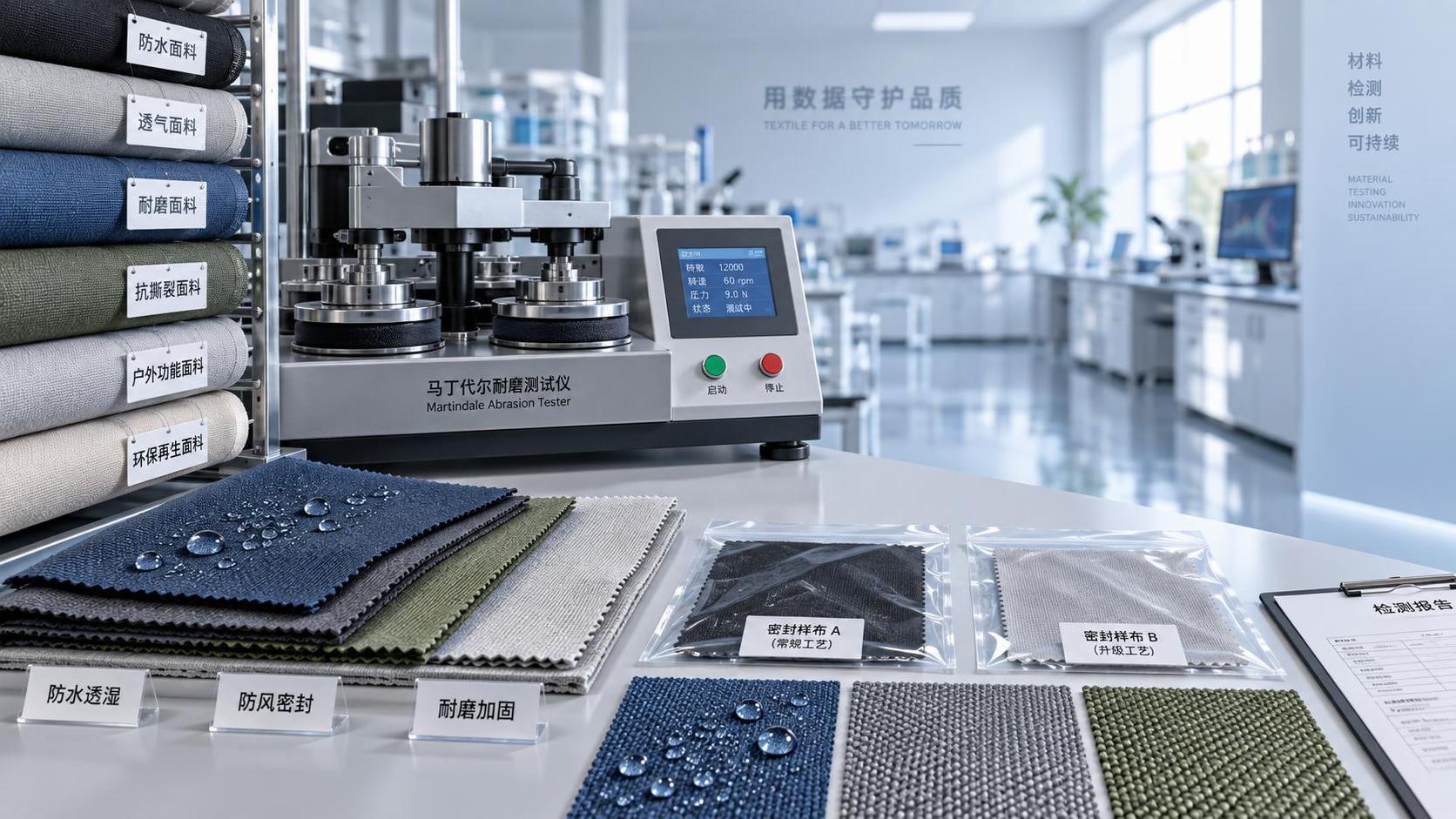
Performance Technical Comparison: Which Fabric Metrics Matter Most?

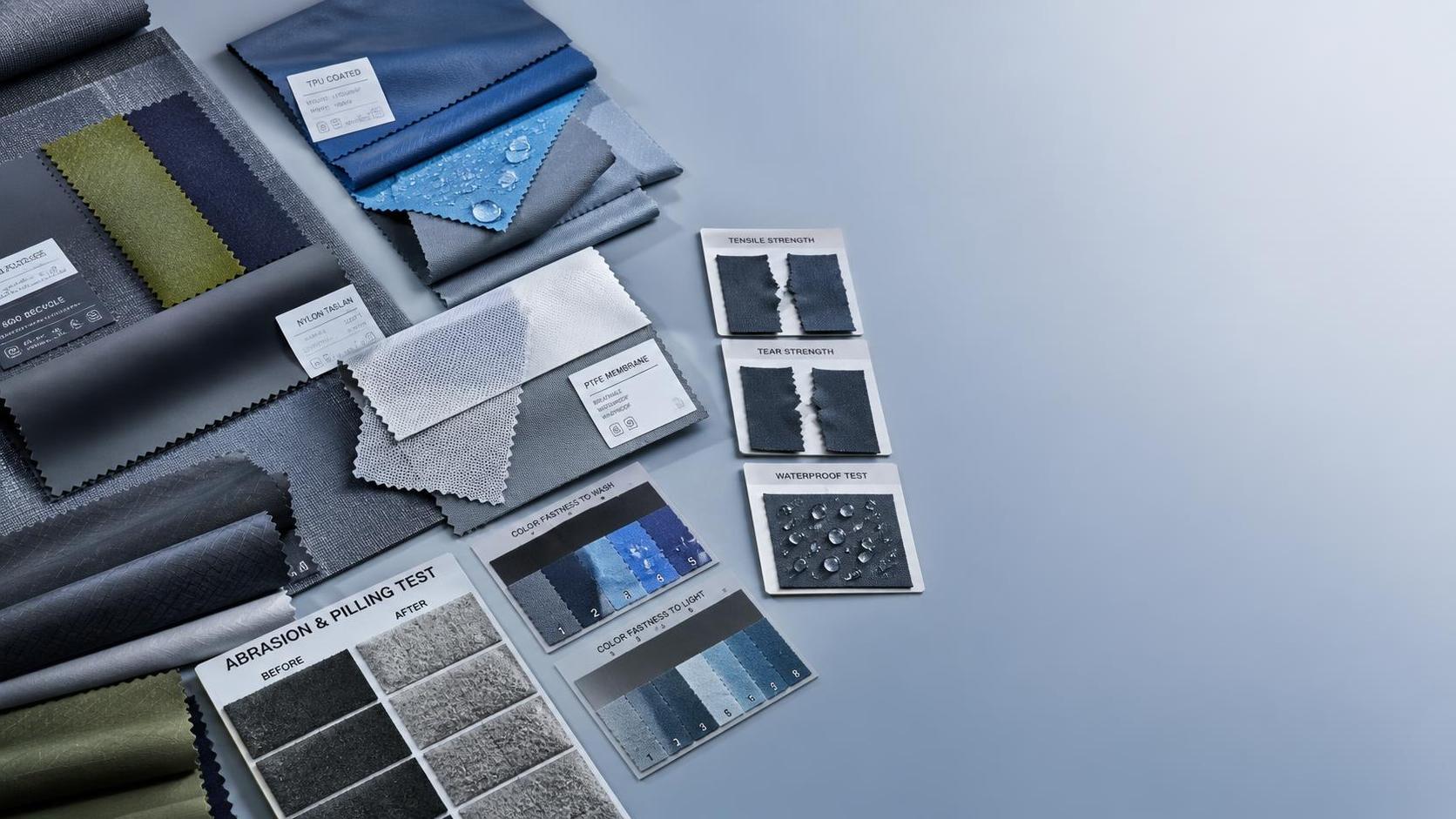
Performance Technical Comparison: Which Fabric Metrics Matter Most?
In any serious performance technical comparison, the hard part is not collecting fabric data. Most mills can provide a sheet full of numbers. The hard part is deciding which numbers actually predict field performance, process stability, and customer acceptance. A fabric that looks strong on a lab report can still fail in wear trials, delaminate in lamination, pill too early in upholstery use, or lose handfeel after finishing. That gap between specification and use is where technical evaluation becomes real work.
This matters across more than apparel. In outdoor products, office seating, soft furnishings, footwear components, and gift or lifestyle items with textile surfaces, the same question keeps coming up: which metrics deserve priority when not every test can be weighted equally? The answer depends on end use, but some indicators consistently carry more decision value than others because they reveal trade-offs in durability, comfort, protection, and manufacturing control.
At GLC, this is exactly where cross-industry interpretation matters. Textile parameters do not live in isolation. A performance fabric for a camping shell, an acoustic office panel, and a premium tote lining may share similar test methods, yet the pass/fail logic is completely different. Good evaluation links aesthetics, craftsmanship, and supply-chain reality instead of treating fabric testing as a separate laboratory exercise.
Not all metrics are equal, even when they look equally technical
A common mistake in fabric comparison is giving equal weight to every property listed in a technical data sheet. In practice, some metrics are “decision metrics” and others are “supporting metrics.” Fiber content, weight, width, and construction count are important baseline descriptors, but they do not tell you enough about service life or user experience on their own. Technical evaluators usually get more value from properties that expose behavior under stress, repeated use, moisture, friction, heat, and finishing variation.
Another trap is looking at a single top-line number without checking the test method behind it. Tensile strength, for example, can vary in meaning depending on whether the fabric is woven, knitted, coated, nonwoven, or composite. The same is true for waterproofness, breathability, abrasion, and color fastness. A number only becomes useful when its method, direction, conditioning, and intended end use are understood together.
The metrics that usually matter first
1. Tensile and tear strength: basic, but still easy to misread
If the fabric is expected to take load, repeated pulling, seam stress, or sharp snag risk, tensile and tear strength deserve early attention. Tensile strength tells you how much force the fabric can withstand before breaking; tear strength tells you how well it resists propagation once damage begins. Those are not interchangeable. Lightweight outdoor shells, bag fabrics, and some upholstery constructions may show acceptable tensile values but disappointing tear performance, especially after coating or calendaring changes stiffen the structure.
For technical review, it helps to ask a simple question: is failure more likely to begin from sustained load or from accidental damage? That answer changes which metric should carry more weight. In workwear reinforcements and seat fabrics, both matter. In ultralight products, tear resistance can become the more practical warning sign.
2. Abrasion and pilling: often closer to customer complaints than strength data
Many fabrics are not rejected because they break. They are rejected because they look worn too soon. Abrasion resistance and pilling performance are therefore highly valuable in a performance technical comparison, especially for office seating, upholstery, workwear, travel accessories, and brushed or filament-rich apparel fabrics.
What matters here is not just the result, but the use context. A fabric used on a decorative cushion may tolerate modest pilling risk. The same surface used on a task chair will not. Evaluators should also be careful with finishing effects. Some soft-touch or peach finishes improve first impression but can reduce long-term surface stability. If the product is meant to communicate quality through appearance, surface endurance may matter more than a marginal gain in softness.
3. Dimensional stability: small movement, big downstream consequences
Shrinkage and dimensional change are frequently underestimated until production starts. In apparel, they affect fit retention. In home and office applications, they affect panel alignment, sewing accuracy, cushion covers, and laminated assemblies. In composite or coated structures, dimensional instability can also cause curling, wrinkling, or poor bonding behavior in later processes.
This is one of those metrics that directly links the lab to the factory floor. A fabric can pass strength tests and still create avoidable waste if it moves unpredictably after washing, steaming, heat setting, or finishing. Technical teams usually benefit from reviewing dimensional change not as a standalone quality value, but as a process risk indicator.
4. Color fastness: still one of the most practical screening tools
Color fastness remains one of the clearest bridges between technical compliance and user perception. Depending on the product, this may include fastness to washing, rubbing, perspiration, light, water, or dry cleaning. The right combination depends heavily on end use. Outdoor textiles and window-exposed furnishings demand attention to light fastness. Dark fashion fabrics, bags, and office-contact surfaces often need closer scrutiny on crocking. Sports and close-to-skin products bring perspiration fastness into sharper focus.
A useful evaluator habit is to ask where failure will be noticed first: on the product itself, on adjacent materials, or on the user. Dye transfer to a sofa, shirt, or car seat is usually a much bigger commercial problem than a minor shade change visible only in controlled comparison.
5. Moisture management and breathability: only meaningful when matched to structure
For activewear, outdoor products, footwear linings, and some seating applications, moisture behavior matters as much as strength. But this category is often oversimplified. Breathability, moisture vapor transmission, wicking, absorbency, and drying time are related but not identical. A hydrophobic filament knit can wick well through structure and finish while absorbing very little moisture itself. A membrane laminate may score well on waterproofness but create user discomfort if vapor transfer is not balanced for the actual climate and activity level.
This is where the evaluator needs to resist brochure language and read the material system as a whole: fiber type, yarn structure, density, finishing, coating, backer, and garment or product construction. Comfort is rarely explained by one metric alone.
6. Water resistance and waterproofness: know what level of protection is really needed
In technical outerwear, tents, covers, bags, and certain furnishing uses, water performance is non-negotiable. Yet teams still confuse water repellency, water resistance, and waterproofness. A durable water repellent finish may help liquid bead on the surface, but it does not make a fabric waterproof. Hydrostatic pressure performance can look strong in a lab and still decline quickly if the coating cracks, if seam construction is poor, or if repeated flexing was not considered in qualification.
When comparing fabrics, it is smarter to ask what exposure scenario the product must survive: light splash, intermittent rain, pressure from kneeling or sitting, or prolonged weather exposure. Over-specifying this property can increase cost, stiffness, and noise without improving actual user value.
The metrics that often decide production success
Some of the most important fabric metrics are not the ones that dominate marketing copy. They are the ones that prevent production disputes.
These are the details that often separate a promising sample from a scalable material. A technical evaluator who only reviews consumer-facing performance claims can miss exactly the metrics that decide whether the fabric behaves consistently from trial lot to bulk.
Context changes the ranking
There is no universal top-five list that works across all categories. In functional apparel, moisture management, stretch recovery, and wash durability may sit near the top. In office and space applications, abrasion, pilling, light fastness, flame-related requirements, and dimensional control often carry more weight. In footwear and leather alternatives, flex resistance, coating adhesion, and surface cracking may matter more than classic apparel comfort metrics. Outdoor products can force a balance between low weight, weather protection, and long-term mechanical reliability that is hard to optimize all at once.
That is why broad intelligence platforms such as GLC are useful when reading technical materials across sectors. The same fabric property can mean different things depending on whether the final object is worn, sat on, carried, gifted, or exposed outdoors. Technical comparison improves when design intent, craft execution, and supply-chain capability are read together rather than treated as separate conversations.
A practical way to compare fabrics without getting lost in data
A workable method is to sort metrics into three layers. First, identify gatekeeper properties: the few requirements that the fabric absolutely must meet for the product to function or comply. Second, identify durability properties: the indicators most likely to affect service life and returns. Third, identify process-control properties: the variables that influence cutting, sewing, bonding, finishing, or lot-to-lot consistency.
This sounds simple, but it prevents a lot of wasted discussion. If two candidate fabrics both clear gatekeeper requirements, the next decision should not automatically go to the one with the highest headline performance number. It should go to the one whose overall profile best fits the product’s use cycle and manufacturing reality. Sometimes the fabric with slightly lower peak performance is the better choice because it is more stable, easier to process, or less sensitive to finishing variation.
It also helps to review any test data alongside real handling notes. Handfeel, noise, drape, rebound, and touch temperature are not trivial just because they are harder to summarize in one number. In sectors shaped by aesthetic consumption and material storytelling, technical performance and perceived quality have to support each other.
What experienced evaluators usually watch for
Three warning signs come up again and again. One is overreliance on supplier summary sheets without full method references. Another is comparing fabrics tested under different conditions and treating the numbers as directly equivalent. The third is ignoring aging behavior. Fresh sample performance can be misleading for coated, laminated, elastomeric, or finish-dependent fabrics. If the product depends heavily on a finish, the key question is not only whether it performs now, but how that performance changes after washing, flexing, abrasion, or environmental exposure.
That is usually where technical judgment earns its keep. The best metric is not always the most impressive one. It is the one that tells you what the fabric will still do after real use, repeated handling, and scaled production.
If a fabric comparison needs one rule of thumb, it is this: prioritize metrics that explain failure modes, not just marketing strengths. Start with end use, verify the test method, check the likely trade-offs, and then decide which numbers deserve trust. Everything else is just a thicker data sheet.