
Procurement Decision Cost Factors That Change Supplier Comparisons

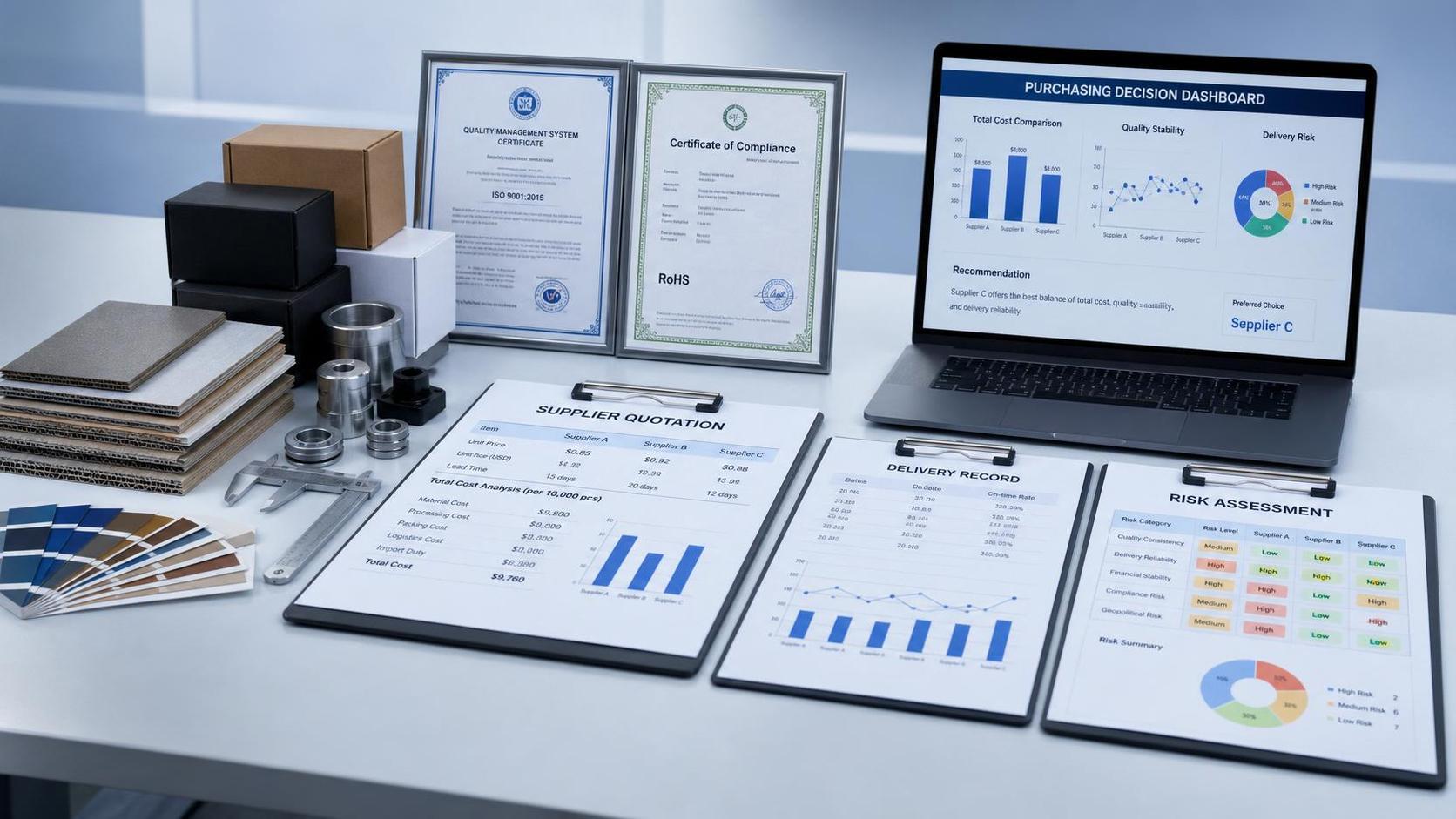
Procurement Decision Cost Factors That Change Supplier Comparisons
When buyers compare suppliers, the lowest quote rarely tells the full story.
Procurement decision cost factors often sit outside the unit price, yet they shape total commercial value.
Lead time risk, defect exposure, compliance work, tooling changes, and service gaps can quietly raise total sourcing cost.
That is why supplier comparison needs a broader lens.
In sectors tied to textiles, furnishings, gifts, outdoor products, and lifestyle manufacturing, this issue is even sharper.
Aesthetic quality, material consistency, and production discipline all influence cost after the purchase order is placed.
Understanding procurement decision cost factors helps teams protect margins, delivery commitments, and brand reputation at the same time.
Why Quoted Price Is Only One Part of Supplier Value
Most supplier comparisons begin with price tables, payment terms, and order volume breaks.
That is necessary, but it is rarely enough for a sound sourcing decision.
A lower quote may hide weaker process control, unstable raw material access, or poor change management.
Those issues usually appear later, when schedules tighten and customer expectations rise.
From a practical sourcing view, procurement decision cost factors turn a simple bid review into a risk-based comparison.
The key question is not only, “Who is cheaper today?” It is also, “Who is more controllable over twelve months?”
The real cost sits across the whole order cycle
Supplier cost should be measured from development through delivery and post-shipment support.
- Pre-production effort, including sampling, approvals, and engineering clarification
- Production stability, including scrap, rework, and output variation
- Logistics reliability, including delays, split shipments, and premium freight
- Post-delivery burden, including claims handling, replacements, and technical support
Once these elements are visible, procurement decision cost factors become easier to compare in concrete commercial terms.
The Main Procurement Decision Cost Factors That Shift Supplier Rankings
Several cost drivers regularly change the outcome of a supplier evaluation.
These procurement decision cost factors matter because they influence both landed cost and operational disruption.
1. Lead time variability
A supplier with a low price but unstable lead times can create expensive planning gaps.
Late materials trigger rescheduling, partial shipments, stockouts, and urgent transport.
In seasonal categories, even a one-week delay can erase the value of a cheaper quote.
2. Quality consistency
Quality is not only about pass or fail.
It includes shade variation, dimensional accuracy, seam strength, finish stability, packaging protection, and product usability.
If quality drifts across batches, internal inspection costs and customer complaints both rise.
3. Tooling and changeover cost
Many sourcing projects involve molds, dies, color development, trim revisions, or packaging adjustments.
A supplier may quote well on production, then recover margin through frequent change fees.
This is one of the most overlooked procurement decision cost factors in product categories with ongoing design updates.
4. Compliance and certification burden
Testing, documentation, social compliance, traceability, and labeling readiness all require time and money.
If a supplier lacks discipline here, the buyer absorbs more coordination work and legal exposure.
For export-driven industries, this factor can outweigh modest price differences very quickly.
5. Communication and response speed
Slow replies create hidden cost because decisions stall and issues stay unresolved longer.
A supplier that answers clearly, fast, and with data often reduces total project friction.
6. After-sales support and claim handling
Problems do not end when goods arrive.
Replacement speed, root-cause analysis, and corrective action quality are real procurement decision cost factors.
Weak support increases dispute time, account pressure, and customer recovery expense.
How To Compare Suppliers Using Total Cost Logic
A useful comparison model should mix direct cost, risk cost, and execution cost.
This makes procurement decision cost factors visible before contracts are signed.
Build a weighted scorecard
Not every factor deserves equal weight.
For example, a promotional item may favor speed and flexibility.
A premium furnishing line may place more weight on finish quality and returns exposure.
A scorecard does not replace judgment. It gives structure to judgment.
Turn risk into estimated money
One practical method is to estimate probable cost ranges for each risk area.
- Cost of one delayed container
- Cost of a failed inspection lot
- Cost of a packaging correction
- Cost of customer replacements or markdowns
This approach makes procurement decision cost factors easier to defend internally during supplier selection reviews.
Category-Specific Signals That Matter More Than They Seem
Different industries expose different hidden costs.
That is why procurement decision cost factors should always reflect product reality.
Textiles and apparel
Fabric shrinkage, color fastness, hand feel stability, and trim matching can all influence downstream claims.
A mill with better process control may save more than a cheaper fabric source.
Footwear and leather goods
Tooling accuracy, material substitution risk, bonding performance, and fit consistency deserve close review.
Minor specification drift often becomes a major returns problem.
Office, furnishing, and space products
Flat-pack damage, installation errors, ergonomic compliance, and finish durability can change supplier economics fast.
In this space, packaging quality is often a hidden cost driver.
Gifts and digitally crafted items
Short runs, personalization accuracy, and artwork approval discipline matter more than generic production cost.
Errors here create waste because customized goods are harder to recover.
Outdoor and lifestyle products
Water resistance, field durability, safety labeling, and season timing all affect total cost.
A supplier that performs well in lab data but poorly in use conditions may not be the low-cost choice.
Practical Steps To Improve Supplier Comparison Decisions
Better sourcing outcomes usually come from better comparison habits.
- Map procurement decision cost factors before requesting quotes.
- Ask suppliers for evidence, not only promises.
- Review defect history, on-time delivery, and claim closure speed.
- Separate one-time development cost from recurring production cost.
- Stress-test suppliers against peak season and change requests.
- Track total cost after award to improve future decisions.
This last point is important.
Many teams discuss procurement decision cost factors during selection, then stop measuring them after launch.
Without feedback, supplier comparison becomes guesswork again in the next sourcing cycle.
A Smarter Way To Read Supplier Quotes
The strongest procurement decisions balance price, resilience, and execution quality.
That balance is what procurement decision cost factors are really about.
They help teams compare suppliers in a way that reflects real operating conditions, not just spreadsheet assumptions.
In actual business, the better supplier is often the one that prevents cost before it appears.
That may mean fewer delays, cleaner quality performance, stronger compliance support, or faster corrective action.
Use procurement decision cost factors as a standard part of supplier comparison, and sourcing decisions become more stable, more defensible, and more profitable over time.