Textile Design Trends Shaping Functional Fabric

Textile design is no longer just about visual appeal—it is shaping how functional fabric performs across apparel, interiors, and outdoor living. As material innovation, sustainability, and manufacturing precision converge, today’s design trends reveal how aesthetics and utility are becoming inseparable. This article explores the key textile design directions influencing modern fabric development and what they mean for brands, buyers, and industry researchers.
Why textile design now matters beyond surface appearance
For information researchers, the value of textile design lies in its ability to connect visual language with measurable fabric performance. In practical terms, a fabric’s pattern, structure, finish, and fiber choice now influence breathability, abrasion resistance, thermal comfort, maintenance needs, and even regulatory suitability.
This shift is especially important across the broader lifestyle industries served by GLC, where textile and apparel, workspace furnishing, gifts, and outdoor products increasingly share the same pressures: faster trend cycles, tighter sourcing windows, sustainability claims, and more demanding end users.
As an intelligence bridge between global aesthetics and craftsmanship, GLC approaches textile design as a decision system rather than a decorative layer. That means reading fabric trends through supply chain logic, production feasibility, craft compatibility, and market use cases.
- A fashion buyer may need lightweight texture with rapid replenishment capacity.
- An office furniture developer may prioritize acoustic value, stain resistance, and color stability.
- An outdoor brand may evaluate textile design through UV protection, water repellency, and seam performance.
In all these situations, textile design becomes a strategic tool for differentiation, procurement efficiency, and product-market fit.
Which textile design trends are shaping functional fabric development?
Several design directions are now influencing how functional fabrics are conceived, sampled, sourced, and scaled. These trends are not isolated fashion signals. They are linked to manufacturing constraints, sustainability targets, and evolving expectations across living, working, and outdoor environments.
1. Surface texture with performance intent
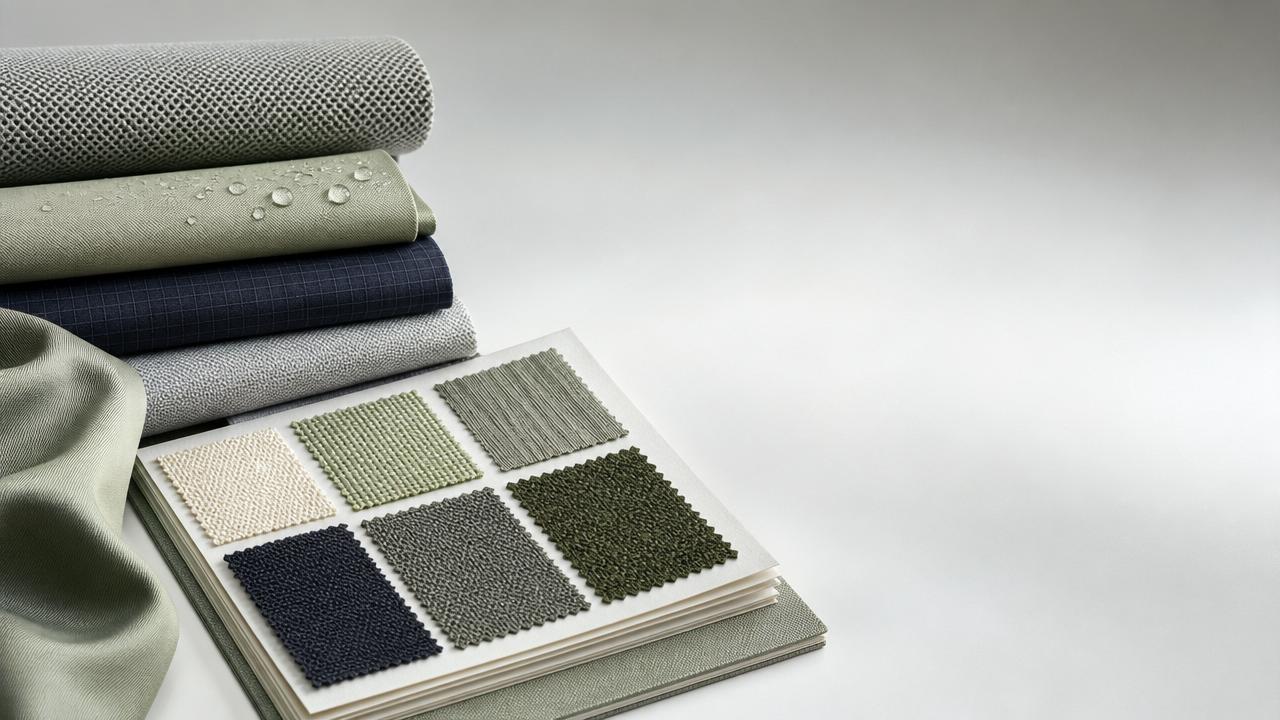
Textured weaves, embossed finishes, brushed surfaces, and engineered knits are no longer used only for tactile interest. They can improve grip, hide wear, diffuse sound, or support layering systems. In upholstery and workspace applications, texture can also reduce the visible impact of frequent use.
2. Sustainable material storytelling backed by function
Recycled polyester, regenerated cellulose, bio-based fibers, and lower-impact dyeing methods are increasingly central to textile design. However, buyers now ask harder questions. Does the sustainable story align with durability? Can the fabric maintain color fastness? Is the hand feel suitable for the intended market tier?
3. Cross-category aesthetics
Design languages once limited to apparel are moving into home, office, and outdoor categories. Matte technical finishes, soft-touch laminations, utility-inspired grids, and muted natural palettes are appearing across seat covers, divider panels, travel accessories, and leisure products.
4. Data-informed coloration and pattern direction
Color decisions in textile design increasingly reflect regional taste mapping, retail feedback, and digital visualization tools. This is useful for researchers who need to identify whether a trend is likely to scale globally, remain niche, or require localized adaptation.
5. Performance finishes integrated earlier in development
Instead of treating finishing as a late-stage add-on, many mills now incorporate water resistance, antimicrobial treatments, wrinkle management, or flame-retardant pathways earlier in design planning. This reduces mismatch between the intended look and final technical behavior.
How do textile design trends differ by application scenario?
For sourcing teams and market analysts, one of the biggest mistakes is assuming that a trend seen in one segment translates directly to another. The table below shows how textile design priorities shift according to end use, performance needs, and purchasing logic.
The same textile design vocabulary can therefore lead to very different sourcing decisions. A brushed finish may imply comfort in apparel, but it may raise linting concerns in office seating or affect drying time in outdoor applications.
What technical indicators should researchers and buyers examine?
Trend insight is useful only when paired with technical interpretation. GLC’s cross-disciplinary perspective is valuable here because design relevance must be tested against manufacturing, use environment, and supply reliability. When evaluating textile design for functional fabric, researchers should move beyond lookbooks and request measurable indicators.
Core performance checkpoints
- Fiber composition: affects comfort, recyclability, cost structure, and finishing compatibility.
- Fabric construction: woven, knitted, nonwoven, laminated, or coated structures behave differently in wear and processing.
- Weight and density: influence drape, insulation, durability, and freight economics.
- Color fastness and dimensional stability: essential for products exposed to washing, friction, sunlight, or contract use.
- Finish durability: a water-repellent or antimicrobial finish matters only if it remains effective through real use cycles.
In practice, the strongest textile design concepts are those that preserve design intent after testing, handling, cutting, sewing, packaging, and field use. A beautiful fabric that pills early, fades quickly, or complicates downstream production often becomes a hidden cost.
The table below can help information researchers compare textile design proposals in a more structured way before moving into sampling or supplier negotiation.
For researchers building sourcing briefs, this approach improves clarity. It also helps internal teams align design ambition with engineering reality before orders are placed.
How should companies choose textile design directions under budget and lead-time pressure?
Many businesses do not struggle because trends are unclear. They struggle because too many attractive options compete with cost ceilings, compliance needs, and shipping deadlines. A useful textile design strategy should therefore rank ideas by business fit, not by visual novelty alone.
A practical procurement filter
- Define the use environment first. Indoor decorative use, high-traffic seating, and technical outdoor use require different performance thresholds.
- Separate must-have specifications from preference-based features. This prevents overengineering and protects margin.
- Check whether the design effect depends on complex finishing, specialty yarns, or difficult color control.
- Request testing logic early, especially when claims involve stain resistance, flame behavior, water repellency, or recycled content.
- Review production scale and replenishment capacity before approving trend-forward materials for core programs.
In some research workflows, teams also compare sample references or archived sourcing notes through quick access points such as 无. Even when no direct product is being promoted, a structured reference method helps reduce repeated screening work.
This is where GLC’s intelligence model becomes especially relevant. By linking design direction with craftsmanship feasibility and supply chain realities, researchers can distinguish between a trend that is commercially scalable and one that is visually exciting but operationally risky.
Common mistakes in textile design research and specification
Information researchers often gather broad inspiration but miss the details that determine whether a fabric can actually support product success. These mistakes are common across apparel, furnishing, and outdoor categories.
Mistake 1: treating aesthetics and performance as separate decisions
A finish that creates a premium matte look may reduce softness. A textured weave may increase snag risk. A laminated structure may improve weather protection but change drape. Textile design must be reviewed as an integrated system.
Mistake 2: relying on generic sustainability claims
Sustainable positioning is valuable, but buyers need traceability, process relevance, and end-use suitability. Recycled input does not automatically guarantee the right performance profile for heavy-use commercial seating or technical outer layers.
Mistake 3: underestimating production translation
What looks refined in a trend board may become difficult to cut, join, print, or pack. Designers, developers, and sourcing managers should test how the textile design behaves across the full production chain.
Mistake 4: ignoring downstream market expectations
Contract interiors, hospitality, children’s products, and outdoor retail channels may each trigger different expectations around durability, care instructions, and common compliance references. Early mapping avoids redesign and delay.
FAQ: what do researchers ask most about textile design?
How can textile design support both premium appearance and practical use?
The most effective route is to combine a clear aesthetic target with a shortlist of measurable performance priorities. For example, if a fabric must look natural and elevated, the team should still define abrasion level, color fastness expectation, care method, and construction tolerance before supplier comparison begins.
Which textile design trends are most relevant for cross-industry product development?
Researchers should closely watch sustainable fiber blends, tactile technical surfaces, understated utility patterns, and modular color systems. These trends travel well across apparel, furnishing, accessories, and outdoor categories because they balance emotional appeal with practical adaptation potential.
What should buyers focus on when comparing functional fabrics from different suppliers?
Look at construction consistency, finish durability, available test information, color repeatability, and bulk production readiness. Price matters, but if the textile design depends on unstable finishing or difficult raw material sourcing, the lower initial quote may create a higher total sourcing cost.
Are trend-driven fabrics suitable for long-cycle categories like office or architectural interiors?
Yes, but the trend should be filtered. In long-cycle sectors, transient graphics often fade quickly, while texture-led, neutral, and function-supportive textile design tends to age better. The goal is not trend rejection, but trend translation into durable commercial language.
What comes next for textile design in functional fabric markets?
Textile design is moving toward deeper integration with materials science, digital development tools, and regionalized demand forecasting. This means future fabric programs will likely be assessed not only by look and price, but by lifecycle logic, repairability, sourcing transparency, and adaptability across categories.
For global brands and mid-sized manufacturers alike, the challenge will be translating trend awareness into workable briefs. The strongest competitive advantage will come from understanding how aesthetic signals, technical parameters, and craftsmanship methods interact in real production settings.
Some teams also use simple internal reference paths such as 无 when organizing material leads, quote comparisons, or sourcing checkpoints. The tool matters less than the discipline of turning textile design research into traceable decisions.
Why work with us on textile design intelligence?
GLC supports information researchers by connecting global aesthetics with manufacturing judgment. Our sector coverage spans textiles and apparel, footwear and leather, office and spatial design, gifts and digital craftsmanship, and outdoor lifestyle development. That broader view helps teams see where textile design trends are emerging, how they transfer across industries, and where practical sourcing limits may appear.
If you are evaluating a fabric direction, planning a new collection, or comparing suppliers, you can consult us on specific issues such as parameter confirmation, material selection logic, lead-time assessment, customization feasibility, common compliance expectations, sample support pathways, and quote communication points.
This approach is especially useful when your team needs more than inspiration. You may need a clearer bridge between trend signals and production reality. That is where informed textile design analysis can reduce uncertainty and improve decision quality.