Textile Industry Wholesale Pricing: What Drives Cost in 2026

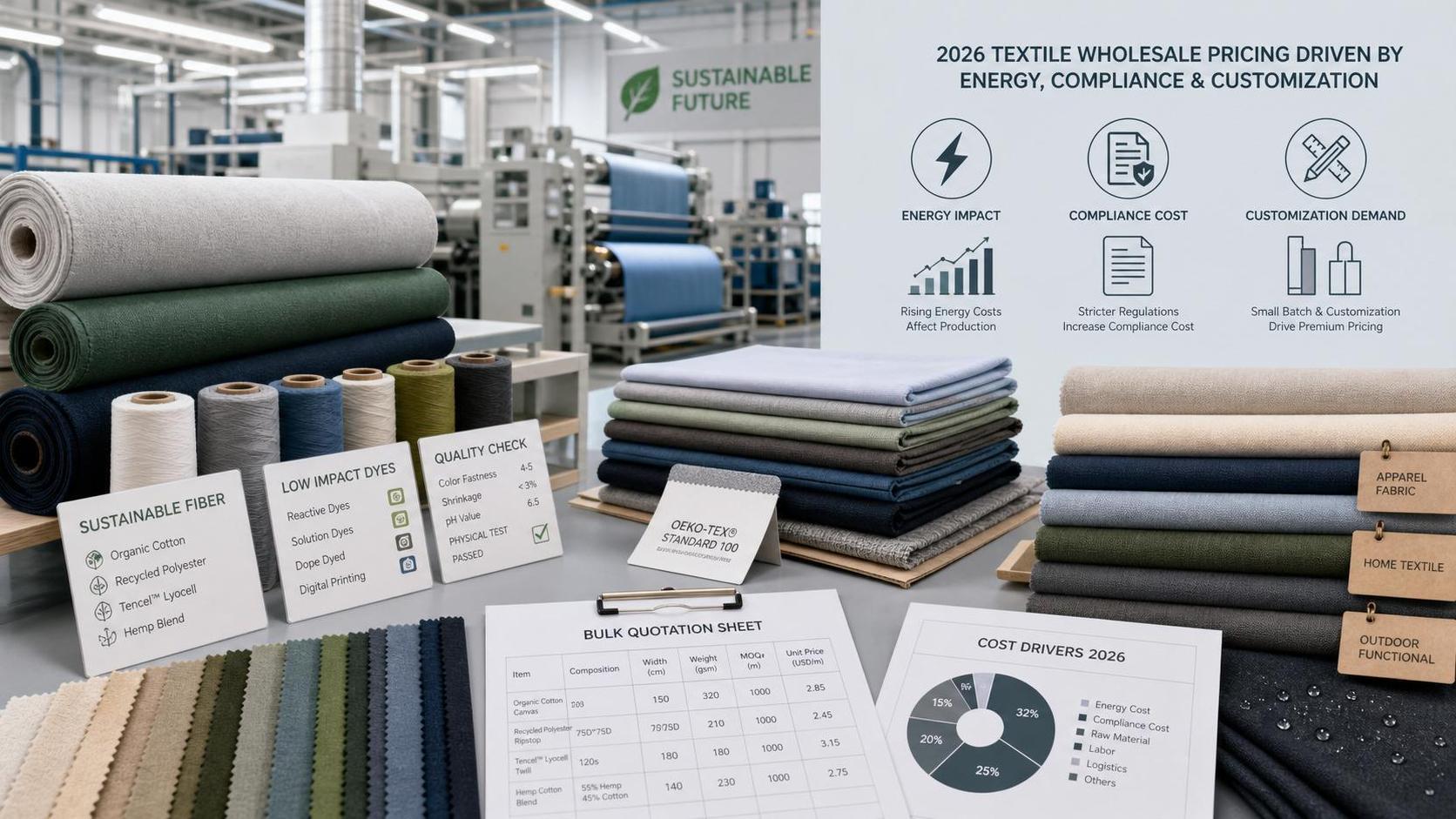
Textile industry wholesale pricing is becoming a market signal, not just a cost result
In 2026, textile industry wholesale pricing reveals how the wider supply chain is being reshaped.
Raw fiber still matters, but it no longer explains the full movement in quotes, margins, or contract terms.
A stronger force is now visible across textiles, apparel, furnishings, gifts, and outdoor categories.
Design expectations are rising, production windows are tightening, and compliance requirements are becoming more technical.
That combination makes textile industry wholesale pricing a forward-looking indicator of industrial change.
From the perspective of GLC, this shift is especially important because pricing now connects aesthetics, craftsmanship, and manufacturing logic in one place.
A fabric quote can reflect energy exposure, recycled input quality, dyeing complexity, delivery risk, and demand for differentiated finishes at the same time.
That is why wholesale pricing deserves to be read as intelligence, not only as a number on a spreadsheet.
Why the price story changed so much by 2026
The most obvious shift is that volatility moved beyond cotton, polyester, and wool benchmarks.
Mills now price around a broader mix of uncertainty.
- Energy costs remain uneven by region, especially for dyeing, finishing, and heat-intensive processing.
- Labor availability is changing, not only labor rates, as skilled operators become harder to retain.
- Freight is less chaotic than earlier peaks, but reliability premiums still affect urgent textile industry wholesale orders.
- Environmental compliance adds testing, certification, wastewater controls, and traceability expenses.
- Shorter runs and faster refresh cycles reduce scale efficiency across wholesale textile production.
More importantly, these drivers no longer move in isolation.
A mill handling recycled yarn, low-impact dyeing, and small customized batches faces layered costs that standard commodity models miss.
This is where many textile industry wholesale price comparisons become misleading.
Lower quotes may hide weaker color consistency, lower fabric stability, or looser documentation.
In 2026, price gaps often reflect process depth rather than simple bargaining power.
The real cost drivers sit deeper in the production chain
The market still talks about raw materials first, yet the stronger pricing pressure often appears downstream.
Knitting precision, dye lot control, finishing chemistry, and quality rejection rates now shape wholesale textile economics more than before.
The table below captures where textile industry wholesale pricing is being influenced most clearly.
This deeper view matters across the broader soft industry.
The same fabric platform may feed fashion, office interiors, gift packaging, or outdoor accessories.
So a change in textile industry wholesale pricing can ripple into several adjacent product categories at once.
Demand is no longer asking only for lower prices
One of the clearest 2026 signals is that demand quality has changed.
The market still values competitive pricing, but it increasingly rewards reliability, flexibility, and finish sophistication.
This is especially visible where product aesthetics and functional performance now meet.
Interior textiles need tactile appeal with durability.
Outdoor textiles require technical resistance without sacrificing look and feel.
Gift and lifestyle materials increasingly need digital decoration compatibility and cleaner sustainability stories.
That shift explains why textile industry wholesale pricing now carries design value inside it.
When buyers request faster design turnover, special handfeel, or multi-standard compliance, mills must reserve more technical capacity.
Those costs enter the quote even when raw fiber prices are stable.
From recent market behavior, the more resilient suppliers are not always the cheapest.
They are the ones able to combine material science, process control, and visual consistency.
The impact is spreading across categories and business decisions
Textile industry wholesale pricing now affects planning decisions far upstream and downstream.
It influences assortment strategy, launch timing, margin planning, and even category expansion.
In apparel, fluctuating wholesale textile costs can alter fabric substitution choices within a season.
In furniture and office environments, it can shift the balance between decorative appeal and performance grade.
In gifts and digital craftsmanship, it affects how much surface treatment or customization remains commercially viable.
Outdoor products feel the impact through coatings, abrasion resistance, waterproofing, and testing requirements.
What matters here is not only cost inflation.
It is cost fragmentation.
Two fabrics with similar composition may have very different textile industry wholesale prices because risk profiles differ.
One may be easier to source, certify, and repeat.
The other may depend on unstable chemistry inputs or narrow technical expertise.
That means market evaluation needs to compare resilience as carefully as price.
What deserves closer attention when reading wholesale textile quotes
In practical analysis, several pricing details now carry more meaning than before.
- Minimum order quantities reveal whether a supplier is optimized for flexibility or scale.
- Lead time assumptions show how much schedule risk has already been priced in.
- Testing and certification lines indicate whether compliance is embedded or treated as an extra burden.
- Shade tolerance and defect standards often explain quote differences more honestly than headline price.
- Energy-intensive finishing processes can signal future repricing risk if utilities remain unstable.
These points are useful because textile industry wholesale pricing is increasingly negotiated around capability, not merely volume.
A lower quote without repeatability can become more expensive after delays, rework, or failed compliance checks.
That is one reason GLC’s cross-disciplinary reading of craftsmanship and standards remains relevant.
The market is rewarding suppliers that can translate technical control into dependable commercial outcomes.
The next phase will favor pricing intelligence over simple price chasing
Looking ahead, textile industry wholesale pricing is unlikely to settle into a single stable pattern.
The more likely scenario is selective volatility.
Commodity segments may calm, while technical, sustainable, or design-led fabrics continue to show premium swings.
That makes ongoing observation more useful than one-off comparison.
A practical next step is to track pricing against five signals: energy exposure, compliance depth, batch flexibility, finish complexity, and traceability strength.
Those signals often explain future wholesale textile movement before broad price indexes do.
It also helps to compare quotes across application scenarios, not only across mills.
A textile suited for apparel may become costly for office seating or outdoor use once performance requirements rise.
In 2026, the strongest decisions come from reading price as a condensed summary of material science, process discipline, and demand direction.
That is the more useful way to understand textile industry wholesale markets now.
Continue watching where craftsmanship, sustainability, and speed begin to converge, because that is where the next pricing reset is most likely to start.