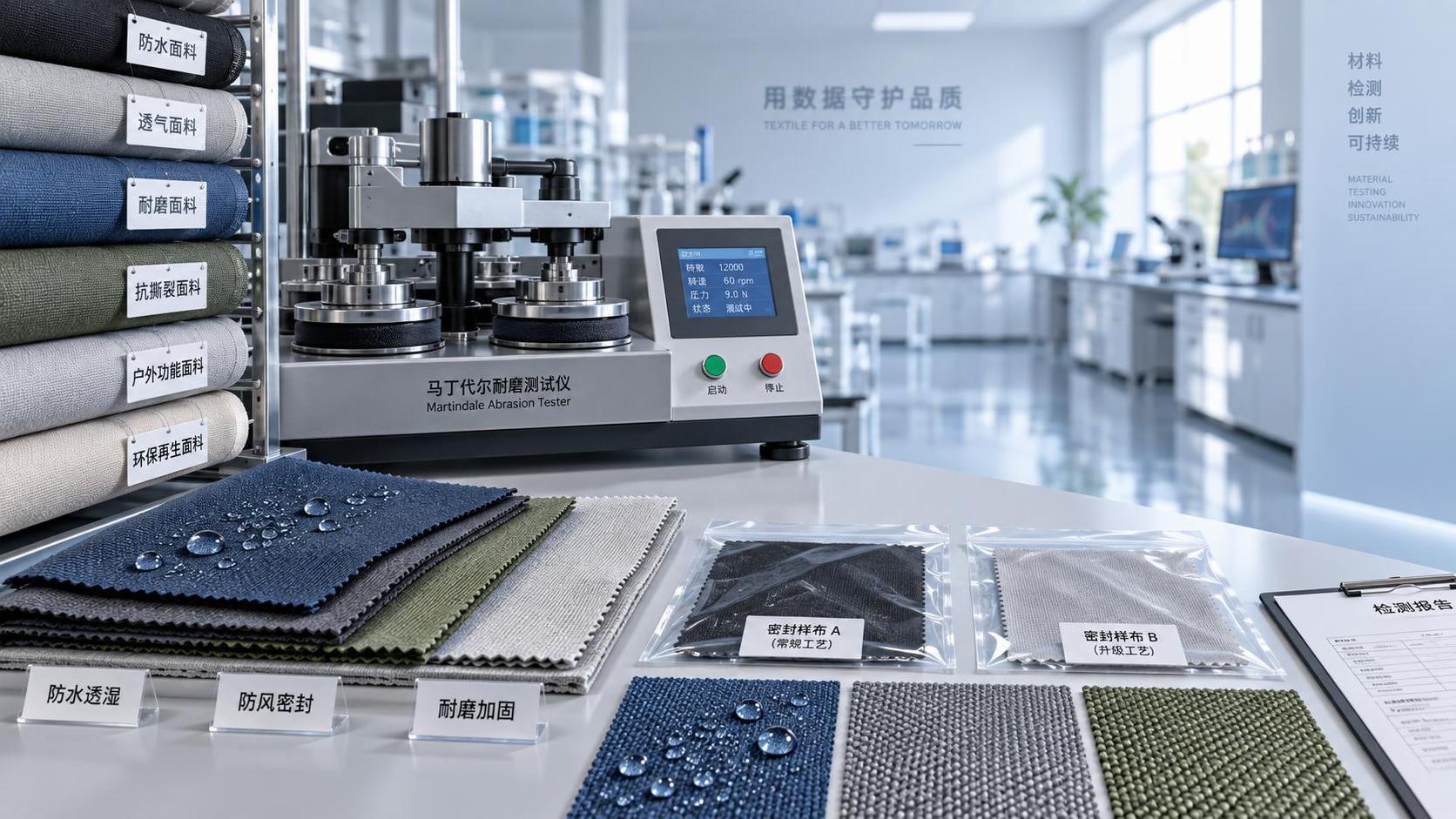
Textile Technology Trends Shaping Material Development in 2026


In 2026, textile technology is no longer a narrow material topic. It sits at the center of product planning, sourcing strategy, compliance, and brand positioning across global lifestyle industries.
Material development now moves faster, but the margin for error is smaller. Performance targets, sustainability claims, and supply chain resilience must work together from the earliest development stage.
That shift matters across apparel, footwear, interiors, gifts, and outdoor products. The same fabric decision can influence comfort, durability, lead time, certification risk, and perceived value in the market.
For platforms such as GLC, which connect global aesthetics with craftsmanship and industrial logic, textile technology becomes a practical lens. It reveals how design intent can be translated into scalable, testable, and commercially viable materials.
Why textile technology is shaping material decisions differently in 2026
The major change is not one breakthrough fiber. It is the integration of material science, digital development, traceability, and manufacturing flexibility into a single decision framework.
In earlier cycles, teams often selected a fabric after product styling was mostly fixed. In 2026, textile technology influences the brief itself, because material capability defines what a product can realistically become.
This is especially visible in sectors where touch, durability, and environmental claims directly affect purchase decisions. Home textiles, technical apparel, office furnishings, and outdoor gear all face that pressure.
At the same time, trade requirements are becoming stricter. Buyers increasingly ask for evidence on recycled content, chemical management, carbon impact, and performance consistency across production batches.
The core trends behind material development
Smarter fiber innovation
Textile technology in 2026 is pushing beyond simple synthetic versus natural choices. Development teams are combining bio-based inputs, regenerated cellulose, performance blends, and engineered surface structures.
The real question is fit for purpose. A recycled yarn may improve sustainability metrics, but it must still meet abrasion, colorfastness, dimensional stability, and process compatibility targets.
Digital material simulation
Virtual sampling is becoming a material development tool, not just a design presentation feature. Fabric drape data, stretch behavior, and surface appearance can now be evaluated earlier.
This reduces sampling waste and shortens iteration cycles. More importantly, it helps align design expectations with factory reality before tooling, dyeing, or finishing costs escalate.
Process-aware sustainability
Sustainability claims are becoming more technical. Material selection now requires attention to water intensity, finishing chemistry, energy source, recyclability, and end-of-life limitations.
That makes textile technology a supply chain issue as much as a fabric issue. A strong concept on paper can fail if local processing capacity cannot support the required finish or certification path.
Data-backed quality control
Inline inspection, sensor-based monitoring, and lab-to-line data mapping are improving repeatability. This matters when brands need the same hand feel and performance across regions and production windows.
For material development, better data shortens the gap between prototype approval and bulk delivery. It also reduces expensive surprises linked to shrinkage, coating defects, or inconsistent lamination.
Where these shifts matter most across industries
GLC’s cross-sector view is useful because textile technology rarely stays inside one category. Material breakthroughs often move from one application field to another with different priorities.
The pattern is clear. Material innovation only creates value when it matches the product environment, production route, and user expectation at the same time.
What deserves closer evaluation during project planning
A promising textile technology can still create delays if teams assess it too narrowly. Performance data alone is not enough, especially when scale-up and regional sourcing are involved.
- Check whether laboratory results match real production conditions, including dye lot variation and finishing tolerances.
- Confirm which claims are certifiable, and which remain supplier estimates or pilot-stage assumptions.
- Review tool compatibility, bonding methods, wash behavior, and packaging effects before volume commitment.
- Map cost by lifecycle, not only by unit price, because rework and claims can erase early savings.
- Compare regional processing capacity, especially for advanced coatings, digital printing, and specialty laminates.
These points matter because material development is now deeply linked to execution risk. The earlier they are tested, the easier it is to protect launch timing and specification stability.
From aesthetic direction to manufacturing reality
One of the most useful ways to read textile technology trends is through the connection between visual language and industrial feasibility. That is where many commercially successful products are decided.
A material may signal softness, naturalness, technical precision, or crafted authenticity. Yet those qualities only translate into market value when factories can reproduce them consistently.
This is why GLC’s perspective matters. By linking design intelligence with craftsmanship, testing logic, and supply chain observation, it becomes easier to distinguish durable trends from short-lived novelty.
In practice, the winning materials in 2026 are not always the most radical ones. They are often the materials that balance tactile appeal, manufacturability, compliance readiness, and commercial scalability.
How to apply these trends in a practical roadmap
Build a narrower material shortlist
Start with end-use demands, not trend language alone. Narrow the shortlist by performance threshold, certification route, process fit, and target cost corridor.
Use staged validation
Separate concept approval from industrial approval. A textile technology that looks excellent in pilot form may require different finishing controls at commercial volume.
Track cross-functional signals
Material teams, sourcing, compliance, and design should share the same evaluation sheet. That prevents late-stage conflict between visual expectations and technical restrictions.
Watch emerging transfer opportunities
Some of the best opportunities come from adjacent sectors. An acoustic textile for workspace interiors may inspire packaging, accessories, or portable outdoor applications.
Looking ahead
Textile technology in 2026 is shaping more than fabrics. It is changing how product ideas are filtered, how supply chains are qualified, and how craftsmanship is scaled for modern markets.
The next useful step is to review current material pipelines against a few grounded questions: which claims are truly verifiable, which processes are scalable, and which innovations fit real product context.
That kind of review makes trend analysis actionable. It also creates a clearer path from aesthetic ambition to dependable execution, which is exactly where future material value will be defined.