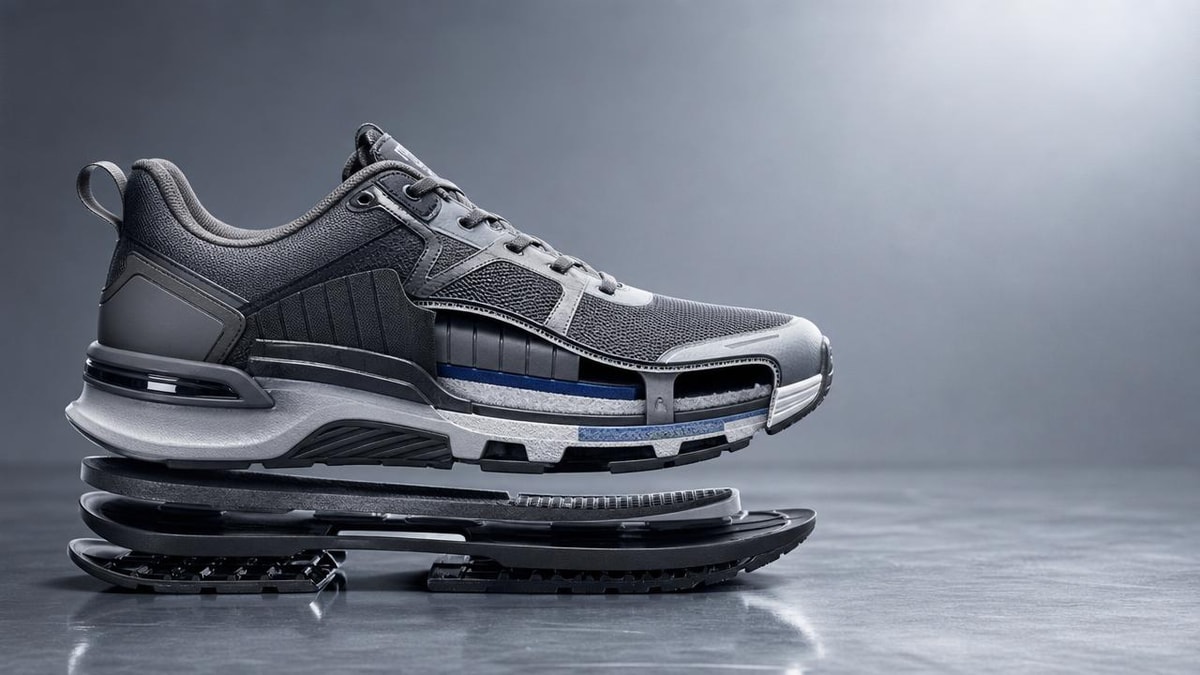
Smart Footwear: Which Features Actually Improve Safety and Tracking

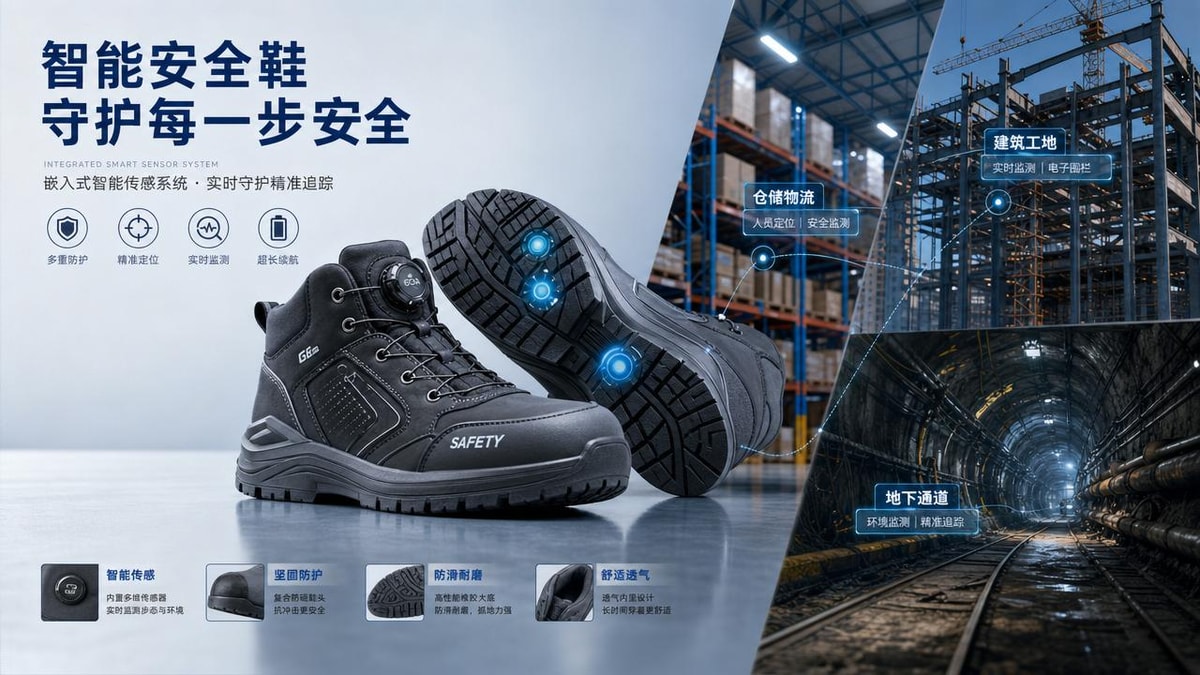
As smart footwear moves from concept to procurement reality, technical evaluators need more than marketing claims. This article examines which features genuinely improve safety and tracking, from sensor accuracy and location reliability to durability, connectivity, and integration with industrial use cases. By focusing on measurable performance, smart footwear can be assessed as a practical tool rather than a novelty.
Why scenario differences matter more than feature lists
For technical assessment teams, the value of smart footwear is not determined by the longest specification sheet. It is determined by whether a given feature improves outcomes in a specific operating environment. A warehouse with indoor navigation needs different capabilities than a construction site, a mining tunnel, a hospital logistics corridor, or a lone-worker maintenance route. In one setting, centimeter-level location precision may be critical; in another, slip detection, battery endurance, or ruggedized housing matters more.
This is where many procurement discussions go wrong. Buyers often compare smart footwear as if all use cases were equal. They are not. Safety improvement depends on actual hazard exposure, user compliance, data latency, and integration with site workflows. Tracking performance depends on whether the site is indoor or outdoor, whether GPS signals are blocked, whether workers move through steel-heavy environments, and whether the system must support real-time alerts or only post-shift reporting.
For organizations across textiles, footwear manufacturing, outdoor workwear, logistics, and industrial operations, the smartest choice is usually the model that fits the application best, not the one with the most sensors. Global Living & Craftsmanship often emphasizes the link between design intent and manufacturing practicality; that same logic applies here. A technically strong smart footwear program is built on scenario fit, measurable test criteria, and long-term maintainability rather than novelty features. Even where product references are limited, evaluators may still encounter catalog placeholders such as 无, which should never replace proper field validation.
Typical business scenarios where smart footwear can deliver real value
Smart footwear becomes more defensible when tied to operational problems that are already expensive, risky, or difficult to monitor. The following scenarios are among the most practical for evaluation.
1. Warehousing and distribution centers
In warehouses, smart footwear is most useful when it supports indoor positioning, walking route analysis, geofencing around restricted zones, and fatigue-related risk monitoring. Forklift interaction zones, repetitive movement, and long walking distances create a strong case for location-aware safety tools. Here, low-latency alerts and stable indoor tracking matter more than outdoor GPS performance.
2. Construction and infrastructure projects
Construction sites are dynamic, uneven, and frequently changing. Smart footwear in this setting must withstand dust, moisture, impact, and irregular gait patterns. Features that may add value include slip detection, fall-event correlation, location tagging for evacuation support, and compliance monitoring for high-risk zones. However, technical evaluators should expect more signal instability because of moving structures, concrete, and metal interference.
3. Mining, tunneling, and confined industrial spaces
These are among the most demanding environments for smart footwear. Location tracking must remain functional where GPS is unavailable. Strong candidates usually rely on UWB, BLE anchors, inertial measurement, or hybrid positioning. Safety gains are tied to worker visibility, emergency mustering, man-down detection, and route reconstruction after incidents. Ruggedness and connectivity resilience are non-negotiable.
4. Lone-worker inspection and field maintenance
For utility inspectors, service engineers, and remote-site technicians, smart footwear can support journey confirmation, movement anomalies, and incident escalation. In these use cases, long battery life, reliable outdoor handoff, and low-maintenance synchronization are more important than dense indoor analytics. The business value comes from reducing blind spots in worker status rather than collecting rich biomechanical data.
5. Healthcare support, clean operations, and controlled facilities
In hospitals, laboratories, and controlled production areas, smart footwear may assist with staff flow analysis, zone compliance, and ergonomic monitoring. These environments often require easier sanitation, lighter weight, and comfort across long shifts. Here, subtlety, wearability, and user acceptance can be just as important as sensor sophistication.
What features actually improve safety and tracking in each scenario
The most useful way to evaluate smart footwear is to separate features into performance categories and ask how each category affects a target scenario.
Sensor accuracy: useful only when validated against real movement
Accelerometers, gyroscopes, pressure sensors, and inertial measurement units can support gait analysis, step counting, fall detection, and motion pattern recognition. But raw sensor presence does not equal meaningful safety improvement. Evaluators should ask for accuracy data under realistic walking conditions: stairs, ladders, wet surfaces, steel grating, heavy loads, and quick directional changes. A smart footwear platform that performs well in flat-office demonstrations may underperform badly on a live industrial floor.
Location reliability: the core of tracking value
For tracking-heavy applications, positioning architecture matters more than app design. GPS may be sufficient for outdoor patrol or campus operations, but it is weak indoors and often unusable underground. BLE can be cost-effective for zone awareness, while UWB offers stronger precision for high-risk areas. Hybrid systems combining inertial navigation, local anchors, and gateway synchronization often produce the most practical results. The right question is not “Does it track?” but “How accurate is it in this exact environment, at what latency, and with what failure rate?”
Durability and ergonomics: ignored too often, decisive in deployment
Smart footwear cannot improve safety if workers stop wearing it. Weight distribution, sole stiffness, moisture resistance, thermal comfort, and cleaning compatibility directly affect adoption. Technical evaluators should examine ingress protection, compression resistance, flex durability, charging port sealing, and the expected lifespan of embedded electronics under repeated impact. If the shoe becomes uncomfortable after a full shift, data quality and compliance will collapse.
Connectivity and system integration: where many pilots fail
A strong smart footwear device can still fail as a project if it does not integrate with site systems. Technical teams should verify API availability, support for EHS dashboards, incident management workflows, RTLS infrastructure, and mobile device management. In industrial settings, local data buffering is also important because wireless gaps are normal. A device that loses records during signal interruption weakens both safety response and audit value.
How to match smart footwear to different buyer types and project scales
Not every organization should evaluate smart footwear in the same way. A pilot for a single facility is different from a global rollout across multiple climates and labor conditions.
SMEs and single-site operators
Smaller organizations usually benefit most from narrowly targeted use cases. Good examples include restricted-zone alerts, lone-worker support, or simple movement-based incident triggers. They should avoid expensive overengineering and focus on fast deployment, acceptable battery life, and easy support. For these buyers, smart footwear should solve one visible operational problem before it expands into broader analytics.
Large industrial groups and multi-site enterprises
Larger enterprises need standardization, security review, integration governance, and consistent reporting logic. They should test smart footwear across multiple site profiles rather than relying on one flagship pilot. A solution that works in a dry warehouse may not survive a humid production plant or a remote outdoor facility. Multi-site buyers should also verify spare-part logistics, firmware update methods, and regional support capability.
Common misjudgments when evaluating smart footwear
Several recurring mistakes distort purchasing decisions.
- Assuming more sensors automatically mean better safety. In reality, signal quality and event logic matter more than sensor count.
- Confusing consumer wellness metrics with industrial safety metrics. Step count is not the same as hazard detection.
- Ignoring footwear comfort and worker acceptance. Poor adoption destroys data continuity.
- Testing only in ideal conditions. Real validation must include dust, vibration, wet floors, obstacles, and shift-length wear.
- Overlooking data governance. Location data, worker privacy, and retention policy require clear rules from the beginning.
- Underestimating maintenance burden. Charging, cleaning, replacements, and software support all affect total cost.
Some sourcing teams also become distracted by placeholder listings or incomplete technical references such as 无. These can be useful for procurement workflow continuity, but they should never substitute for a structured acceptance test.
A practical evaluation checklist before pilot approval
Before approving a pilot, technical evaluators should confirm whether the smart footwear proposal answers the following questions with measurable evidence:
- What exact risk or tracking gap is being addressed?
- Which environments will the shoes operate in: indoor, outdoor, underground, wet, high-temperature, or mixed?
- What positioning accuracy is required for the use case: zone-level, room-level, or sub-meter?
- What is the expected battery duration under real shift patterns?
- How are alerts triggered, escalated, and acknowledged?
- Can the device buffer data during connectivity loss?
- What are the replacement cycle and cleaning requirements?
- How will user acceptance, comfort, and compliance be measured?
- How will the system integrate with EHS, workforce, or asset platforms?
Conclusion: evaluate smart footwear by operational fit, not by novelty
The strongest smart footwear programs are built around clear scenarios: warehouse safety, confined-space visibility, lone-worker support, or high-risk route monitoring. In each case, the winning feature set is different. Sensor accuracy, location reliability, durability, battery endurance, ergonomics, and integration should all be judged against the real operating environment. For technical evaluators, the right decision is rarely about whether smart footwear is innovative. It is about whether it can produce measurable safety improvement, dependable tracking, and manageable lifecycle cost in the specific context where people actually work.
If your organization is considering smart footwear, start by mapping the scenario before comparing vendors. Define the risk, define the environment, define the required tracking precision, and define the acceptance criteria. That approach turns smart footwear from a trend-driven purchase into a disciplined industrial decision.