What Footwear Technology Improves Durability Without Raising Failure Risk

For technical evaluators, choosing footwear technology that boosts durability without increasing failure risk requires more than material claims or marketing language. This article examines how structural design, bonding methods, reinforcement strategies, and manufacturing precision influence long-term performance in real-world use. By focusing on measurable reliability factors, it helps identify which footwear technology solutions truly extend product life while maintaining consistent quality, safety, and production efficiency.
Understanding Durable Footwear Technology in a Reliability Context
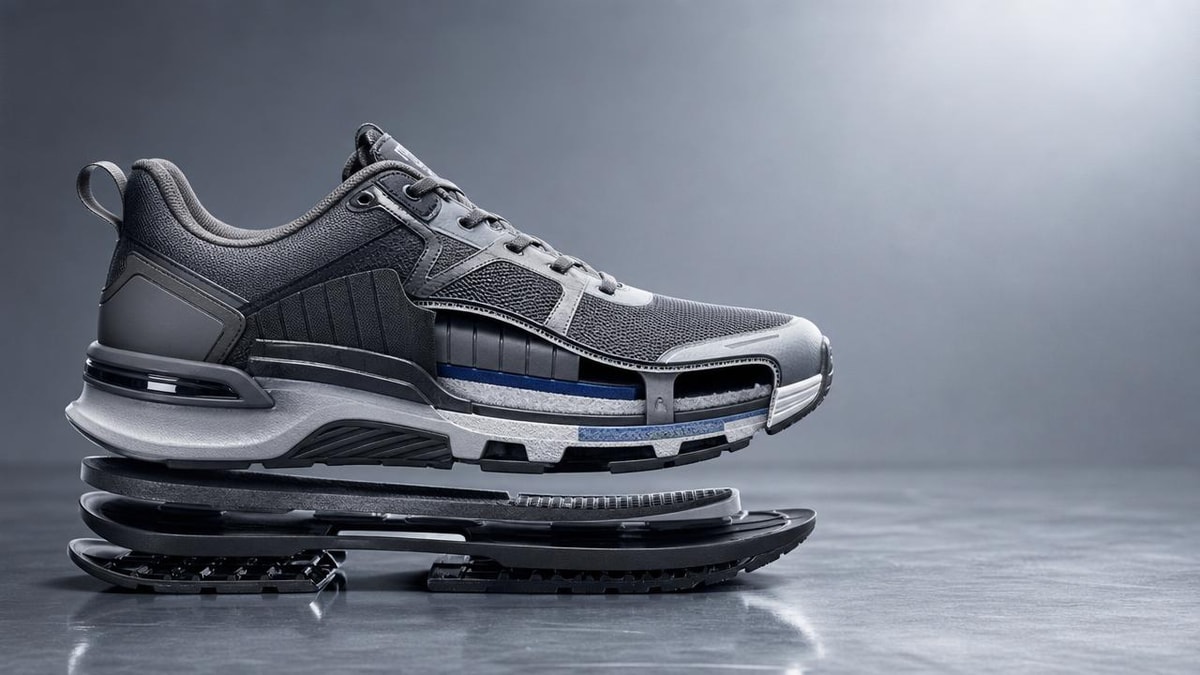
In technical evaluation, durability is not simply the ability of a shoe to resist visible wear. It is the capacity of the full system—upper, lining, sole, bonding interface, reinforcement zones, and production tolerances—to maintain function over repeated stress cycles. The best footwear technology improves life span while keeping failure modes predictable and limited. That distinction matters because some upgrades raise stiffness, complexity, or process sensitivity, which can create new risks even when laboratory abrasion numbers look better.
Across global footwear and leather manufacturing, the industry increasingly values technologies that connect design aesthetics with stable craftsmanship. This is especially relevant in modern supply chains where brands want lighter products, faster development cycles, and more sustainable materials without sacrificing field reliability. For evaluators, the real question is not which innovation sounds advanced, but which one consistently reduces premature sole separation, upper tearing, delamination, compression set, and seam breakdown under actual use conditions.
Why the Industry Focuses on Durability Without Higher Failure Risk
The pressure on footwear manufacturers comes from several directions at once. Consumers expect longer service life. Brands seek lower warranty rates. Factories must balance throughput with precision. Regulators and sustainability programs increasingly reward products that last longer because durability supports lower replacement frequency and better resource efficiency. In this environment, footwear technology is judged not only by performance gains, but by whether it can be industrialized without unstable quality output.
Failure risk rises when a new material or process performs well in isolation but interacts poorly with neighboring components. A tougher outsole may increase stress transfer into the midsole. A stronger adhesive may require tighter surface preparation control. A reinforcement film may improve tear strength while reducing flex compliance at the vamp. Technical evaluators therefore need system-level assessment rather than single-property benchmarking.
Core Footwear Technology Areas That Commonly Improve Durability
The most reliable durability improvements usually come from balanced engineering rather than dramatic material substitution. Several technology areas stand out because they strengthen the product while preserving manageable process control.
1. Zoned structural reinforcement
Reinforcing only high-stress areas—such as toe flex zones, eyestay regions, heel counters, and lateral forefoot sections—often improves durability more safely than making the entire upper thicker. Zoned reinforcement limits local failure while maintaining flexibility and reducing unnecessary mass. Thermoplastic films, engineered overlays, and woven support grids can be effective when stress maps are validated through wear testing.
2. Improved bonding systems with controlled surface preparation
Adhesive performance remains one of the most important forms of footwear technology in durability engineering. However, stronger adhesive chemistry alone is not enough. Reliable results depend on surface energy compatibility, priming, roughing consistency, open time control, temperature, humidity, and cure conditions. Polyurethane and reactive hot-melt systems can improve bond retention, but only when the process window is stable and repeatable.
3. Mechanical and hybrid attachment strategies
In some categories, combining adhesive bonding with stitching, foxing, molded locking geometry, or sidewall anchoring reduces catastrophic separation risk. Hybrid construction is particularly valuable when products face repeated flexing, moisture exposure, or temperature swings. The goal is not redundancy for its own sake, but controlled load sharing between connection methods.
4. Midsole and outsole compound optimization
Compound design affects abrasion, compression set, crack resistance, hydrolysis stability, and energy return retention. Durable footwear technology typically favors compounds that achieve acceptable softness and resilience without excessive permanent deformation. In practical terms, a slightly less aggressive softness target can extend life if it prevents bottoming-out, edge chipping, or interface fatigue.
5. Precision manufacturing and digital process control
CNC cutting, automated cement application, machine-vision alignment, and data-based curing control may not be visible to end users, but they are often the safest route to higher durability. Precision reduces variation, and reduced variation lowers failure risk. For technical evaluators, process capability is often more important than headline material innovation.
Industry Overview Table: Which Technologies Tend to Deliver Safe Durability Gains
Where Technical Evaluators Find the Most Practical Value
For evaluators working across textiles, footwear, outdoor gear, and lifestyle product categories, the most useful footwear technology is technology that supports repeatable quality across suppliers and production seasons. A material with excellent test data but narrow processing tolerance may not be the best commercial choice. By contrast, a moderate innovation that integrates smoothly into existing machinery and operator skill levels often creates stronger long-term results.
This practical view aligns with broader industrial intelligence in global craftsmanship sectors: performance should be assessed through the connection between design intent and manufacturing capability. In some sourcing reviews, supporting reference material such as 无 may appear in documentation, but evaluators should still prioritize verified process data, failure history, and field-use evidence over generic claims.
Typical Application Categories and What to Check
How to Evaluate Failure Risk Before Approving a Technology
A strong assessment framework should combine material testing, assembly testing, and real-use simulation. Technical evaluators should compare not only average performance but also variability across lots. A technology that delivers high peak results but poor consistency can increase field claims. Focus on the full chain: incoming material condition, process sensitivity, worker dependency, machine calibration, and post-production aging.
Recommended checks include flex testing at realistic temperatures, peel and shear testing after humidity exposure, outsole abrasion, foam compression recovery, seam slippage, and accelerated aging for hydrolysis or oxidation-prone materials. It is also useful to inspect where failure starts. If failure shifts from a low-cost replaceable area to a structural area, the upgrade may not represent a net gain even if absolute durability increases in one component.
Common Mistakes When Judging Footwear Technology
One common mistake is overvaluing hardness, thickness, or tensile strength without considering fatigue behavior. Many footwear failures happen after repeated moderate stress, not extreme single events. Another mistake is assuming that premium materials automatically lower risk. In reality, advanced materials often demand stricter storage, activation, or curing control. A third mistake is separating design review from manufacturing review. If pattern geometry, adhesive path, and machine capability are not evaluated together, hidden failure points can enter production.
Evaluators should also be careful with supplier narratives that emphasize sustainability or light weight while minimizing reliability trade-offs. Sustainable footwear technology can absolutely improve product value, but environmental benefits should be validated alongside tear resistance, bond retention, and aging stability. Where supporting product references such as 无 are included in sourcing packages, they should remain secondary to engineering evidence.
Practical Guidance for Technical Evaluation Teams
For organizations building stronger review systems, five practices usually produce better decisions. First, evaluate footwear technology at the system level, not by single component ranking. Second, require process-capability evidence from pilot runs, not just laboratory samples. Third, compare dry, wet, hot, and cold performance because environmental transitions expose weak interfaces. Fourth, track repairability and visible aging, since customer perception of durability matters commercially. Fifth, maintain a failure database that links defect type to material lot, assembly method, and machine settings.
This disciplined approach is especially relevant for globally connected industries where aesthetics, craftsmanship, and industrial standards must work together. In footwear and leather supply chains, the most dependable innovation is rarely the most dramatic one. It is the one that preserves comfort, supports manufacturing consistency, and reduces uncertainty over time.
Conclusion and Next Evaluation Direction
The footwear technology that most effectively improves durability without raising failure risk is usually balanced, targeted, and process-stable. Zoned reinforcement, controlled bonding systems, hybrid attachment, well-tuned sole compounds, and precision manufacturing all offer strong potential when validated as an integrated system. For technical evaluators, the priority is not chasing novelty, but confirming that each improvement extends service life without introducing new weak points.
A sound evaluation method should connect product design, material science, factory execution, and real-world wear evidence. When those elements align, durability becomes more than a marketing promise—it becomes a measurable result that supports quality, brand trust, and long-term industrial value.