Sustainable Textiles Without Greenwashing? Key Proof Points

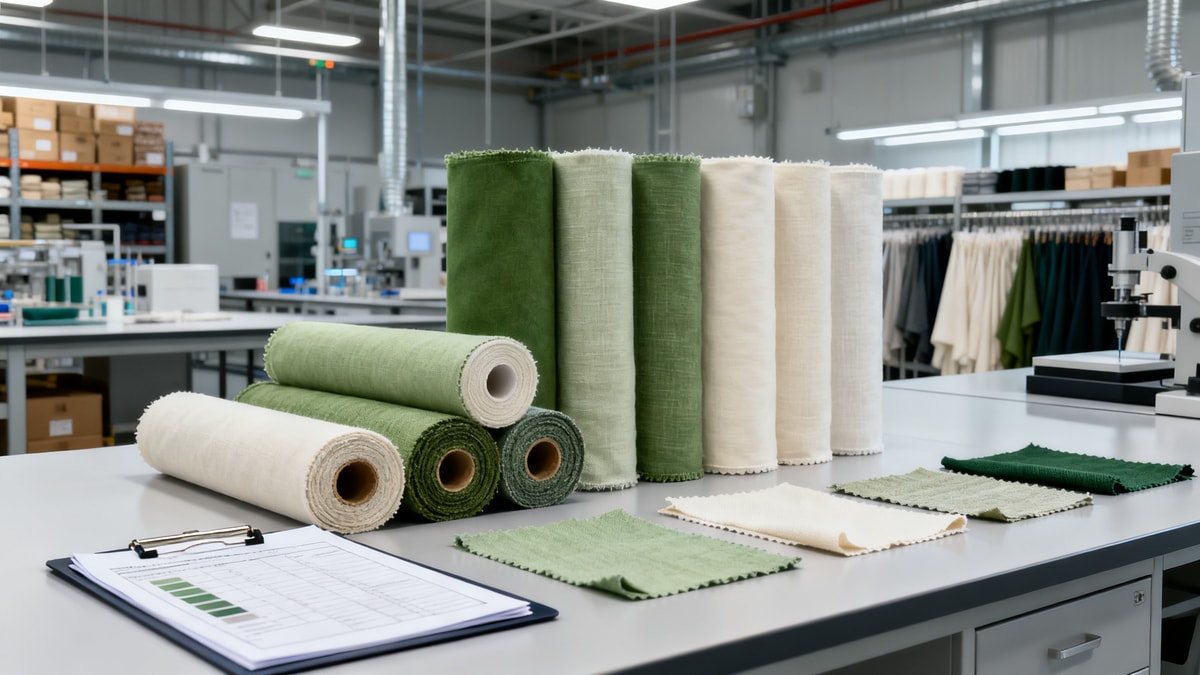
Can sustainable textiles be verified without greenwashing? For decision-makers across the textile industry, fast fashion, home furnishing, office furniture, leather goods, and camping equipment, the answer lies in traceable proof points. This article examines how fair trade standards, industrial design, material data, and supply chain transparency support quality living while helping buyers and evaluators separate credible claims from marketing noise.
For sourcing teams, technical evaluators, quality managers, and brand leaders, the challenge is rarely a lack of sustainability claims. The real issue is excess noise: recycled content labels without chain-of-custody evidence, “eco” finishes with incomplete chemical disclosure, and factory narratives unsupported by process data. In B2B purchasing, proof matters more than positioning.
Across apparel, upholstery, office interiors, footwear, gifting, and outdoor products, sustainable textile verification now affects compliance risk, supplier approval, margin protection, and long-term brand trust. Buyers are increasingly expected to review not only fiber claims, but also durability, restricted substances, labor conditions, and lead-time reliability within the same decision cycle.
As an intelligence bridge between global aesthetics and manufacturing craftsmanship, GLC follows a practical question: what evidence should professionals request before accepting a sustainability claim? The answer usually sits in a combination of 4 layers—material origin, process control, product performance, and supply chain transparency—rather than in a single logo or marketing statement.
What Counts as Real Proof in Sustainable Textiles
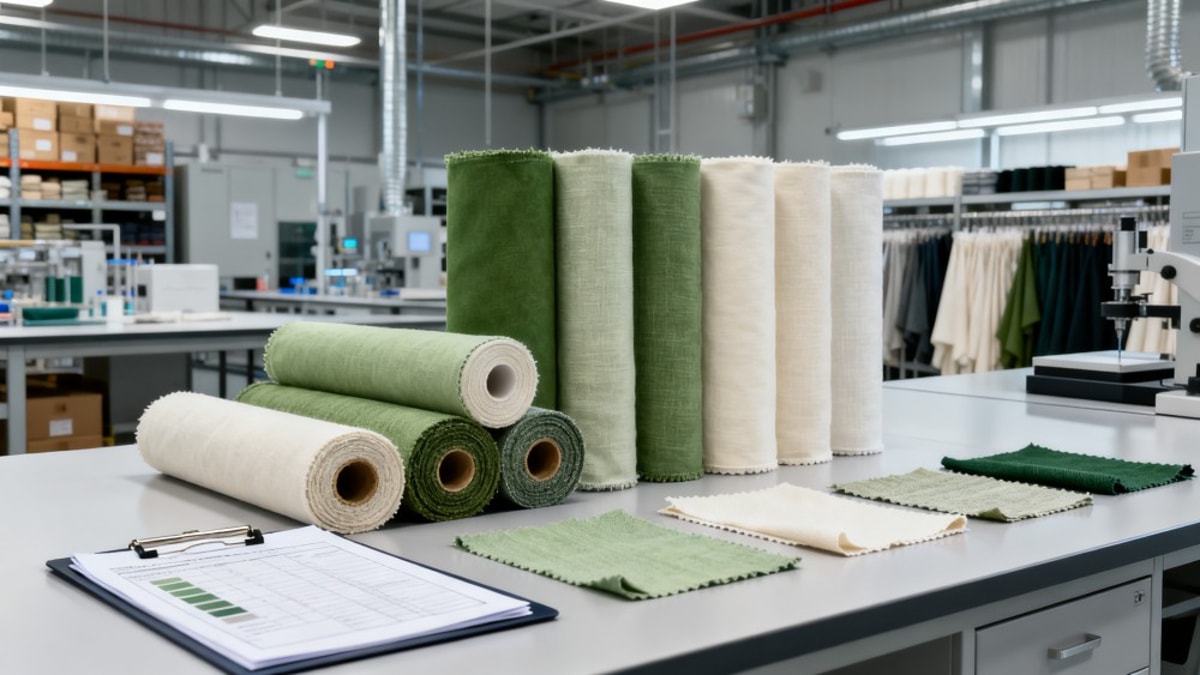
A credible sustainable textile claim should be verifiable at more than 1 point in the supply chain. If a supplier states that a fabric contains recycled polyester, organic cotton, bio-based polyurethane, or low-impact dye chemistry, the claim should be backed by documents that connect input materials, processing stages, and final product output. One label alone is rarely enough for technical approval.
In practice, most sourcing and compliance teams review evidence in 3 stages. First comes material proof, such as fiber composition records, transaction certificates, or test reports. Second comes process proof, including wet-processing controls, wastewater handling, and chemical management files. Third comes product proof, where abrasion, colorfastness, dimensional stability, and safety thresholds confirm that sustainability does not weaken performance.
This matters across multiple sectors. A fashion brand may focus on recycled content and wash durability. A home furnishing buyer may prioritize flame-related compliance pathways, pilling resistance, and finish stability. An outdoor equipment brand often needs UV resistance, hydrolysis performance, and coating integrity over 12–24 months of use. Sustainable textiles only become commercially useful when they meet both environmental and functional requirements.
Greenwashing often appears when one positive attribute is used to distract from missing data elsewhere. For example, a fabric may contain 30% recycled content, yet still lack transparency on dyehouse chemistry, subcontracted finishing, or worker welfare. That is why decision-makers should ask not “Is this sustainable?” but “Which claim is being made, how is it measured, and where is the proof?”
The 4 proof layers buyers should map
- Material origin: virgin, recycled, regenerative, bio-based, or blended input; target percentages should be stated clearly, such as 20%, 50%, or 100% claimed content.
- Processing integrity: spinning, weaving, knitting, dyeing, coating, lamination, or finishing records, especially when multiple subcontractors are involved.
- Performance validation: test values for tensile strength, tear resistance, Martindale abrasion, wash shrinkage, crocking, odor retention, or hydrolysis depending on the end use.
- Social and transactional transparency: fair trade practices, audit visibility, delivery consistency, and document traceability from PO to shipment.
A practical difference between claims and proof
A claim is a statement. Proof is a connected evidence chain. If a supplier says a textile uses low-water dyeing, a buyer should expect process logs, machine type, production batch references, and chemical input records for at least the relevant order window, often 6–12 months depending on audit practice. Without that connection, the claim remains promotional rather than operational.
How to Screen Supplier Claims Without Slowing Procurement
A common concern in B2B procurement is that deeper verification may delay sampling, quotation, or launch calendars. That risk is real, especially in fast fashion or seasonal home collections where product approval cycles may run only 2–6 weeks. The answer is not to reduce verification, but to standardize the screening method so teams can compare suppliers quickly and consistently.
A useful approach is to divide supplier review into 3 bands: mandatory evidence, preferred evidence, and supporting evidence. Mandatory items determine whether the supplier can enter the shortlist. Preferred items strengthen commercial confidence. Supporting items help long-term partnership evaluation. This framework works well for apparel mills, upholstery fabric producers, synthetic leather manufacturers, and outdoor textile converters alike.
For many buyers, the biggest time loss comes from unclear requests. If one team asks for “eco documents” and another asks for “all certifications,” suppliers often reply with incomplete files or unrelated brochures. A better method is to request 5–7 named document types, each tied to a claim. That reduces back-and-forth, shortens review time, and improves internal decision quality.
The table below shows a practical screening structure that can be adapted for sourcing, technical, and quality functions. It is designed for early-stage supplier approval before pilot orders, bulk testing, or annual vendor review.
The key takeaway is that screening should focus on claim-to-document matching. If the marketing language highlights 3 sustainability benefits, the supplier should provide at least 3 corresponding evidence sets. When this ratio falls short, procurement teams should treat the offer as high-risk, even if price and sampling speed look attractive.
A 5-step review process for cross-functional teams
- Define the claim scope: recycled, low-impact dyeing, fair labor, durability extension, or circular design.
- Request named documents within 3–5 working days rather than broad “sustainability files.”
- Check batch consistency between lab dips, sample yardage, and bulk order references.
- Review performance data against end-use thresholds such as wash cycles, abrasion counts, or seam slippage limits.
- Approve conditionally, fully, or reject based on documented gaps and corrective action timing.
When executed well, this process can shorten internal approvals by 15–30% because teams spend less time debating unsupported claims. It also helps distributors and agents defend product positioning with clearer evidence in downstream sales conversations.
Performance Data That Prevents “Eco” from Becoming a Quality Risk
One of the most persistent myths in the market is that a sustainable textile should be accepted with softer technical expectations. In reality, buyers in office furniture, hospitality interiors, footwear, and outdoor leisure usually need the opposite: stronger verification. If an eco-friendly coating peels after 9 months, or a recycled fabric pills heavily after limited use, the environmental story collapses under replacement cost and warranty pressure.
The right performance indicators depend on application. Upholstery programs often focus on abrasion, pilling, seam behavior, and colorfastness. Apparel programs may prioritize shrinkage, hand feel retention, wash durability, and print compatibility. Outdoor and camping goods typically require higher resistance to moisture exposure, UV aging, and coating delamination, especially where laminated or water-repellent constructions are used.
For technical evaluators, the safest rule is simple: compare sustainable textile data to the same end-use threshold you would apply to a conventional material. A green claim should not replace a specification. It should sit beside one. This prevents internal teams from approving materials that look responsible on paper but fail during field use, retail returns, or project installation.
The following table outlines common performance checkpoints that often appear in B2B evaluation across different product categories. Exact targets vary by market, but these ranges are useful starting points for discussion and supplier alignment.
The lesson is clear: sustainable textiles should pass both responsibility and usability checks. For project managers and quality teams, that means writing approval criteria that combine composition, safety, and performance in one specification sheet rather than splitting them across departments.
Where quality failures usually occur
- Blend inconsistency between sampling and bulk production, especially when recycled feedstock supply changes mid-season.
- Finish instability after laundering, rubbing, or heat exposure in office and hospitality settings.
- Overpromised “biodegradable” positioning without realistic use-phase or disposal context.
- Insufficient compatibility testing between sustainable substrates and downstream printing, embossing, lamination, or sewing operations.
Why design and engineering should review together
Design teams often select materials for tactile and visual reasons, while technical teams review performance and compliance. In sustainable textiles, these functions must align earlier—ideally during the first 1–2 sample rounds—because texture, coating weight, fiber blend, and finishing choices directly affect both environmental profile and product lifespan.
Traceability, Fair Trade, and Supply Chain Visibility as Commercial Signals
Sustainable textile verification is not only a compliance issue. It is also a supply chain intelligence issue. For business evaluators and enterprise leaders, visibility into sourcing geography, subcontracting structure, labor practices, and process ownership can reveal whether a supplier is positioned for stable partnership or repeated disruption. A low-cost quote with poor traceability often creates hidden cost later in claims, delays, or market restrictions.
Fair trade and labor-related claims deserve the same discipline as fiber claims. If a vendor highlights ethical production, buyers should ask which sites are covered, how often the site is reviewed, and whether temporary or outsourced production falls under the same controls. In many categories, the highest risk is not the main factory but a secondary processor used during peak capacity periods.
Traceability should also be practical. A supplier does not need to produce a complex digital story for every order, but it should be able to identify key stages within a reasonable response window, often 24–72 hours for standard requests. If basic production-route questions cannot be answered promptly, the likelihood of hidden subcontracting or weak record control rises significantly.
For distributors, agents, and downstream brand partners, this visibility becomes a selling tool. Markets are increasingly asking not only “What is this textile made from?” but also “Where was it processed, under what controls, and how consistent is the supply base?” Clear answers strengthen trust in tenders, retail presentations, and OEM negotiations.
Commercial risks when traceability is weak
- Bulk delivery mismatch: sample-approved material differs from shipped lots because 1 or more processes were outsourced without disclosure.
- Claim exposure: sustainability messaging reaches end customers before documentation is fully verified.
- Project delays: office, hospitality, or furnishing installations slip by 2–4 weeks due to missing compliance files.
- Brand credibility loss: inconsistent proof weakens distributor confidence and reduces repeat business.
What strong transparency looks like in practice
Strong transparency usually includes named production stages, documented supplier handoffs, basic social compliance visibility, and a clear owner for corrective actions. It does not require perfect digitization. It requires disciplined recordkeeping, accountability, and the ability to connect purchasing claims with operational facts. In global sourcing, that is often a stronger indicator than polished sustainability branding.
A Buyer’s Decision Framework for Sustainable Textiles Across Sectors
Because sustainable textiles appear in many sectors—from apparel and leather alternatives to office seating fabrics, decorative home textiles, gifts, and camping components—decision-makers need a repeatable framework instead of a category-by-category improvisation. The goal is to align sourcing, technical review, and commercial viability in one decision model.
A practical model uses 4 decision dimensions: claim credibility, performance suitability, supply stability, and business fit. Claim credibility asks whether the sustainability message is documented. Performance suitability checks whether the textile meets the end-use specification. Supply stability reviews capacity, lead time, and process control. Business fit measures MOQ, target margin, sampling responsiveness, and communication reliability.
This framework is especially useful when comparing 2–3 shortlisted suppliers offering similar narratives at different prices. In many cases, the lowest quote is not the highest-value option once document gaps, testing cycles, and likely rework are included. A difference of 5% in purchase price may be less important than a 20-day delay in bulk readiness or a repeated need for retesting.
The table below can be used in supplier meetings, internal scorecards, or project sourcing reviews. It is not a fixed standard, but it helps teams assign weight to the evidence that matters most in cross-functional decisions.
When teams use a framework like this, sustainable textile sourcing becomes less vulnerable to trend-driven decisions. It also improves alignment between design ambition and manufacturing realism, which is central to quality living products built for global markets.
FAQ for decision-makers
How many proof points should a buyer request before approving a supplier?
For most B2B projects, 4–6 proof points are a strong minimum: material evidence, chemical or safety disclosure, performance data, factory or process visibility, and order-linked traceability. Higher-risk categories such as children’s goods, coated textiles, or public-space furnishings may require more detailed review.
Are sustainable textiles always more expensive?
Not always. Some options carry a premium, while others become cost-neutral at scale. The more useful comparison is total commercial cost over 12–24 months, including failure risk, retesting, returns, replacement frequency, and the value of credible market positioning.
What is the biggest red flag during supplier evaluation?
The biggest warning sign is inconsistency between the claim and the available documents. If a supplier promotes multiple sustainability benefits but cannot provide batch-linked evidence, recent test records, or clear process ownership, buyers should slow approval and request clarification before proceeding.
Sustainable textiles can be verified without relying on marketing language alone, but only when buyers use a structured proof-based approach. The strongest decisions combine material traceability, process visibility, performance testing, and fair trade or labor transparency into one commercial review. That is how brands, sourcing teams, and project leaders protect both quality and credibility across apparel, interiors, gifts, footwear, and outdoor applications.
GLC focuses on this intersection of global aesthetics, craftsmanship, and industrial intelligence—helping professionals evaluate not just how a product looks, but how it is made, documented, and delivered. If you are reviewing sustainable textile suppliers, refining procurement criteria, or building a more transparent product strategy, contact us to get tailored insights, compare proof points, and explore more practical sourcing solutions.