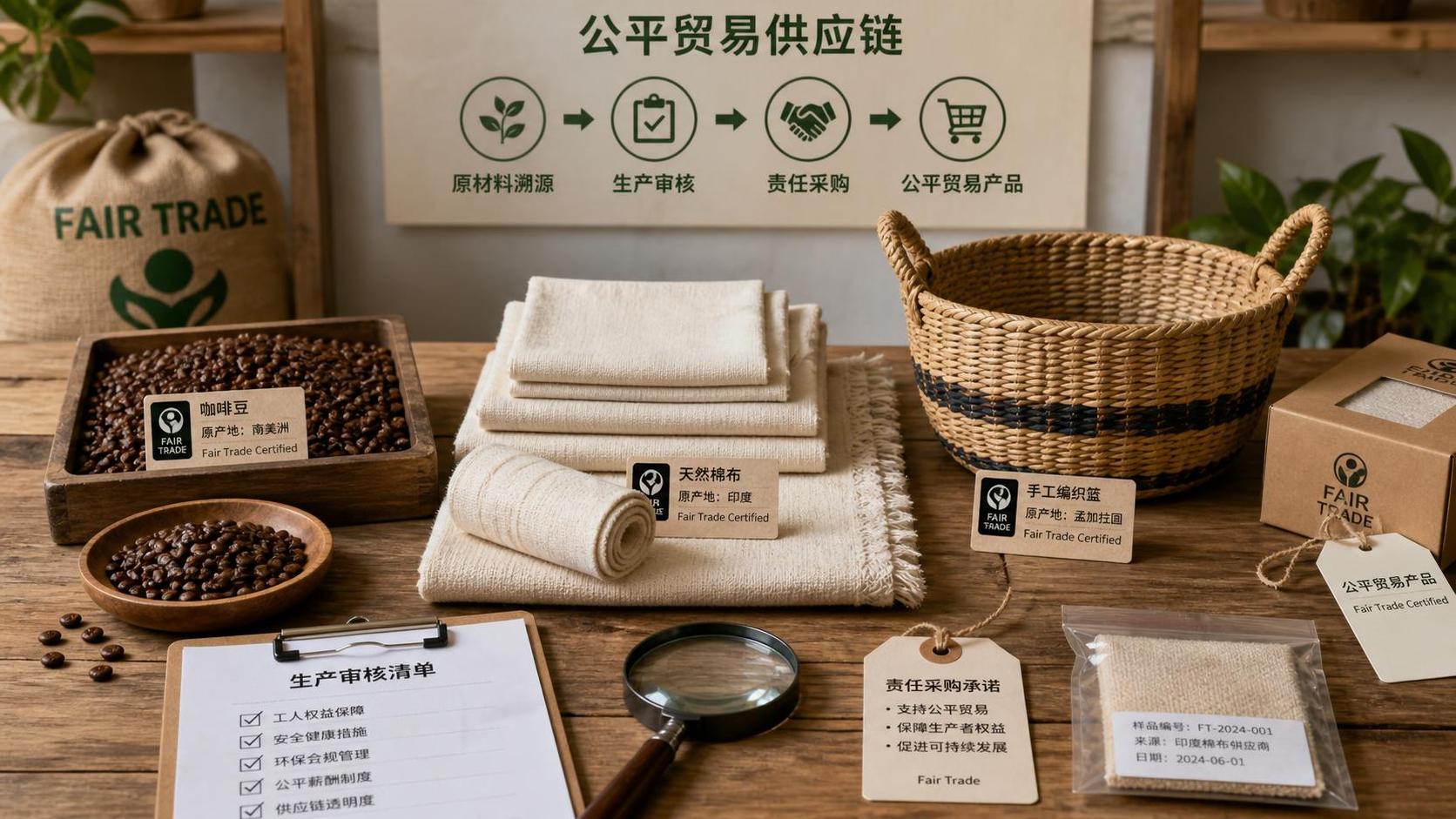
Handcrafted Gifts That Scale Without Losing Quality


Scaling handcrafted gifts is no longer a trade-off between artisan value and operational efficiency. For project managers and engineering leads, the real challenge lies in building repeatable processes, reliable supplier coordination, and quality control systems that protect design integrity at every stage. This article explores how handcrafted gifts can grow from niche production to scalable business models without sacrificing craftsmanship, consistency, or brand trust.
For most readers searching handcrafted gifts in a scaling context, the real question is practical. Can a handmade product line expand without becoming inconsistent, delayed, or too costly to manage?
The short answer is yes, but only when growth is designed as a system. Quality does not fail because demand rises. It fails because process discipline, supplier visibility, and specification control lag behind demand.
That is why project managers and engineering leads should not frame handcrafted gifts as an artisanal exception. They should treat them as a controlled production category with higher variability and stronger storytelling value.
What Decision-Makers Really Need to Know Before Scaling Handcrafted Gifts
Target buyers in this space usually are not looking for abstract inspiration. They want a way to assess whether handcrafted gifts can support volume, margin, timeline reliability, and brand expectations at the same time.
For project leaders, the first concern is repeatability. If one sample looks exceptional but the next five batches vary in color, finish, assembly, or packaging, the business model becomes fragile very quickly.
The second concern is capacity coordination. Handmade production often depends on distributed workshops, specialized skills, seasonal labor patterns, and material availability that do not behave like standardized factory inputs.
The third concern is commercial risk. A handcrafted gifts program may create strong market differentiation, but if quality claims cannot be defended consistently, returns, rework, and reputation damage will erase that advantage.
So the evaluation standard should be clear. Do not ask whether the product is handmade. Ask whether the craftsmanship can be translated into measurable process controls without stripping away its human value.
Why Handcrafted Gifts Often Break During Growth
Many handcrafted gifts fail at scale for predictable reasons. The issue is rarely the craft itself. The breakdown usually comes from weak documentation, informal communication, and no clear definition of acceptable variation.
In small-batch environments, founders often rely on visual memory, artisan experience, and direct supervision. That works at low volume, but it becomes unstable once multiple production nodes are involved.
Material inconsistency is another common problem. Natural fibers, wood, leather, ceramics, dyes, and hand-applied finishes behave differently across lots, climates, and operator techniques, especially when sourcing expands too quickly.
Lead time volatility also increases under growth pressure. When demand spikes, bottlenecks often appear in pre-production stages such as sample approval, component matching, decoration setup, and packaging readiness rather than final assembly.
There is also a misconception that quality problems can be fixed only at the final inspection stage. In handcrafted gifts, most quality failures are designed upstream through unclear standards and unmanaged process variation.
What “Scalable Quality” Actually Looks Like in Handcrafted Gifts
Scalable quality does not mean every item becomes identical like injection-molded output. It means every item stays within a controlled range that preserves design intent, user experience, and commercial acceptability.
This is especially important in categories where craftsmanship is part of the value proposition. Slight variation can strengthen authenticity, but unmanaged variation creates doubt, especially for retail programs, corporate gifting, and international distribution.
A scalable handcrafted gifts program usually has five visible traits. Specifications are documented. Critical quality points are defined. Approved tolerances are realistic. Supplier roles are clear. Corrective actions happen before shipment, not after complaints.
For engineering-minded teams, this means translating aesthetics into measurable checkpoints. Soft edges, stitched alignment, engraving depth, color tone, gloss level, closure strength, and packaging presentation all need operational definitions.
For project managers, it also means balancing control with practicality. If standards are too vague, output becomes unstable. If standards are too rigid, production becomes slow, expensive, and unnecessarily difficult for artisan partners.
Build Specifications That Protect Craft Without Over-Industrializing It
The most effective scaling tool is not more supervision. It is better specification architecture. Handcrafted gifts need documentation that captures both measurable attributes and visual expectations in a way suppliers can actually use.
A strong specification pack should include bill of materials, dimensional ranges, finish references, approved color windows, assembly sequence, packaging instructions, and defect classification by severity rather than generic comments.
Photos are essential, but they are not enough on their own. Teams should combine annotated images with numeric tolerances, material samples, and pass-fail examples so artisans and quality inspectors interpret standards consistently.
It is also wise to separate “must-match” features from “craft-allowed” variation. For example, logo placement, closure function, and safety compliance may be non-negotiable, while minor grain variation or hand-brushed texture may be acceptable.
This distinction prevents a common error. Teams either reject too much output in pursuit of unrealistic sameness or accept too much inconsistency because they are afraid to constrain the handmade identity.
Supplier Structure Matters More Than Many Buyers Expect
When companies scale handcrafted gifts, they often focus heavily on product design and not enough on supplier architecture. Yet the structure of the production network usually determines whether quality survives commercial expansion.
Some suppliers are excellent at sample craftsmanship but poor at scheduling, batch tracking, or material forecasting. Others have stronger operational control but weaker sensitivity to handcrafted finishing details. Those differences matter early.
Project managers should evaluate suppliers across two dimensions at once: craft capability and systems maturity. A partner that scores high in both is rare, but that is exactly why structured qualification is necessary.
Useful assessment criteria include process documentation, subcontractor visibility, incoming material control, defect escalation routines, training consistency, capacity buffers, and ability to maintain finish standards across repeat orders.
For multi-supplier programs, one additional rule is critical. Do not assume that one approved sample means all workshops can replicate the same result. Capability must be validated at the workshop level, not just the company level.
Quality Control Should Start Before Production, Not After It
In handcrafted gifts, final inspection alone is too late. By that point, labor has already been spent, materials have already been transformed, and corrective action is usually costly or commercially disruptive.
A better model uses layered quality control. Start with raw material approval, then pilot batch validation, then in-line checkpoints at the most variable operations, and finally pre-shipment inspection based on critical defect thresholds.
The key is identifying where variation enters the process. In some products it begins during cutting. In others it begins during dyeing, stitching, carving, filling, hand-painting, or packaging assembly. Quality plans should reflect that reality.
For engineering leads, a control plan can be simple but disciplined. Define process step, risk point, checkpoint method, sample size, acceptance criteria, and escalation path. This creates accountability without making artisan production unworkable.
For project managers, regular review cadence matters just as much. A brief structured review of yield, rework, late approvals, and recurring defects often reveals scaling stress weeks before customer complaints appear.
How to Standardize Processes Without Making the Product Feel Generic
One reason teams hesitate to scale handcrafted gifts is fear of losing uniqueness. That concern is valid, but it usually comes from confusing process standardization with aesthetic homogenization.
Standardization should target the invisible mechanics of consistency, not the emotional surface of the product. You can standardize material grading, workstation flow, curing time, moisture control, and packaging sequence while preserving handmade character.
Think of it as modular control. Lock down the variables that affect function, durability, and brand promise. Leave room in approved areas where hand-finishing, texture nuance, or material individuality adds authentic value.
This approach is especially useful for gift lines with premium positioning. Buyers expect handcrafted gifts to feel human, but they still expect them to arrive complete, safe, presentable, and aligned with what was ordered.
In other words, scale should remove avoidable inconsistency, not meaningful variation. That is the operational mindset that allows craftsmanship and commercial growth to coexist.
Lead Time, Cost, and Yield: The Metrics That Actually Matter
Many handcrafted programs are judged mainly on unit cost, which is a mistake. A lower quoted price means little if the supplier produces unstable lead times, high defect rates, or repeated batch rework.
A better decision framework tracks a broader set of metrics. These include first-pass yield, rework percentage, on-time milestone completion, material utilization, order change impact, packaging accuracy, and complaint rate after delivery.
Lead time should also be broken into stages rather than measured only as one total number. Sampling, material readiness, artisan allocation, production, quality review, packing, and export preparation each need visibility.
This matters because delays in handcrafted gifts are often hidden in transitions, not in the visible making stage. Teams that map those transitions can usually improve reliability without forcing unrealistic production speed.
Cost analysis should include the price of inconsistency. Returns, repacking, discounting, missed launch windows, and extra coordination hours are real operational costs that often exceed small differences in piece price.
When Handcrafted Gifts Are a Strong Business Fit
Not every product should be scaled as handcrafted. The model works best when buyers value story, tactile quality, cultural connection, premium presentation, or design distinction more than absolute visual uniformity.
It is particularly strong for corporate gifting, boutique retail, seasonal collections, hospitality welcome programs, museum or heritage merchandise, and premium home or lifestyle accessories with limited but repeatable assortments.
Handcrafted gifts are also attractive when brands want to reduce direct price competition. Distinct craft value can make products harder to commoditize, especially when supported by transparent sourcing and credible production narratives.
However, the model is weaker for products requiring extremely tight tolerance, highly automated replenishment, or aggressive mass-market pricing with little room for yield variation or longer approval cycles.
That is why fit assessment should come before scale planning. The question is not whether handmade is appealing. It is whether the product category, customer promise, and operating model all support it.
A Practical Scaling Framework for Project Managers and Engineering Leads
If you are responsible for execution, a phased framework is usually more effective than immediate expansion. Start by proving repeatability in a controlled pilot before committing to wide distribution or high-volume demand signals.
Phase one should validate the product definition. Confirm materials, finish standards, packaging, defect thresholds, and approved tolerances through multiple sample rounds produced under realistic conditions rather than showroom conditions.
Phase two should validate process stability. Run a pilot batch large enough to expose bottlenecks, defect patterns, and communication gaps. Measure where rework appears and whether results remain consistent across operators or workshops.
Phase three should validate network readiness. Test supplier reporting, replenishment timing, component traceability, and contingency options for labor, materials, or finishing capacity. This is where scalable handcrafted gifts are truly won or lost.
Phase four should validate commercial sustainability. Review margin after rework, schedule reliability, quality trendline, and customer feedback. If those indicators hold, expansion becomes a managed decision rather than a leap of faith.
Conclusion: Craftsmanship Scales Best When It Is Managed Like a System
Handcrafted gifts do not lose quality because demand grows. They lose quality when teams try to scale emotion without scaling control. For project managers and engineering leads, that distinction is the foundation of good decision-making.
The most successful programs treat craftsmanship as a strategic asset supported by disciplined specifications, supplier qualification, layered quality control, and realistic tolerance management. That is how handmade value survives operational complexity.
If your goal is to grow handcrafted gifts without damaging trust, focus less on romantic ideas of craft and more on the systems that protect it. Repeatability, visibility, and process ownership are what make quality truly scalable.
Done well, handcrafted gifts can deliver both differentiation and reliability. They can preserve artisan character while supporting modern sourcing, multi-market distribution, and long-term brand credibility. That is the real opportunity behind scaling with care.