Contemporary Furniture Quality Checks Before Ordering

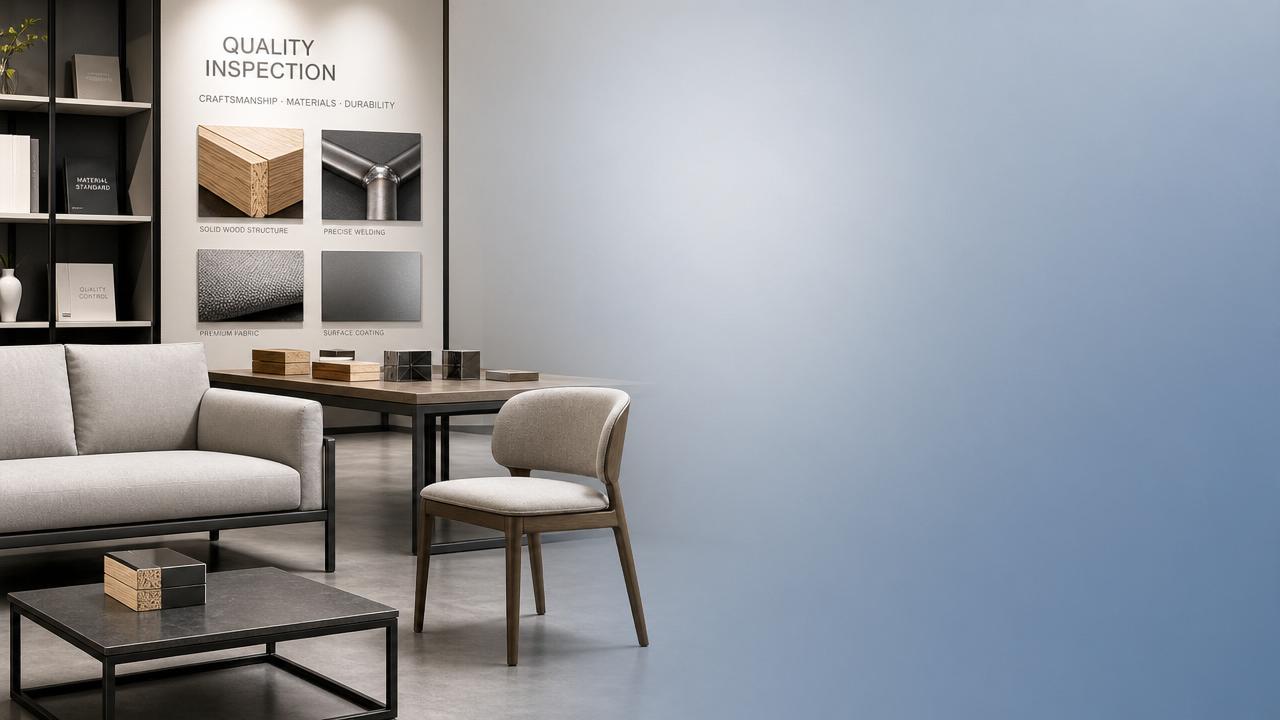
Contemporary furniture quality checks before ordering: where should the review really begin?
When contemporary furniture is evaluated for bulk or project orders, appearance is only the starting point.
Clean lines, soft textures, and modern silhouettes can hide weak joints, unstable frames, or inconsistent finishes.
That is why a practical quality review needs to connect design intent with manufacturing evidence.
In real sourcing work, the stronger approach is not asking whether a piece looks premium.
The better question is whether the contemporary furniture will perform consistently across use cycles, environments, and delivery batches.
This perspective reflects the logic often used by GLC.
Furniture quality is not isolated from textiles, leather, space planning, or lifestyle usage.
It sits at the meeting point of aesthetics, craftsmanship, supply chain control, and standards compliance.
So what should be checked before ordering contemporary furniture, and what tends to be missed?
Is visual appeal enough to judge contemporary furniture quality?
Not really, and this is one of the most common mistakes.
Contemporary furniture often depends on refined proportions and minimal details.
Because the design language looks clean, quality problems can stay hidden until installation or repeated use.
A chair may look elegant but flex too much under load.
A table may photograph well but show edge swelling after humidity exposure.
An upholstered bench may feel comfortable at first yet lose shape after limited compression cycles.
A more reliable quality screen usually covers four layers:
- Material truth: what the product is actually made from.
- Structural logic: how the frame, joints, and reinforcements work together.
- Surface durability: how finishes respond to abrasion, moisture, and cleaning.
- Compliance readiness: whether claims are backed by test documents and traceable records.
In other words, contemporary furniture quality is a system check, not a styling judgment.
Which material checks matter most before placing an order?
Material verification usually reveals more than supplier presentations do.
The goal is to confirm consistency, not only composition.
For wood-based contemporary furniture, start with substrate type, moisture level, density range, and veneer thickness.
Thin veneer on unstable core boards often creates later cracking or edge lifting.
For metal frames, ask about wall thickness, welding treatment, anti-corrosion steps, and coating adhesion.
Powder coating can look smooth while hiding poor pretreatment underneath.
For upholstered contemporary furniture, the review becomes broader.
Fabric composition, rub count, pilling resistance, colorfastness, foam density, and cushion recovery all deserve attention.
This is where GLC’s cross-sector view becomes useful.
Textile performance cannot be separated from furniture durability, especially in lounge seating, office breakout areas, and hospitality spaces.
The same applies to leather or bio-synthetic alternatives.
Touch alone is not enough.
Check backing stability, seam behavior, aging performance, and cleaning compatibility.
A quick material judgment table
Before moving to samples, this comparison helps narrow weak points quickly.
How do you tell if the structure is strong enough for real use?
Structural stability is where many contemporary furniture decisions succeed or fail.
Minimalist designs often reduce visible supports, so engineering quality becomes even more important.
A useful first check is to inspect how the product transfers load.
If pressure is concentrated on slim legs, floating panels, or narrow connection points, reinforcement details should be verified carefully.
Joint quality deserves special attention.
Loose screw anchoring, shallow inserts, weak corner blocks, and inconsistent weld penetration often create long-term instability.
In actual application, sample testing gives faster answers than verbal assurance.
- Apply repeated load to seating and observe wobble growth.
- Check tables for racking during side force.
- Inspect drawers and sliding parts after cycle testing.
- Review whether replacement hardware is standardized.
This matters for office, residential, and commercial settings alike.
GLC often frames furniture as part of broader living systems.
That means structure should be judged in context, not in isolation.
A lounge chair for occasional home use and one for active collaborative space use are not equal, even if they share the same design language.
What finish and craftsmanship details usually expose weak contemporary furniture?
Surface finish is often treated as a cosmetic matter, but it affects maintenance, aging, and customer satisfaction.
For painted or coated contemporary furniture, look for thickness consistency, adhesion, edge coverage, and scratch resistance.
Thin coating around corners is a frequent failure point.
For veneer and laminate surfaces, inspect pattern matching, glue lines, edge banding neatness, and surface flatness under side light.
With upholstery, craftsmanship shows up in seam alignment, piping symmetry, pattern placement, and fabric tension.
Overstretched fabric may look crisp initially, then distort during use.
The same goes for cushion tailoring.
Sharp-looking forms are attractive in contemporary furniture, but overly tight construction can shorten service life.
A practical review should include cleaning response as well.
If the finish stains easily or dulls after basic cleaning, the long-term maintenance cost increases quickly.
Are certifications and documents just formalities, or do they change the risk profile?
They change the risk profile more than many people expect.
Documentation does not replace physical inspection, but it helps verify whether the supplier controls processes consistently.
For contemporary furniture, useful documents may include material specifications, test reports, compliance declarations, packaging standards, and inspection records.
The key is traceability.
If a supplier presents a fabric abrasion report, the reported material should match the actual upholstery used.
If wood emission claims are made, the board source and batch control should be clear.
This is especially relevant when contemporary furniture crosses categories.
A workspace lounge unit may involve fabric testing, foam safety, metal coating, ergonomic dimensions, and fire performance requirements at the same time.
That cross-disciplinary view reflects GLC’s broader method.
Good design and good paperwork should support each other, not contradict each other.
Documents worth requesting before approval
- Bill of materials aligned with the final sample.
- Test reports for seating, tables, coatings, or textiles where relevant.
- Packaging drop or transit protection details.
- Inspection checklist used during production.
- Care instructions and spare part availability.
What are the most overlooked mistakes before ordering contemporary furniture?
One frequent mistake is approving based on a showroom sample only.
Showroom pieces are often better assembled, better lit, and less representative of batch variation.
Another mistake is checking the product but ignoring packaging and installation details.
Well-made contemporary furniture can still arrive damaged if edge protection, carton strength, or hardware segregation is poor.
There is also a cost misconception.
Lower unit pricing may hide higher risk in rework, returns, replacement parts, or finish inconsistency.
A balanced evaluation should compare total lifecycle value, not only opening price.
The final blind spot is failing to define acceptable tolerances.
Contemporary furniture often uses precise visual lines.
Even small variation in seams, finish tone, or leg alignment becomes easy to notice.
Without documented tolerances, quality discussions become subjective.
So how should the final decision be made with more confidence?
A confident decision usually comes from combining sample review, technical evidence, and usage context.
Start by defining where the contemporary furniture will be used and how intensively.
Then match that requirement to structure, material, finish, and compliance checkpoints.
If two options look similar, compare them through failure risk rather than style preference.
Which one has clearer batch control?
Which one provides more transparent test data?
Which one will be easier to maintain over time?
That is often where the stronger contemporary furniture option becomes obvious.
In practice, the most reliable review framework is simple.
- Verify materials against declared specifications.
- Test structural stability under realistic use.
- Inspect finish durability and craftsmanship consistency.
- Confirm documents, traceability, and compliance alignment.
- Review packaging, spare parts, and after-delivery practicality.
Contemporary furniture should express both aesthetics and discipline.
That balance is exactly what separates a visually impressive sample from a dependable order decision.
The next useful step is to build a short approval checklist around your actual application, then compare suppliers against the same standards.
When design, craftsmanship, and evidence are reviewed together, sourcing decisions become far easier to defend.