Modern Furniture for Apartments: Space-Saving Picks

Why does modern furniture for apartments matter more than ever?
Choosing modern furniture for apartments is no longer just about appearance. Urban homes need every chair, shelf, and table to work harder without making rooms feel crowded.
That is why space-saving design has become a practical decision, not a passing trend. A compact apartment still needs comfort, storage, flexibility, and visual calm.
In real projects, the best modern furniture for apartments usually combines global design language with solid craftsmanship. That balance reflects a wider industry shift toward smarter living products.
This is also where GLC’s perspective becomes useful. Looking at furniture through aesthetics, materials, ergonomics, and supply chain logic helps explain why some pieces truly perform better.
A beautiful sofa that blocks circulation is not efficient. A sleek table with poor hardware will not age well. Apartment living makes these details impossible to ignore.
What actually counts as apartment-friendly modern furniture?
Modern furniture for apartments is not simply smaller furniture. The better definition is furniture designed around limited footprint, multiple uses, and easier spatial flow.
In practice, apartment-friendly pieces often share a few traits. They look light, move easily, and reduce visual clutter even when storage needs are high.
- Raised legs that expose more floor area
- Slim frames with strong internal support
- Hidden storage under seats or beds
- Expandable tops or nesting formats
- Durable upholstery suited to daily, repeated use
The most effective modern furniture for apartments also respects human behavior. People eat, work, relax, host friends, and store seasonal items in the same compact environment.
So the question is not only, “Does it fit?” A better question is, “Can it support changing routines without forcing the room into one fixed purpose?”
Which space-saving picks solve the biggest apartment problems?
The strongest picks usually address three common issues: lack of storage, awkward room overlap, and furniture that feels oversized once installed.
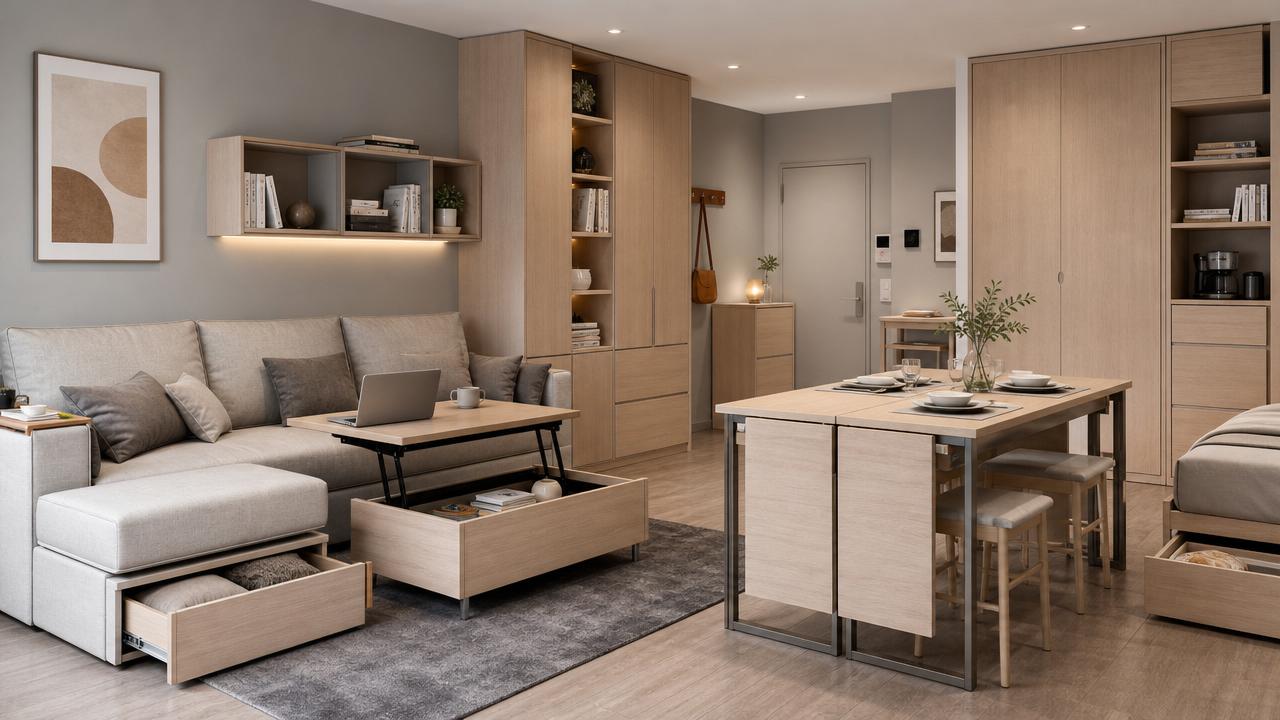
If the living area also serves as dining room and office, multifunctional seating is often the smartest starting point. Storage benches and modular sectionals are especially useful.
For sleeping areas, platform beds with drawers reduce the need for extra cabinets. In studios, daybeds and sofa beds help separate day use from night use.
Dining zones benefit from drop-leaf tables, wall-mounted tables, or nesting stools. These options support daily meals without occupying permanent floor space.
Vertical storage matters just as much as floor planning. Tall bookcases, narrow cabinets, and entry consoles use overlooked wall height rather than expanding outward.
A quick comparison can make selection easier:
The point is not to fill every corner. The point is to choose modern furniture for apartments that removes friction from daily life.
How do you judge quality without being misled by looks alone?
This is one of the most searched questions for good reason. Many compact pieces look elegant online, but apartment use is intensive and exposes weak construction quickly.
Start with materials. Engineered wood can be practical, but edge finishing, board density, and moisture resistance matter more than marketing language.
For upholstered items, fabric performance is critical. Textile knowledge matters here, especially when furniture must resist abrasion, pilling, and frequent cleaning in small homes.
That broader view aligns with GLC’s cross-sector approach. Furniture quality is not only visual design. It also depends on textile science, ergonomic support, hardware reliability, and responsible manufacturing.
A few checkpoints help separate stylish pieces from well-made ones:
- Check drawer slides and hinge movement for smooth, stable action
- Look for removable, cleanable covers when possible
- Ask about weight capacity, not just overall dimensions
- Review seat depth and back angle for real comfort
- Confirm finish durability on tabletops and high-touch surfaces
Better modern furniture for apartments often feels quieter in design but stronger in details. That is usually a sign that craftsmanship, not only styling, guided development.
Are modular and multifunctional pieces always the best choice?
Not always. Multifunctional furniture sounds ideal, but some pieces try to do too much and end up doing nothing particularly well.
A sofa bed can be excellent in a studio or guest-ready living room. In a larger one-bedroom, a regular sofa may deliver better comfort and longer service life.
Modular systems work best when layouts change often or access is difficult. Narrow staircases, elevators, and rental moves make sectional flexibility very attractive.
Still, every added function introduces extra mechanisms, seams, and potential wear points. That can affect maintenance, assembly time, and long-term stability.
A practical rule is simple. Buy multifunctional modern furniture for apartments when the second function gets used weekly, not just occasionally.
If the feature rarely serves a real need, the extra cost and complexity may not be worth it. Compact living rewards honest decisions more than clever marketing claims.
What mistakes make small spaces feel even smaller?
The most common mistake is buying by showroom impression alone. Large open displays make furniture appear smaller than it will feel in an actual apartment.
Another issue is ignoring circulation. Even attractive modern furniture for apartments can fail if doors, drawers, and walking paths overlap awkwardly.
Color also matters, though not in a simplistic way. Light finishes can help, but contrast and material texture often influence visual weight more than color alone.
People also underestimate storage strategy. Too many open shelves can create visual noise, while a mix of closed storage and display surfaces feels more controlled.
Watch for these frequent errors:
- Oversized armrests that waste usable seating width
- Coffee tables with heavy bases in narrow rooms
- Low storage that spreads horizontally across walls
- Furniture sets that force every piece to match exactly
- Ignoring delivery access and assembly constraints
In smaller homes, visual discipline matters as much as function. A few well-chosen items usually outperform a room full of average ones.
How should you build a smart apartment furniture plan from room to room?
A good plan starts with behavior, not catalog browsing. Map what happens in each zone during a normal week before choosing modern furniture for apartments.
If the living room supports work, entertainment, and visitors, assign one primary function and one secondary function. That keeps the layout clear.
Measure wall lengths, door swings, window height, and walking lanes. Then compare furniture dimensions with real clearance, not estimated space.
It helps to create a short decision checklist:
When these questions are answered early, selection becomes more consistent. Style still matters, but it follows function instead of competing with it.
The best modern furniture for apartments usually comes from that balance: design intelligence, material credibility, and a realistic understanding of how small spaces are actually lived in.
If the next step feels unclear, begin with one room, one pain point, and one measurement-based shortlist. Compare storage value, comfort, durability, and layout fit before deciding.
That approach leads to better choices than trend chasing. It also reflects the larger principle behind quality living today: thoughtful craftsmanship should make daily space work better, not just look better.