Modern Furniture Manufacturer: 7 Checks Before Starting a Project

Choosing a modern furniture manufacturer is more than comparing catalogs or prices—it is a strategic decision that affects timelines, quality, compliance, and long-term project value. For project managers and engineering leads, these seven essential checks help reduce risk, align design with production capability, and ensure every furniture solution meets both functional demands and brand expectations before the project begins.
In commercial interiors, office fit-outs, hospitality upgrades, public facilities, and mixed-use developments, furniture is not a decorative afterthought. It is part of the operational system of a space. Lead times, fire performance, ergonomic targets, maintenance cycles, installation sequencing, and budget control all depend on whether the selected modern furniture manufacturer can translate design intent into repeatable production.
For teams working across global supply chains, the challenge is even greater. A chair, workstation, or storage solution may look convincing in a showroom, but project delivery depends on factory discipline, technical communication, material traceability, and the ability to manage revisions within 2 to 6 weeks rather than losing an entire quarter. That is why the right evaluation framework matters before RFQ submission, mock-up approval, or contract award.
Drawing on the cross-sector perspective of GLC, where design intelligence meets manufacturing logic across furnishing, textiles, workspace architecture, and lifestyle products, this guide focuses on seven practical checks that help decision-makers reduce procurement risk and improve execution outcomes.
Why Manufacturer Selection Impacts the Entire Project Lifecycle
A modern furniture manufacturer influences far more than unit pricing. In most fit-out or furnishing projects, furniture touches at least 5 operational variables: space planning, MEP coordination, user comfort, code compliance, and post-installation maintenance. If one of these breaks down, the downstream cost can exceed the initial price difference by 8% to 20% through delays, rework, or replacement.
Project managers typically work under fixed milestones. A missed sample approval by 7 days can push procurement, production, packing, and site installation into conflict with flooring, lighting, and partition trades. Engineering leads face a similar issue when a supplier cannot provide technical drawings, loading data, or mounting details early enough for integration.
The operational difference between a vendor and a manufacturing partner
A vendor may only resell standard items. A capable modern furniture manufacturer should be able to interpret BOQs, optimize joinery details, manage material substitutions within defined tolerances, and coordinate custom production at scale. For medium-to-large projects, this distinction is critical when order quantities range from 50 units to 5,000 units across multiple SKUs.
Core project risks when selection is rushed
- Design approved but not manufacturable within the required material thickness or hardware system
- Insufficient testing documents for upholstery, coatings, or flame-retardant components
- Lead times quoted at 30 days but actual capacity requires 45 to 60 days
- Poor packaging standards causing transit damage rates above acceptable levels
- Weak revision control, resulting in production based on outdated drawings
Before evaluating the seven checks in detail, the table below shows how selection criteria connect to common project outcomes.
The main lesson is simple: selection should be based on execution evidence, not only design appeal. A reliable modern furniture manufacturer supports both aesthetic goals and measurable delivery control.
The 7 Checks Before Starting a Furniture Project
The following seven checks are especially relevant for project managers responsible for cost, timeline, and inter-trade coordination. They work best when reviewed during supplier shortlisting, before final specification sign-off, and again before purchase order release.
1. Confirm manufacturing scope and category specialization
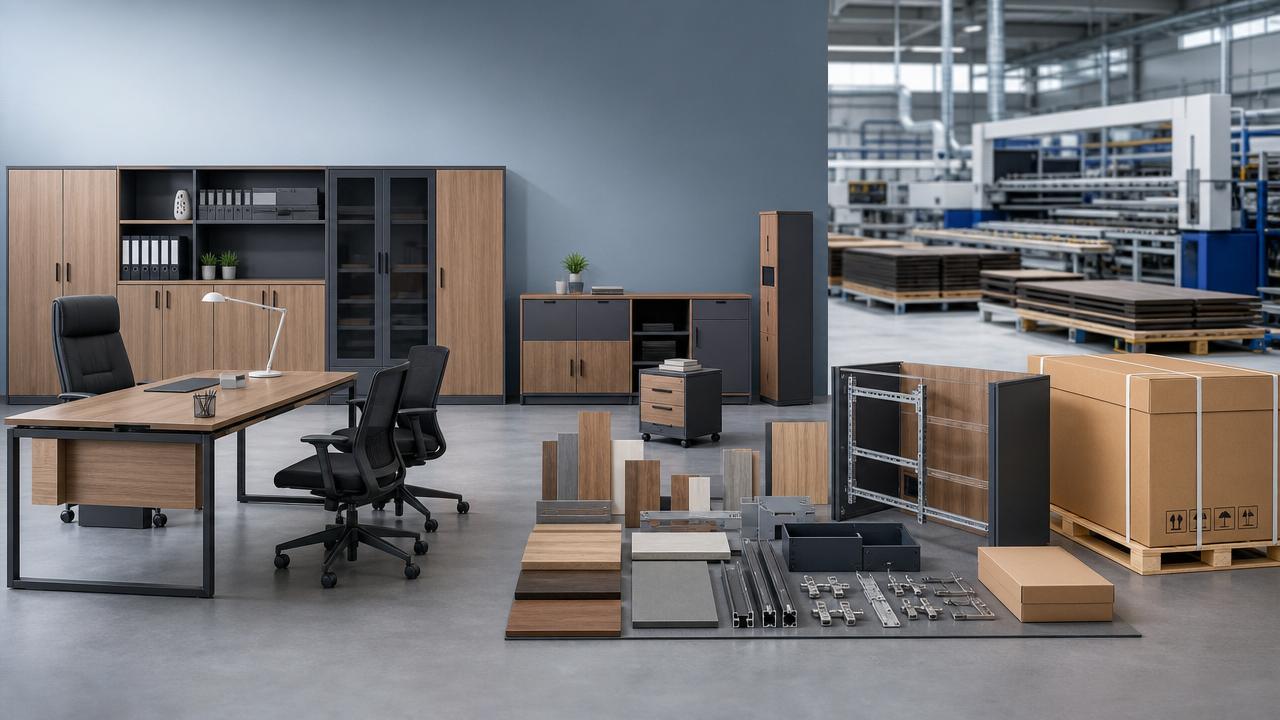
Not every factory that produces furniture is equally strong in seating, casegoods, acoustic solutions, metal frames, or integrated office systems. Ask for category-specific evidence from the last 12 to 24 months. A factory that excels in residential loose furniture may struggle with contract-grade workstation systems or high-traffic lounge seating.
Check whether the manufacturer handles wood, metal, upholstery, laminates, veneer, and powder-coated parts in-house or through outside partners. A hybrid model is common, but it requires stronger coordination and can add 5 to 10 days if approvals are not synchronized.
2. Validate design-to-production capability
A strong modern furniture manufacturer should convert concept drawings into production-ready documentation with minimal ambiguity. This includes bill of materials, exploded views, connection methods, finish schedule, and dimensional tolerances. For custom items, a tolerance band of ±1 mm to ±3 mm may be acceptable depending on material type and assembly condition.
If the project includes mixed materials, such as fabric, metal, and engineered wood, ask how movement, edge treatment, and finish compatibility are controlled. This is where GLC’s broader view of craftsmanship matters: furniture quality often depends on textile behavior, foam density, stitch consistency, and coating performance as much as on frame construction.
3. Review sample, mock-up, and approval workflow
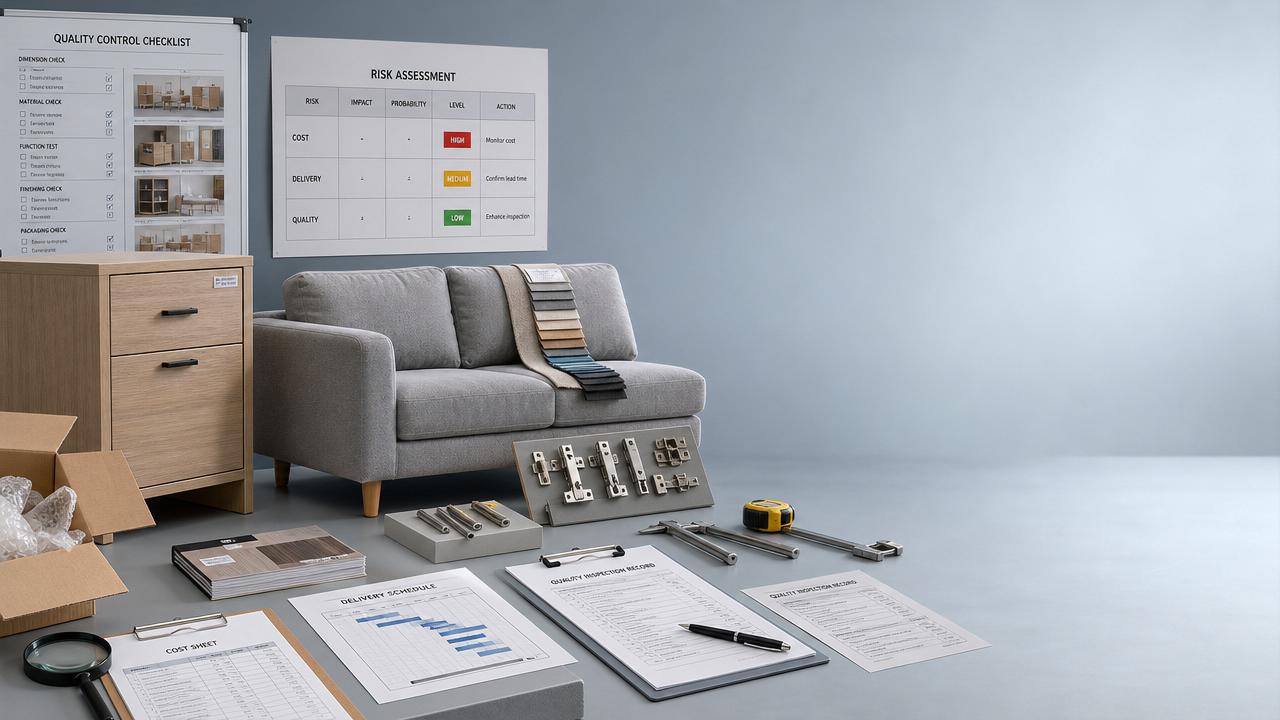
For projects above 100 units or with brand-sensitive spaces, do not skip mock-ups. A finish chip is not enough when seating comfort, edge radius, drawer movement, or visual grain direction affects user experience. A practical workflow includes 3 levels: material sample, prototype, and pre-production sample.
Lead times for this stage usually range from 7 to 21 days depending on complexity. If a manufacturer cannot define approval gates clearly, the project is at higher risk of undocumented changes during mass production.
4. Check production capacity against your installation schedule
Capacity is not just a factory size question. It is a sequencing question. Can the supplier deliver 30% of the order for the first site zone, then 40%, then the final 30% without changing color lots or hardware specifications? For phased projects, partial delivery discipline matters as much as total capacity.
Ask how many active projects the factory usually runs at one time, what percentage of output is reserved for export, and whether peak season reduces flexibility. Many problems begin when a quote assumes ideal production flow but real scheduling is already saturated.
5. Verify compliance, durability, and safety requirements
Commercial furniture often needs to meet more than appearance standards. Depending on the application, teams may need evidence related to flame performance, VOC emissions, abrasion resistance, edge safety, or static load capacity. For example, task seating, public benches, and storage systems often require different performance priorities.
If your project involves open-plan office zones, reception areas, co-working spaces, or education environments, ask for application-specific durability data rather than generic statements. A surface that works in low-touch residential use may fail quickly in a workplace with 8 to 12 hours of daily contact.
6. Audit communication, documentation, and change control
Many furniture delays come from information gaps rather than factory weakness. You need a documented process for RFIs, revision numbering, sample approval logs, packing lists, and shipment notices. Response time should be defined early. For active project phases, 24 to 48 hours is a practical target for technical feedback.
Even when product information is limited, teams should insist on traceable references. If a placeholder item must be carried for internal workflow, it should be marked clearly, such as 无, to avoid confusion between provisional and approved specifications.
7. Assess packaging, logistics, and after-installation support
A good product can still become a bad delivery if packaging and logistics are weak. Ask whether items are shipped KD, semi-assembled, or fully assembled, and how corners, glass, powder-coated surfaces, and upholstered parts are protected. Damage rates should be discussed openly, especially for cross-border shipments and multi-stop delivery.
After-installation support also matters. Clarify spare part availability, touch-up procedures, claim response time, and whether replacement components can be supplied within 7 to 14 days for standard items. For workplace and hospitality projects, downtime can cost more than the replacement part itself.
Quick pre-award checklist for decision teams
- Match the supplier’s strongest category to the project’s top 3 furniture types.
- Review at least 1 prototype or equivalent pre-production sample for custom items.
- Confirm the production timeline in weeks, not only a verbal “ready soon” estimate.
- Check technical documents for dimensions, finishes, hardware, and packing method.
- Ask for durability and compliance evidence relevant to the actual use environment.
- Define revision control and response SLA before purchase order release.
- Align logistics method with site access, lift size, staging area, and installation sequence.
To make these seven checks easier to apply, the table below maps them to practical review questions and warning signs.
A manufacturer that answers these questions clearly is usually easier to manage during execution. In contrast, vague communication early in procurement often becomes expensive once production starts.
Common Mistakes in Furniture Procurement for Modern Projects
Even experienced teams can under-evaluate furniture packages because they appear less technical than MEP or façade packages. In reality, furniture procurement is a coordination-heavy package with direct user impact. Several avoidable mistakes appear repeatedly across office, hospitality, retail, and institutional projects.
Mistake 1: Buying only on visual similarity
Two items may look almost identical in a presentation deck, yet differ significantly in substrate density, hardware cycle life, foam resilience, stitching accuracy, or coating thickness. A modern furniture manufacturer should be judged on construction logic and service life, not image resemblance alone.
Mistake 2: Underestimating finish coordination
Color approval becomes difficult when fabric, veneer, laminate, metal, and plastic components come from different streams. Tolerances in texture and sheen are normal, but they must be managed. Build a finish board and lock approved references before mass production. This single step can reduce visual rejection risk across large batches.
Mistake 3: Ignoring site realities
Furniture that fits the plan may not fit the lift, corridor turn radius, or staging area. KD design, split packaging, and on-site assembly requirements should be reviewed at least 2 to 3 weeks before dispatch. This is especially important in retrofit office projects where access windows may be limited to nights or weekends.
Mistake 4: Treating after-sales support as optional
Project closeout is not the end of furniture risk. Missing glides, damaged panels, finish touch-ups, and hardware replacements are common in the first 30 to 90 days after handover. A dependable supplier should define who handles punch-list items, what lead time applies, and which spare parts should be held locally.
How GLC’s Cross-Industry View Helps Better Decision-Making
Furniture decisions improve when they are viewed through a wider craftsmanship lens. GLC connects insights from furnishing, textiles, workspace architecture, gifts, and outdoor lifestyle manufacturing, which matters because modern furniture is increasingly multi-material, sustainability-conscious, and experience-driven.
For example, upholstery decisions are tied to textile performance and cleaning regimes. Ergonomic seating connects to workplace behavior and collaborative space design. Lounge and outdoor-adjacent products depend on coating durability, moisture resistance, and packaging resilience. This broader supply chain perspective helps project leaders ask better questions before specifications are frozen.
What informed buyers should prioritize in 2025 and beyond
- Material transparency across engineered wood, fabrics, foams, and surface finishes
- Flexible production for mixed SKU projects with smaller runs and faster approvals
- Ergonomic integration for hybrid workspaces and multi-use interior zones
- Lower-emission and easier-to-maintain solutions for long-term operational value
- Better digital communication between design teams and factory engineering staff
When a modern furniture manufacturer can support these priorities with real process discipline, the project gains more than good-looking furniture. It gains predictability, adaptability, and lower lifecycle friction.
Final Decision Framework for Project Managers
If you need a practical approach, score each shortlisted supplier across 4 weighted areas: technical capability, schedule reliability, compliance readiness, and communication quality. Many teams use a 100-point matrix, but even a simple ranking model can reveal which supplier is strongest where the project carries the most risk.
The best modern furniture manufacturer for your project is not necessarily the one with the largest catalog. It is the one that can prove category fit, convert design into production accurately, deliver within the required sequence, and support the space after installation. That is the difference between a smooth rollout and a chain of preventable corrections.
For project managers, engineering leads, and procurement teams working across office, commercial, hospitality, or public interior programs, these seven checks create a stronger starting point for supplier evaluation and project control. If you want a more informed path from concept to manufacturing, explore more insights through GLC and connect with specialists who understand both global aesthetics and real production logic. Contact us today to discuss your project, request a tailored sourcing perspective, or learn more solutions for furniture manufacturing decisions.