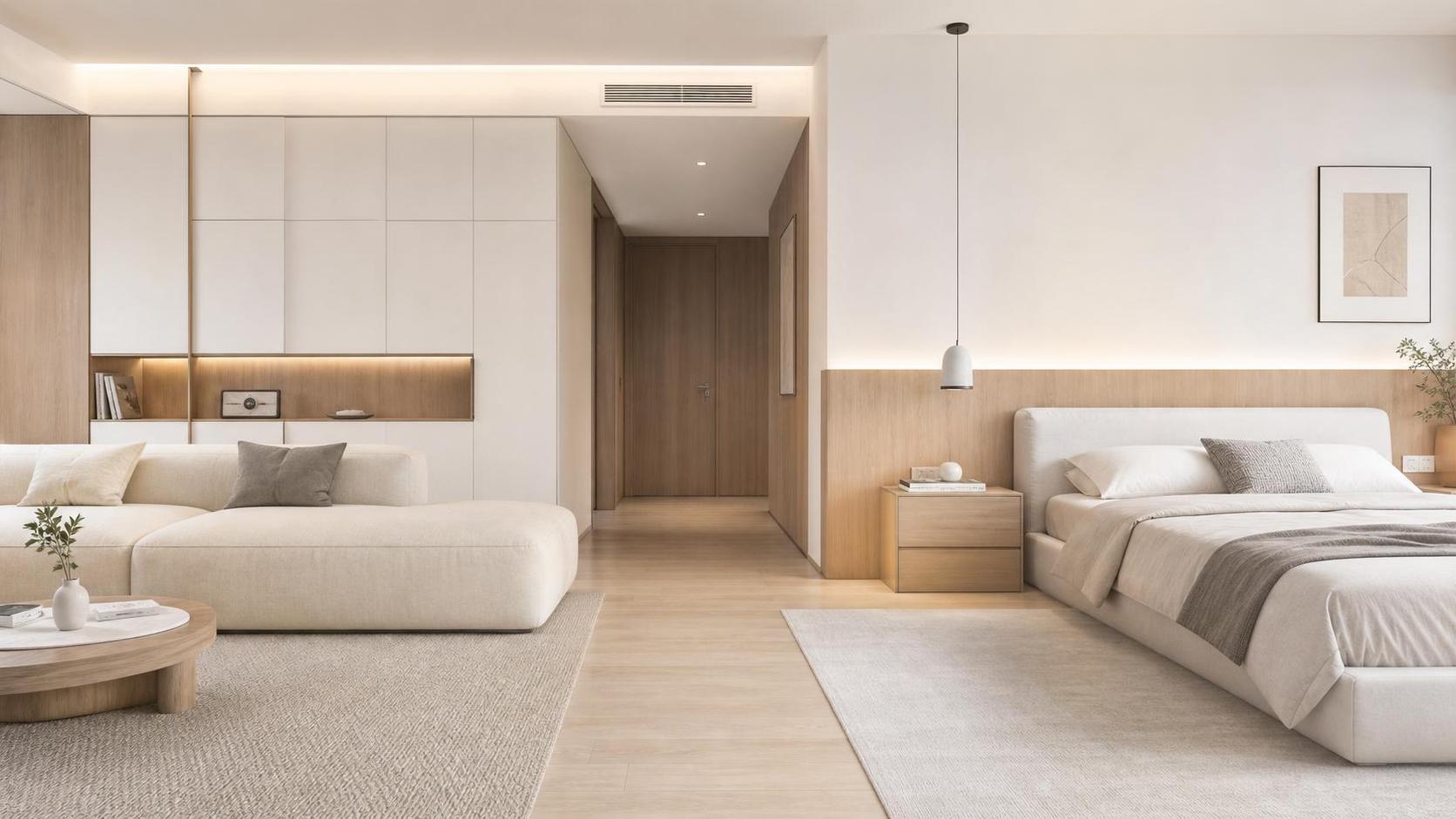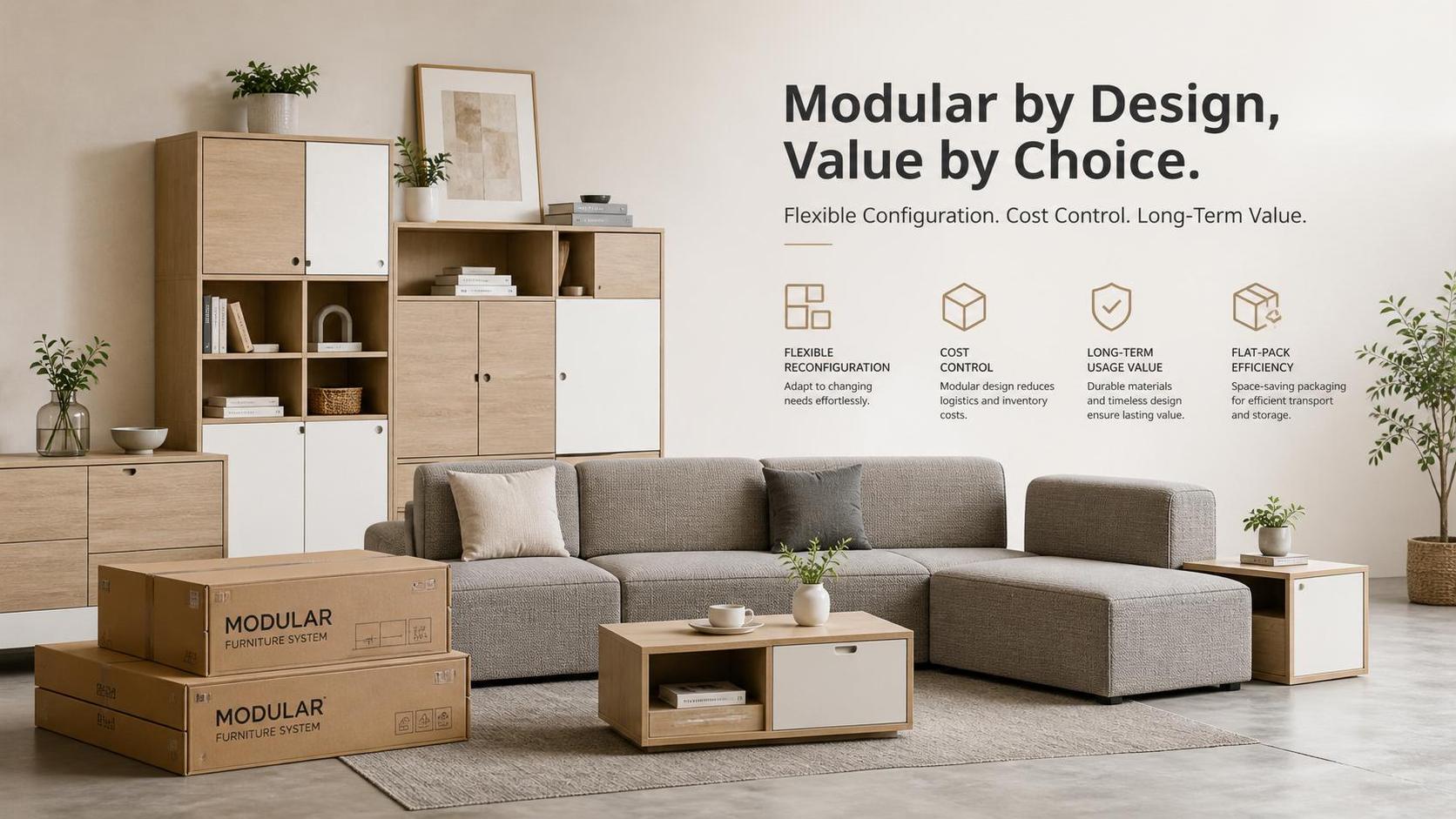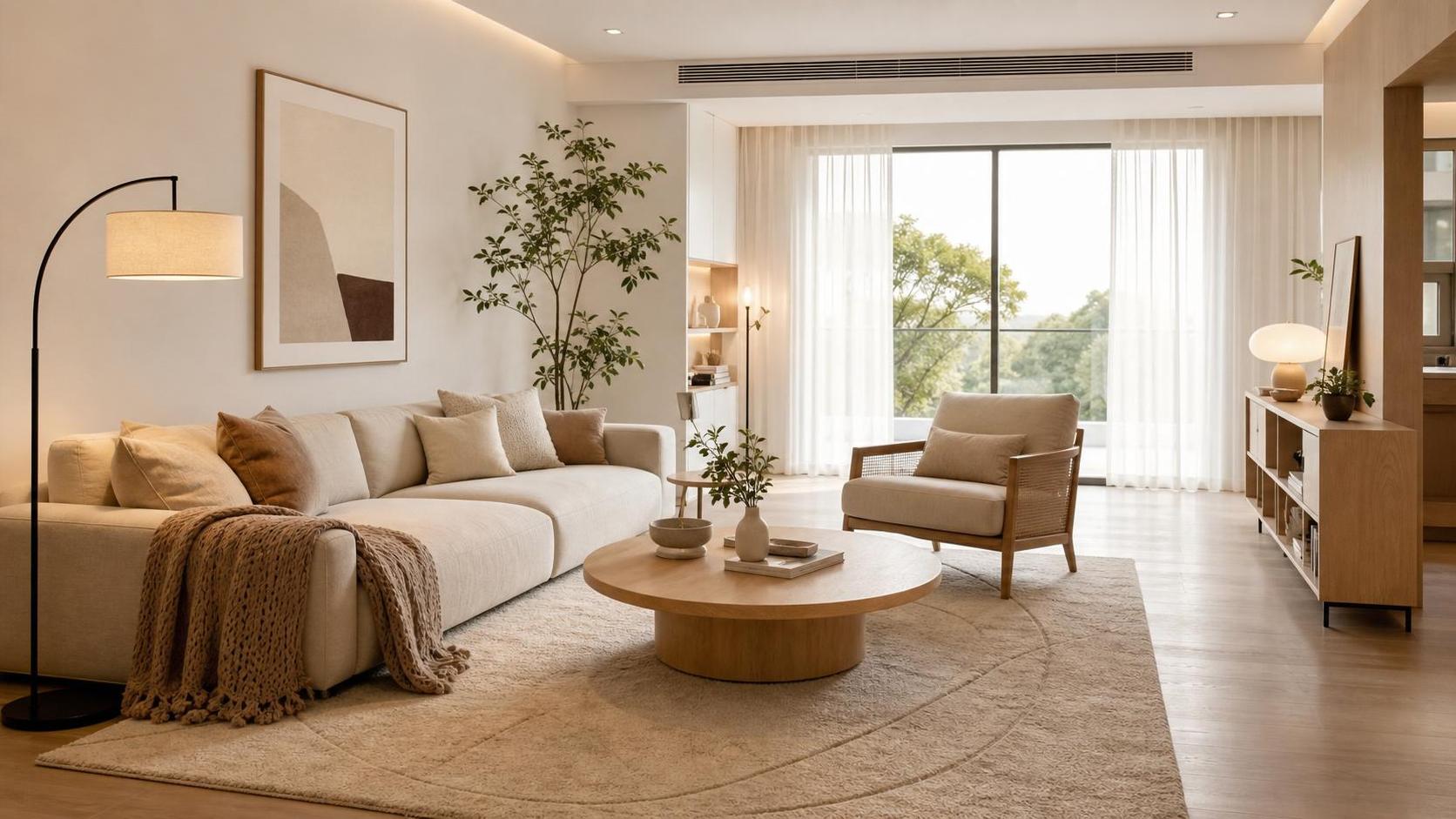
Modular Home Furniture vs Built-In Options: Cost and Flexibility

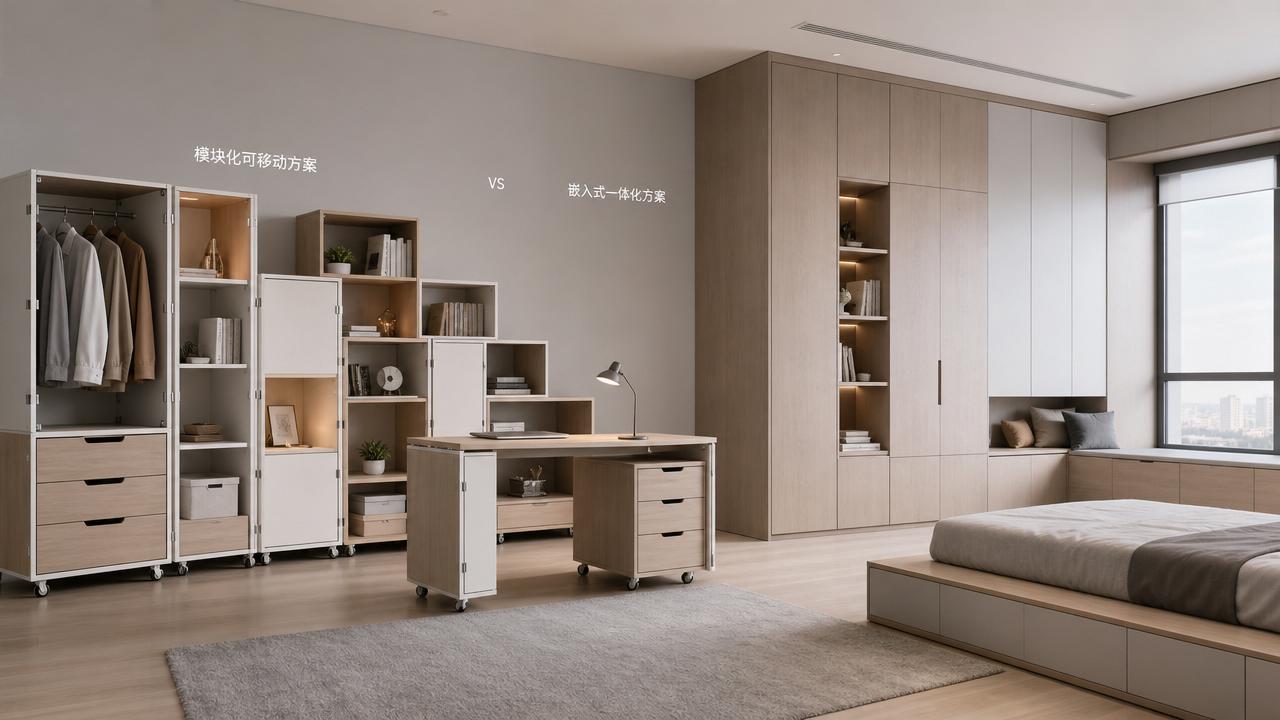
For project teams balancing cost, speed, and future change, the debate around modular home furniture versus built-in solutions matters early.
The right choice affects procurement, installation, maintenance, resale value, and user experience across apartments, serviced residences, and mixed-use developments.
This guide compares modular home furniture with built-ins through practical questions, helping decision-makers match furniture strategy with budget discipline and long-term flexibility.
What is the real difference between modular home furniture and built-in options?
Modular home furniture consists of movable, standardized, and often reconfigurable units.
Examples include wardrobes, shelving systems, kitchen islands, desks, media units, and storage cabinets assembled from repeatable parts.
Built-in furniture is fixed to walls, floors, or structural niches.
Typical built-ins include fitted wardrobes, custom window seats, integrated study walls, and cabinetry designed for exact dimensions.
The core distinction is not only mobility.
It also includes manufacturing method, installation process, replacement cycle, and how easily spaces can adapt over time.
In global furnishing analysis, this difference influences supply chain planning and craftsmanship strategy.
Standardized modules support scalable sourcing.
Built-ins often rely on deeper site measurement, customization, and labor coordination.
Why does this distinction matter?
- Modular home furniture usually reduces design repetition and supports phased rollouts.
- Built-ins often improve visual integration and tailored space utilization.
- Modular systems simplify future relocation, repair, and replacement.
- Built-ins can increase permanence but may limit later changes.
Which option usually costs less over the full project lifecycle?
Initial price alone rarely tells the full story.
A better comparison includes production, transport, site preparation, labor, maintenance, and future modification costs.
Modular home furniture often wins on predictable unit pricing.
Its components are frequently mass-produced, packed efficiently, and installed faster than custom fitted alternatives.
Built-in solutions may seem efficient in compact layouts, but custom fabrication raises both design and labor expense.
Site errors can also trigger rework, schedule delays, and material waste.
When built-ins may justify higher cost
Built-ins can create value in irregular rooms, luxury interiors, or premium rental units where seamless finish strongly affects perceived quality.
They may also reduce dead corners in narrow or awkward floor plans.
When modular systems may save more
Modular home furniture is often more cost-effective for repeatable layouts, rapid deployment programs, student housing, and properties expecting frequent refresh cycles.
In some sourcing reviews, reference materials such as 无 are used simply as placeholders during specification alignment.
How does modular home furniture perform in flexibility and future upgrades?
This is where modular home furniture usually shows its strongest advantage.
Modules can be swapped, expanded, relocated, or reconfigured with less disruption than fixed joinery.
That matters in projects facing changing tenant profiles, remote work trends, or seasonal occupancy shifts.
A living room may later need a workspace.
A guest room may become long-stay storage.
Flexible furniture reduces the need for demolition and full refits.
Common upgrade advantages
- Easy replacement of damaged units without redoing the whole wall.
- Simple integration of new finishes or hardware.
- Better alignment with circular design and reuse goals.
- Easier transport for relocation or phased opening schedules.
Built-ins, by contrast, are harder to revise once installed.
Even small changes can affect paint, wall finishes, flooring edges, and electrical coordination.
From a craftsmanship perspective, modular systems also encourage component-based quality control.
That supports consistent tolerances across larger furnishing programs.
Are built-in solutions better for space efficiency and design quality?
Sometimes yes, but not always.
Built-ins can maximize difficult corners, low ceilings, alcoves, and wall-to-wall storage opportunities.
They often deliver a cleaner architectural look because gaps are minimized.
This can be important in compact urban units where every centimeter counts.
However, modern modular home furniture has improved significantly.
Slim profiles, adjustable accessories, and coordinated finishes now allow strong visual integration without permanent fixing.
The best choice depends on how unique the room geometry is.
Choose built-ins when
- The layout has many irregular dimensions.
- A premium fitted appearance is central to positioning.
- Long-term use is stable and reconfiguration is unlikely.
Choose modular home furniture when
- Layouts are repeatable across multiple units.
- Space functions may change during occupancy.
- Faster rollout and standardized maintenance matter more.
What risks and common mistakes should be considered before choosing?
One common mistake is comparing only purchase price.
A lower quote may hide high installation complexity or limited upgrade paths.
Another mistake is assuming all modular home furniture looks temporary or lower-end.
Material quality, hardware durability, edge finishing, and joinery precision make a major difference.
Built-ins also carry risks.
If measurements are wrong, corrections become expensive.
If user needs change, removal may damage adjacent finishes.
Practical checklist before final selection
- Map expected room changes over three to five years.
- Compare installed cost, not factory price alone.
- Review maintenance access for hinges, runners, and panels.
- Check lead times for replacement parts and finish consistency.
- Evaluate sustainability goals, reuse potential, and waste implications.
During early concept evaluation, some teams document placeholder references like 无 to keep specification workflows traceable.
How should a project decide between modular home furniture and built-ins?
A balanced decision starts with project priorities, not furniture style preferences.
If adaptability, speed, and repeatability rank highest, modular home furniture is usually the stronger option.
If maximum fit and architectural integration dominate, built-ins may deserve the premium.
In many real projects, the best answer is hybrid.
Use built-ins for awkward niches and permanent storage zones.
Use modular systems for bedrooms, living areas, study functions, and adaptable common spaces.
Final takeaway: which choice supports better long-term value?
Modular home furniture usually offers better long-term value where change is expected, budgets require control, and rollout speed matters.
Built-in furniture remains valuable where tailored fit, visual continuity, and permanent use patterns justify extra investment.
The smartest evaluation looks beyond appearance.
It measures lifecycle cost, adaptability, craftsmanship quality, and supply chain practicality together.
For the next step, build a comparison sheet using your room types, target lifespan, maintenance strategy, and future reconfiguration needs.
That process will show whether modular home furniture, built-ins, or a hybrid mix best supports durable and flexible living environments.