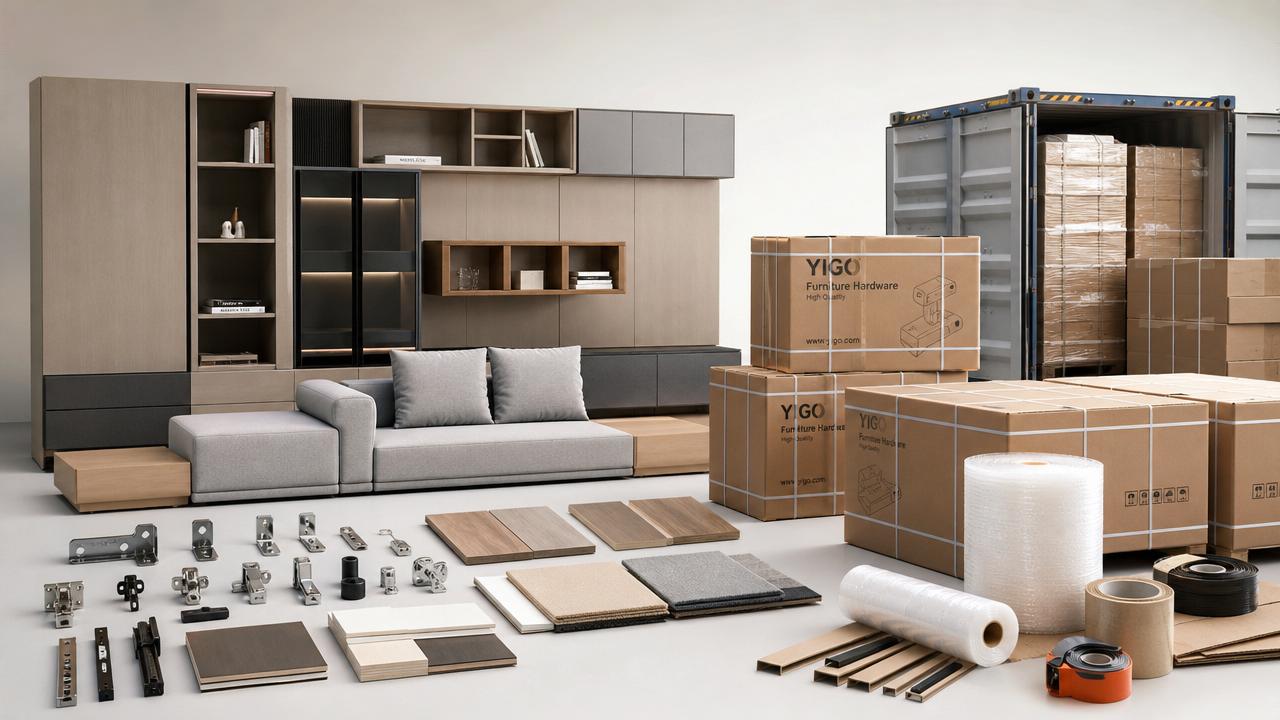
Contemporary Furniture Stores: How to Judge Quality Before You Order

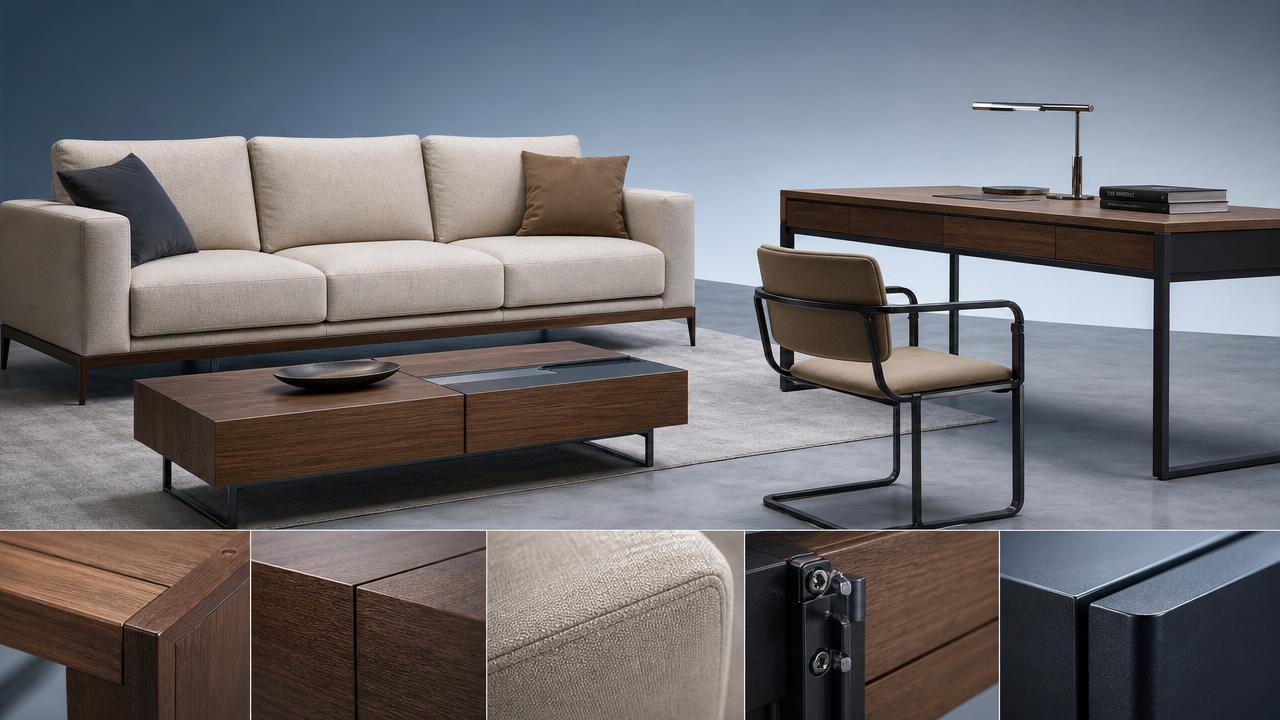
When sourcing from contemporary furniture stores, technical evaluators need more than style cues—they need reliable indicators of material integrity, joinery precision, finish consistency, and compliance readiness. This guide helps you assess quality before placing an order, combining design insight with manufacturing logic so you can reduce risk, verify craftsmanship, and make more confident purchasing decisions.
Why quality judgment is harder in contemporary furniture stores
Contemporary furniture stores often present clean silhouettes, premium photography, and trend-led styling. For technical evaluators, that creates a familiar challenge: visual appeal can hide weak substrate quality, inconsistent hardware selection, unstable finishes, or incomplete compliance documentation.
The problem is not only aesthetic ambiguity. Modern furniture increasingly blends textiles, engineered wood, metal frames, leather alternatives, coatings, foam, and smart features. Each material family has a different failure mode, testing logic, and sourcing risk profile.
This is where a cross-disciplinary lens matters. In the GLC approach, furniture is not judged as a surface product alone. It is evaluated as a convergence of design intent, production capability, supply chain discipline, and real-world use performance.
- A low-profile sofa may look refined but still fail in seam strength, cushion recovery, or frame rigidity.
- A minimalist desk may appear solid while using thin edge-banding, low-grade fasteners, or unstable coatings.
- A sculptural lounge chair may photograph well but present poor tolerance control and high defect risk in batch production.
What technical evaluators should verify first
Before requesting samples, define the use case, expected load, contact intensity, cleaning exposure, environmental conditions, and required certifications. Contemporary furniture stores serve residential, office, hospitality, and mixed-use buyers, and one design rarely fits all performance expectations.
How to assess build quality before you place an order
A structured evaluation matrix reduces subjectivity. The table below helps technical teams compare offers from contemporary furniture stores using practical inspection points rather than marketing language.
This matrix makes one point clear: quality in contemporary furniture stores should be treated as measurable evidence. A strong product listing should lead to documents, construction details, and repeatable manufacturing logic—not only curated imagery.
Five pre-order checks that reveal real quality
- Request a bill of materials with substrate, upholstery, coating, and hardware details instead of generic descriptions such as “premium wood” or “durable fabric.”
- Ask for close-up photos or videos of underside construction, internal frame intersections, zippers, seams, and mounting points.
- Confirm whether the displayed prototype matches production specification or only represents a showroom sample with upgraded finishing.
- Review tolerance expectations for modules, tabletops, doors, drawer fronts, or removable cushions.
- Check whether replacement parts, spare fabric lots, and hardware continuity can be supported after shipment.
Materials and craftsmanship: what separates strong products from risky ones
Technical buyers evaluating contemporary furniture stores should read materials as performance variables. A sleek look does not indicate stable construction. Material selection influences cost, lifespan, emissions, comfort, maintenance, and logistics behavior.
Wood, engineered panels, and veneers
Solid wood adds authenticity but needs moisture discipline and species consistency. Engineered panels can be stable and cost-efficient, but density, core quality, and edge treatment must be verified. Veneers require careful substrate bonding and finish control to prevent bubbling or visual mismatch.
Metals and structural stability
Steel and aluminum are common in contemporary furniture stores, especially for desks, chairs, shelving, and mixed-material designs. Inspect weld smoothness, coating adhesion, exposed cut edges, fastener interfaces, and anti-corrosion treatment if the item may be used in humid or semi-outdoor settings.
Textiles, leather alternatives, and cushioning systems
Upholstery quality depends on abrasion performance, seam construction, backing stability, colorfastness, and cleaning suitability. Cushion quality depends on density, resilience, layering, and long-term compression behavior. In hospitality and workspace settings, these variables directly affect maintenance cost and perceived product life.
- Look for fabric specifications tied to use intensity, not just color or texture.
- Check whether synthetic leather is selected for appearance alone or for hydrolysis resistance and cleaning performance.
- Ask whether seat cushions are loose, fixed, reversible, or replaceable, because each choice affects service life and after-sales planning.
Comparison guide for contemporary furniture stores by buying scenario
Different sourcing scenarios call for different quality priorities. The table below compares what technical evaluators should emphasize when reviewing contemporary furniture stores for residential, commercial, or project-based procurement.
This scenario view reflects a broader industry truth. Contemporary furniture stores are no longer isolated retail showcases. They are nodes within a lifestyle supply chain that links office architecture, home furnishing, textiles, gifts, and outdoor living expectations.
Which standards and documents should you request?
Compliance requirements vary by market and application, but technical evaluators should still build a standard documentation checklist. This is especially important when sourcing from contemporary furniture stores that mix imported materials, outsourced upholstery, and multiple production sites.
Core documentation checklist
- Material specification sheets for panels, metals, coatings, fabrics, foam, and hardware.
- Applicable test reports related to strength, stability, flammability, emissions, or surface durability where required.
- Packaging specification and drop-protection method for fragile components, glass, stone tops, or painted surfaces.
- Assembly instructions, spare-parts list, and maintenance guidance for downstream teams or end users.
- Country-specific labeling or declaration documents if the goods enter regulated project channels.
Standards to discuss without over-assuming
Do not assume every supplier needs the same standard set. Instead, align requirements with destination market, use category, and project type. Common reference areas include flammability, formaldehyde or VOC concerns, structural safety, textile abrasion, and general furniture stability testing.
The practical goal is not to collect certificates for appearance. It is to verify that the product specification, the supplied sample, and the final production batch remain technically consistent and legally usable in the target market.
Procurement risks that contemporary furniture stores often do not show upfront
Many sourcing failures happen after visual approval but before long-term use. Technical evaluators should flag hidden risks early, especially when timelines are tight and design teams are pushing for quick sign-off.
Common hidden risks
- Sample-to-bulk mismatch, where the sample uses upgraded foam, thicker veneer, or better fabric than mass production.
- Component substitution, especially in glides, hinges, zippers, leveling feet, and internal connectors.
- Overlooked packaging risk for marble-look surfaces, lacquered edges, or knock-down hardware packs.
- Incomplete lead-time planning when upholstery, metal fabrication, and finishing are managed by separate subcontractors.
- Inadequate after-sales support for replacement fabric lots or matching finish touch-up materials.
How to reduce risk without slowing the project
Use a gate-based approval process. Approve concept first, then construction details, then material swatches, then sample testing, and finally packaging validation. This staged method helps technical teams preserve schedule control while catching problems before shipment.
FAQ: what technical evaluators ask about contemporary furniture stores
How can I tell if a contemporary furniture store is selling design-led products with weak construction?
Ask for structural photos, material specifications, and tolerance details. If the seller can only describe style, color, and dimensions, the technical foundation may be underdeveloped. Reliable partners should explain frame logic, upholstery layers, hardware choices, and quality-control checkpoints.
What matters more: solid wood claims or engineered stability?
Neither is automatically better. Solid wood can be premium but sensitive to moisture and grain variation. Engineered materials can offer strong dimensional stability when panel quality and edge treatment are controlled. The right decision depends on application, climate, finish requirement, and target price point.
Which products from contemporary furniture stores need the strictest technical review?
Priority items include seating, adjustable desks, storage with moving parts, hospitality upholstery, and any item used in public or commercial settings. These products face repeated loading, cleaning exposure, and higher complaint risk if small specification weaknesses are ignored.
How early should compliance discussions start?
At concept selection, not after order confirmation. If a market requires specific fire, chemical, or labeling conditions, material selection and upholstery planning may need adjustment from the start. Early alignment prevents redesign cost and shipment delays.
Why GLC is a practical partner for quality evaluation and sourcing decisions
GLC connects global aesthetics with manufacturing logic. For technical evaluators reviewing contemporary furniture stores, that means a broader decision framework: not just whether a product looks current, but whether its materials, workmanship, and supply chain behavior support commercial success.
Our perspective is shaped by adjacent sectors that increasingly influence furniture performance—textiles, office architecture, digital craftsmanship, and outdoor lifestyle innovation. This matters when products combine fabric science, ergonomic expectations, surface engineering, and scalable production demands.
- We help clarify specification details before purchasing teams commit to volume.
- We support product selection by connecting design language with manufacturing feasibility.
- We help identify risk in materials, construction methods, and compliance pathways across global sourcing contexts.
Contact us for targeted evaluation support
If you are comparing contemporary furniture stores and need a more technical basis for decision-making, contact GLC for focused support on parameter confirmation, product selection, delivery cycle review, customization feasibility, certification requirements, sample assessment, and quotation alignment.
A productive inquiry can start with a product link, drawing, bill of materials, target market, or sample concern. From there, we can help you frame the right questions before ordering—so design intent, craftsmanship quality, and procurement confidence move in the same direction.