Textile Technology Trends Shaping Functional Fabric in 2026

As performance expectations, sustainability mandates, and smarter supply chains converge, textile technology is redefining what functional fabric can deliver in 2026. From bio-based fibers and adaptive membranes to AI-driven material testing and circular finishing systems, the next wave of innovation is moving beyond comfort toward measurable value. For researchers tracking textiles, apparel, outdoor gear, and lifestyle manufacturing, understanding these trends offers a clearer view of how craftsmanship, industrial standards, and global market demand are reshaping the future of fabric.
For information researchers, the central question is no longer whether fabric can be breathable, durable, or sustainable. The sharper question is how those qualities are verified, scaled, priced, and translated into procurement decisions.
In 2026, textile technology sits at the intersection of material science, digital manufacturing, product aesthetics, and compliance. This makes functional fabric a strategic category for apparel, interiors, outdoor equipment, footwear components, and lifestyle goods.
Material Innovation Moves Functional Fabric Beyond Basic Performance
The most visible shift in textile technology is the move from single-function fabrics to multi-performance systems. A jacket shell, office chair textile, or travel accessory may now require 4 to 6 measurable attributes.
Common requirements include moisture management, abrasion resistance, thermal regulation, stretch recovery, colorfastness, and reduced environmental impact. Buyers increasingly expect these properties to remain stable after 20 to 50 wash cycles.
Bio-Based and Regenerated Fibers Gain Practical Momentum
Bio-based fibers are becoming more commercially relevant because brands need lower-impact materials without compromising hand feel or production stability. Textile technology is improving fiber consistency, spinning performance, and dye uptake.
Regenerated cellulose, bio-based polyester alternatives, hemp blends, and recycled nylon are being evaluated through 3 practical lenses: tensile strength, process compatibility, and lifecycle positioning. Each factor affects sourcing confidence.
Key Research Questions for Fiber Selection
- Can the fiber support target GSM ranges, such as 120–180 GSM for shirting or 250–380 GSM for upholstery?
- Does the material maintain dimensional stability within common tolerances, such as shrinkage below 3% after washing?
- Is the supply chain capable of repeat orders across 2–4 production seasons?
- Can the fiber be processed with existing dyeing, finishing, cutting, and sewing equipment?
These questions help researchers separate promising concepts from scalable textile technology. A material that performs well in a sample but fails during bulk finishing can create delays, claims, and cost overruns.
Adaptive Membranes and Smart Layering Systems
Adaptive membranes are becoming important in outdoor apparel, protective layers, footwear linings, and travel goods. They respond to humidity, temperature, pressure, or body movement more intelligently than conventional coatings.
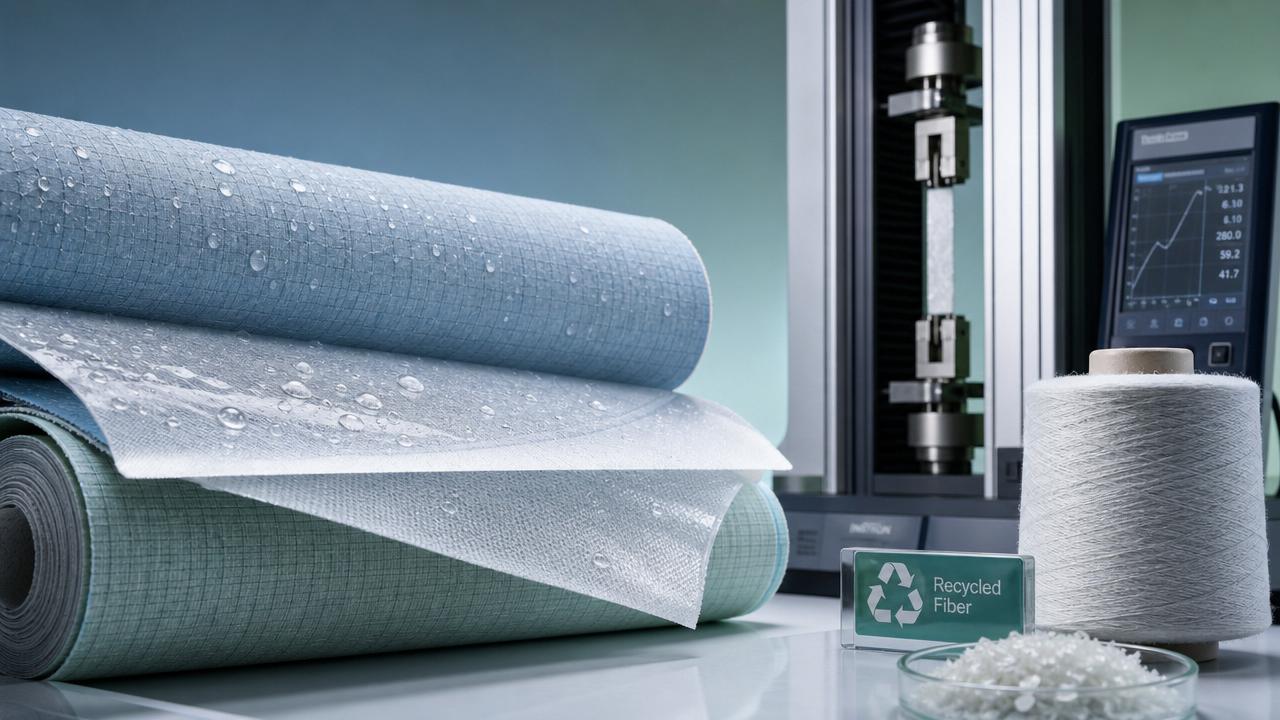
For 2026 product development, buyers often compare water resistance, vapor transmission, film durability, and lamination strength. Typical evaluation ranges include 5,000–20,000 mm water column performance and 5,000–15,000 g/m²/24h breathability.
The commercial value of this textile technology lies in balance. Over-engineered fabric may raise costs, while under-specified fabric may fail in rainwear, camping equipment, or performance footwear applications.
Data-Driven Testing Becomes the New Language of Trust
Functional fabric sourcing increasingly depends on verifiable data. In 2026, textile technology is making test results easier to collect, compare, and connect with manufacturing decisions.
For information researchers, this matters because claims such as “quick-dry,” “cool-touch,” or “eco-finished” are only useful when linked to standards, test methods, and repeatable production controls.
From Lab Reports to Predictive Material Evaluation
AI-assisted testing platforms are helping mills and brands predict fabric behavior before full-scale sampling. This textile technology can reduce unnecessary development loops from 5 rounds to 2 or 3 rounds.
Digital tools can analyze yarn composition, weave density, coating recipes, and finishing parameters. They do not replace lab testing, but they help prioritize which prototypes deserve deeper validation.
The table below summarizes how researchers can compare major textile technology directions for functional fabric development, especially when assessing apparel, outdoor, office, and lifestyle categories.
The key conclusion is that textile technology should not be evaluated in isolation. A membrane, fiber, or finishing method must match application risk, supply maturity, and measurable product claims.
Testing Metrics That Matter to Procurement Teams
Procurement teams need testing metrics that translate into product performance. For apparel, this may include pilling grades from 3 to 5, seam slippage, stretch recovery, and wash durability.
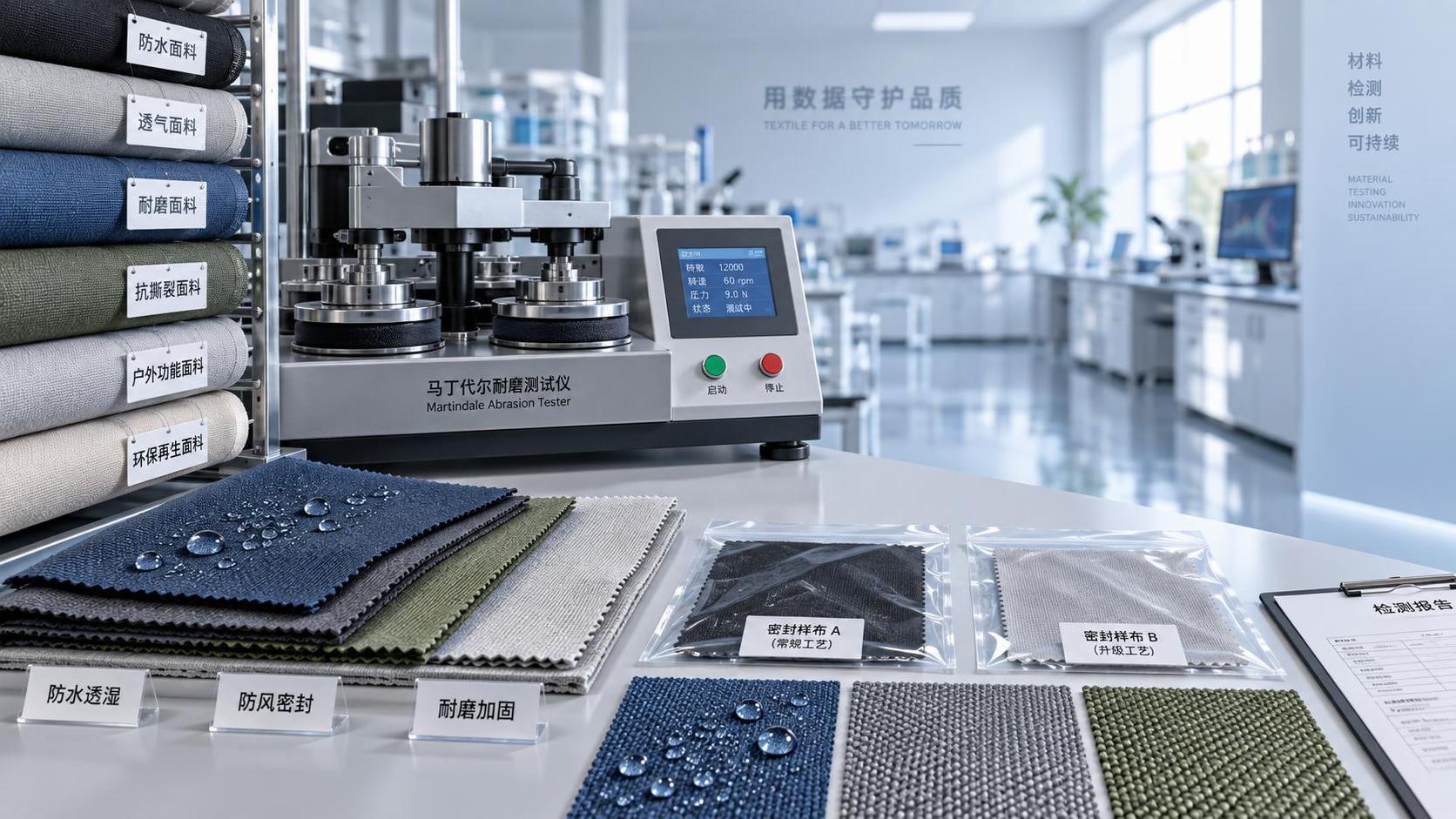
For furniture and office interiors, textile technology evaluation often includes Martindale abrasion cycles, colorfastness to light, flame behavior, and cleanability. A fabric may require 30,000–100,000 abrasion cycles depending on use.
For outdoor categories, researchers should compare laboratory data with field exposure. A 7-day field trial can reveal condensation, noise, stiffness, or comfort issues not obvious in controlled testing.
Sustainability Shifts from Claim to Engineering Discipline
Sustainability in textile technology is becoming less about marketing language and more about engineered process control. Buyers want cleaner inputs, lower waste, traceability, and realistic end-of-life planning.
For functional fabric, the challenge is more complex because performance finishes may affect recyclability. Water repellency, antimicrobial treatments, stretch components, and laminated layers must be designed with trade-offs in mind.
Circular Finishing and Chemical Management
Circular finishing systems focus on reducing wastewater, improving bath reuse, and limiting unnecessary chemical inputs. Common development targets include fewer processing steps, lower curing temperatures, and tighter recipe control.
A practical 2026 approach is to treat finishing as a 5-step control system: input screening, recipe validation, pilot run, bulk monitoring, and post-production testing.
- Screen raw materials for restricted substances, fiber compatibility, and supplier documentation.
- Validate performance claims through lab tests before committing to bulk production.
- Run pilot batches, often 50–300 meters, to confirm color, handle, and coating stability.
- Monitor bulk production for temperature, bath ratio, dwell time, and drying consistency.
- Review finished fabric against 3 acceptance groups: appearance, performance, and compliance.
This process-based view makes textile technology more transparent. It also supports fairer communication between designers, mills, sourcing teams, and buyers managing functional product lines.
Mono-Material Design and Recyclability
Mono-material construction is gaining interest because it simplifies sorting and recycling. A polyester shell with polyester thread, polyester trim, and compatible finishing can be easier to recover.
However, mono-material design does not automatically guarantee performance. Textile technology teams must still validate stretch, softness, seam strength, abrasion resistance, and color consistency across multiple production lots.
Common Sustainability Risks to Watch
- Sustainable fiber claims without clear composition percentages or batch traceability.
- Low-impact finishing that cannot maintain performance after 10–20 care cycles.
- Recycled content that increases shade variation, yarn breakage, or surface defects.
- Complex laminated structures that improve performance but reduce end-of-life options.
For researchers, these risks show why sustainability must be examined alongside manufacturing reality. Responsible textile technology requires proof, repeatability, and a clear view of application demands.
Functional Fabric Applications Across Lifestyle Sectors
GLC’s cross-sector view shows that textile technology does not serve apparel alone. Functional fabric now shapes how people dress, work, travel, rest, explore, and interact with designed objects.
The same fabric innovation may appear in a hiking jacket, office acoustic panel, smart luggage lining, or outdoor chair. This convergence creates wider sourcing opportunities and new evaluation challenges.
From Apparel to Office and Outdoor Living
In apparel, textile technology is focused on comfort that can be measured. Breathability, thermal balance, low-friction touch, and rapid drying are increasingly linked to consumer satisfaction.
In office and space architecture, functional fabric supports ergonomics, acoustics, durability, and visual warmth. Upholstery and panels may require 5 or more tests before specification approval.
In outdoor leisure, fabric failures are more visible because products face rain, UV exposure, abrasion, packing stress, and temperature shifts. Performance margins must be more conservative.
The following table gives researchers a practical lens for matching textile technology trends to major lifestyle applications and buyer decision points.
This comparison highlights a key point: textile technology creates value only when performance targets match the user environment. Over-specification wastes budget, while under-specification increases after-sales risk.
Craftsmanship Still Defines the Final Experience
Advanced textile technology cannot replace craftsmanship. Cutting accuracy, seam engineering, lamination pressure, pattern placement, and finishing hand all influence how fabric performs in finished products.
A technically strong fabric may disappoint if the product design ignores drape, recovery, friction, or user movement. This is why material selection should involve both technical and aesthetic review.
How Researchers Can Evaluate Textile Technology Suppliers
Supplier evaluation in 2026 requires more than comparing swatches and quotations. Researchers need a structured method to judge capability, documentation, sample accuracy, and production reliability.
A strong textile technology supplier should explain not only what a fabric does, but how that performance is achieved, measured, repeated, and adapted for different product categories.
A 6-Point Supplier Screening Framework
- Check material transparency, including fiber composition, finishing method, and available test reports.
- Review development speed, such as lab dip timing within 5–10 days and prototype fabric within 2–4 weeks.
- Confirm bulk consistency controls for shade, GSM, width, coating, and shrinkage.
- Assess MOQ flexibility, especially for brands testing 300–1,000 meter pilot orders.
- Evaluate communication quality across design, compliance, and production teams.
- Request risk notes for performance limits, care conditions, and application restrictions.
This framework helps convert textile technology research into actionable sourcing intelligence. It also reduces the chance of selecting attractive samples that cannot survive real production conditions.
Common Mistakes in Functional Fabric Research
One common mistake is focusing only on headline performance values. A 20,000 mm waterproof rating may be impressive, but seam sealing, garment design, and breathability remain equally important.
Another mistake is overlooking serviceability. Functional fabric used in uniforms, office seating, or outdoor goods must be maintained, cleaned, stored, and repaired within realistic user routines.
Practical Questions Before Shortlisting
- What is the expected product lifespan: 1 season, 3 years, or more than 5 years?
- Will the fabric face frequent washing, UV exposure, abrasion, compression, or body movement?
- Are the performance claims supported by comparable test methods and repeat samples?
- Can the supplier scale from sampling to bulk without changing key process parameters?
These questions are especially useful for information researchers who must brief sourcing teams, product developers, designers, or executives before supplier engagement begins.
What 2026 Means for Global Living and Craftsmanship
The future of functional fabric is not only technical. It is also cultural, commercial, and design-driven. Textile technology now supports the broader movement toward quality living.
For manufacturers, 2026 is a year to connect engineering discipline with aesthetic value. For brands, it is a year to ask better questions before committing to materials.
GLC’s Role as an Intelligence Bridge
GLC views textile technology through a cross-disciplinary lens that connects fabric science, craftsmanship, lifestyle design, and supply chain logic. This approach helps researchers understand both product form and industrial reality.
By tracking textiles, apparel, office furnishings, gifts, leather alternatives, and outdoor lifestyle products, GLC helps identify where technical innovation creates durable market value.
In practical terms, the strongest 2026 opportunities will come from 3 alignments: verified performance, responsible production, and design relevance. Functional fabric must satisfy all 3 to win long-term trust.
For researchers and sourcing teams, the next step is to build a shortlist based on clear parameters, realistic application needs, and supplier transparency rather than trend language alone.
If you are mapping functional fabric opportunities, comparing textile technology suppliers, or preparing a material strategy for apparel, interiors, or outdoor lifestyle products, GLC can support deeper research and decision clarity. Contact us to learn more solutions, discuss product details, or request a customized insight brief.