Modern Furniture With Storage: What to Check First

Before choosing modern furniture with storage, the first review should go beyond style boards and showroom appeal. The real test is performance. A clean silhouette matters, but so do load capacity, material stability, hardware life, and space efficiency. When these basics are checked early, modern furniture with storage becomes a long-term asset instead of a short-lived design purchase.
This topic connects strongly with today’s broader lifestyle industries. In home, office, hospitality, and mixed-use spaces, buyers increasingly expect furniture to solve clutter, support comfort, and reflect modern aesthetics. That is why technical evaluation now sits at the center of design decisions.
What does modern furniture with storage really mean?
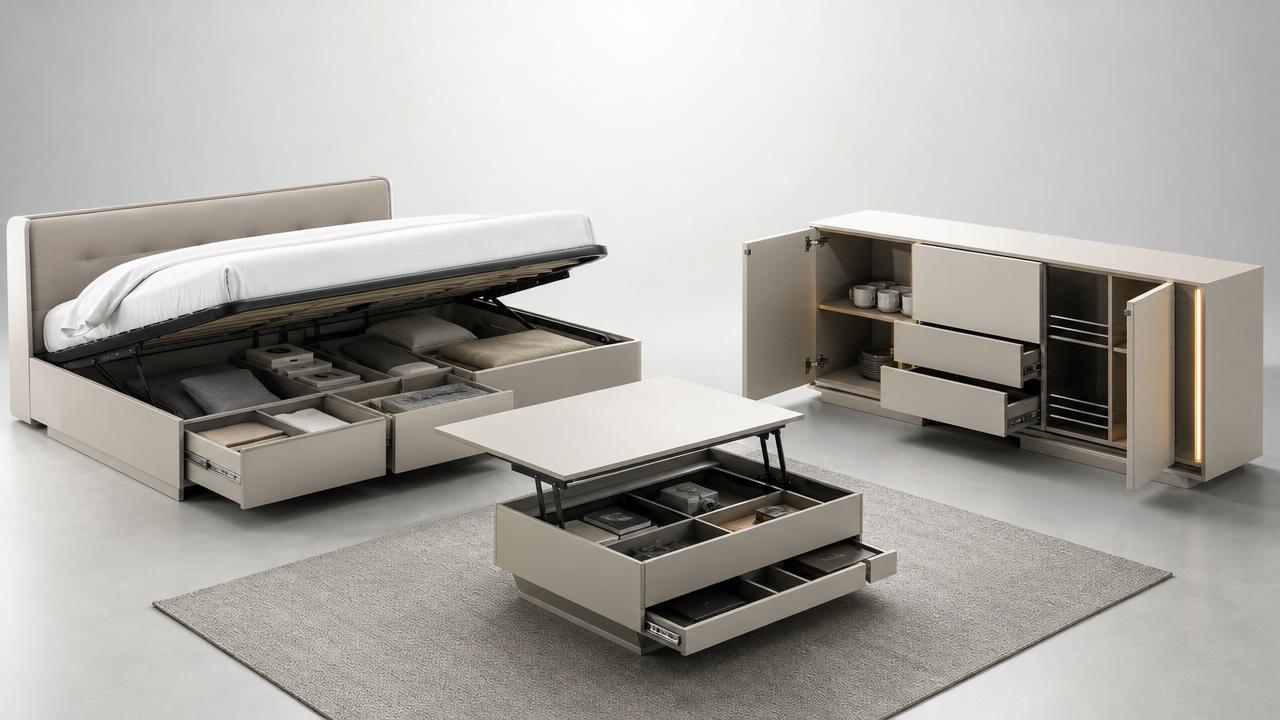
Modern furniture with storage is not simply furniture with hidden compartments. It combines visual simplicity, practical organization, and engineered durability. The best pieces reduce visual noise while improving daily access to stored items.
Common examples include beds with drawers, coffee tables with lift tops, sideboards with modular interiors, storage benches, media units, and office desks with integrated cable and file management.
In the broader furnishing industry, this category reflects two market shifts. First, urban spaces are getting tighter. Second, consumers want multifunctional products that feel refined rather than bulky.
That makes modern furniture with storage a cross-sector solution. It supports residential living, boutique hospitality, shared workspaces, and flexible interior planning. The design language may change, but the evaluation logic remains similar.
What should be checked first before appearance?
The first checkpoint is structural load. A drawer under a bed or a lift-top mechanism in a table must carry repeated weight without warping, sagging, or misalignment. Visual balance cannot compensate for poor engineering.
The second checkpoint is material stability. Panels, solid wood parts, veneers, and laminates react differently to humidity, heat, and repeated contact. Stability affects edge integrity, surface flatness, and long-term fit.
The third checkpoint is hardware durability. Slides, hinges, gas lifts, soft-close systems, and handles often fail before the main structure does. In modern furniture with storage, hardware quality directly shapes user satisfaction.
The fourth checkpoint is space efficiency. Storage volume alone is not enough. Internal layout, opening angle, reach distance, and ease of sorting determine whether the storage works in real use.
- Check static and dynamic load limits.
- Review resistance to humidity and thermal change.
- Test repeated opening and closing cycles.
- Measure usable internal storage, not gross volume.
- Confirm maintenance access for future repairs.
How can material and craftsmanship quality be judged accurately?
Start with substrate selection. Engineered boards can perform well, but density consistency, moisture resistance, and edge sealing are essential. Inconsistent core material often leads to swelling, loose fittings, and reduced life span.
Surface finishing also deserves close attention. High-touch areas need scratch resistance, stain resistance, and color stability. A beautiful finish that marks easily will quickly reduce the value of modern furniture with storage.
Joinery quality reveals a lot. Tight seams, stable corner construction, even drilling, and balanced alignment indicate good process control. Gaps, rough edges, and uneven reveals often point to weak production discipline.
For upholstered storage benches or beds, evaluate fabric abrasion performance, foam recovery, and internal frame strength. Soft surfaces may hide structural shortcuts, so internal support should never be assumed.
The same principle appears across textile, furnishing, and lifestyle industries: aesthetics and craftsmanship must reinforce each other. This balance reflects the kind of cross-disciplinary thinking highlighted by global platforms that connect design with manufacturing intelligence.
Useful material checks
- Inspect edges for sealing quality and chip resistance.
- Check whether drawers glide smoothly under weight.
- Look for stable panel thickness and consistent finishing.
- Review certifications or test data when available.
Which application scenarios need different selection standards?
Not every space needs the same type of modern furniture with storage. A compact apartment may prioritize hidden organization and easy cleaning. A home office may value cable routing, document access, and ergonomic reach.
Hospitality spaces often require stronger surfaces, faster maintenance, and more predictable replacement planning. Shared interiors may also need anti-tip features and hardware that tolerates high-frequency use.
Children’s rooms or educational settings add another layer. Rounded corners, pinch-point reduction, stable anchoring, and low-emission materials become more important than purely visual minimalism.
Outdoor-adjacent settings, such as covered terraces or leisure lounges, need extra caution. Unless the specification clearly supports humidity variation, ordinary indoor storage units may deteriorate faster than expected.
How do modern furniture with storage and ordinary furniture differ?
The main difference is integration. Ordinary furniture may offer shelves or drawers, but integrated storage furniture is designed around concealment, movement, and multipurpose use from the beginning.
That difference affects cost structure. More moving parts, tighter tolerances, and additional testing increase production complexity. As a result, quality variation between products can be much wider.
Modern furniture with storage also places higher pressure on internal planning. A sleek outer form can hide wasted internal volume if partitions, drawer depths, or openings are poorly calculated.
This is why comparison should never stop at dimensions and finish color. It should include mechanism type, cycle performance, cleaning convenience, and replacement part availability.
In some curated selections, even a reference item such as 无 may appear alongside standard furnishings. The key is not the label but whether the technical details support the intended use case.
What mistakes cause regret after purchase?
The most common mistake is buying for appearance alone. Minimalist forms photograph well, but shallow drawers, weak runners, or inaccessible compartments quickly create frustration in daily routines.
Another mistake is ignoring room circulation. A storage bed or wide cabinet may fit on paper, yet doors, drawers, and lift tops can collide with walls or restrict movement.
Many people also underestimate maintenance. Fingerprint-prone surfaces, non-removable panels, and proprietary hardware can make cleaning and repair harder than expected.
A further risk is mismatch between storage type and actual habit. Deep hidden compartments suit seasonal items, while daily-use objects need faster access. Convenience matters as much as total capacity.
Quick warning signs
- Drawer fronts look aligned, but inner boxes feel thin.
- Lift mechanisms feel jerky or noisy.
- Back panels are weak and unsupported.
- Interior surfaces are rough or unfinished.
- No clear guidance exists for weight limits.
How should cost, lifecycle, and long-term value be evaluated?
Price should be viewed across the full lifecycle. A lower upfront cost may hide faster failure, shorter hardware life, and higher maintenance effort. Better specifications often reduce replacement frequency.
Long-term value comes from durability, adaptability, and serviceability. If a component can be repaired, adjusted, or replaced, the furniture remains useful longer and creates less waste.
Sustainability also matters. Responsible sourcing, lower-emission finishes, durable textiles, and stable construction support greener supply chains. This is increasingly important across furnishing and lifestyle sectors.
When reviewing options, a sample listing like 无 should be treated as a starting point for specification checks, not the final reason to decide.
Choosing modern furniture with storage starts with disciplined checking, not impulse selection. First confirm structural strength, material reliability, and hardware quality. Then review storage usability, safety, and long-term maintenance.
When these factors are assessed together, modern furniture with storage becomes more than a trend. It becomes a practical design tool that supports better living, better organization, and better value over time.
For the next step, compare shortlisted pieces using one checklist only: load, stability, hardware, access, maintenance, and lifecycle cost. That simple method leads to clearer decisions and stronger results.