Office Furniture Sets: Cost, Lifespan, and Space Planning Basics

Choosing the right office furniture sets is more than a budget decision for procurement teams. Cost, lifespan, and space efficiency directly affect workplace performance, brand image, and long-term value. This guide outlines the basics buyers need to compare options wisely, balance durability with price, and plan layouts that support modern office needs.
Why a Checklist Matters for Office Furniture Sets
Office fit-outs often fail when decisions rely on unit price alone. A lower quote can hide weak hardware, poor ergonomics, limited warranties, or costly layout compromises.
A checklist helps compare office furniture sets across total cost, expected service life, maintenance burden, and usable floor area. It also keeps design choices aligned with workflow.
This approach fits the broader furnishing industry, where aesthetics, craftsmanship, and operational performance must work together rather than compete with one another.
Core Checklist: What to Review Before Buying
Use the following checklist to evaluate office furniture sets in a structured way before shortlisting suppliers or approving layout plans.
- Define total budget first, including delivery, installation, cable accessories, storage add-ons, replacement parts, and future reconfiguration costs over three to seven years.
- Measure real lifespan, not brochure claims, by checking frame material, edge banding quality, drawer runners, chair mechanisms, fabric abrasion ratings, and warranty scope.
- Match furniture dimensions to actual circulation paths, door clearances, workstation depth, and collaborative zones before selecting any office furniture sets.
- Compare ergonomic support carefully, especially seat adjustment range, lumbar performance, monitor height alignment, and desk height suitability for mixed user groups.
- Check material performance for daily wear, including scratch resistance, stain behavior, moisture tolerance, color consistency, and ease of cleaning in high-touch areas.
- Review modularity options so desks, storage units, and meeting tables can be moved, expanded, or repurposed as team structures change.
- Ask for layout drawings that show workstation density, aisle width, power access, natural light use, and acoustic separation, not just product renderings.
- Verify compliance and testing details such as load capacity, fire performance where relevant, VOC emissions, and commercial-use durability standards.
- Assess visual consistency because office furniture sets influence client perception, internal culture, and how well the workplace reflects a modern brand identity.
- Confirm after-sales support, lead times, spare component availability, and installation accountability before placing a multi-item furnishing order.
Cost Basics: Look Beyond the Purchase Price
The true cost of office furniture sets includes acquisition, operation, upkeep, and replacement timing. A desk package that lasts eight years may outperform a cheaper option replaced in four.
Installation complexity also matters. Modular benching, cable trays, privacy screens, and lockable storage can raise the invoice, yet reduce later retrofit expense.
For practical comparison, calculate annualized cost. Divide the full installed price by expected service years, then compare that figure across competing office furniture sets.
Lifespan Basics: What Usually Determines Durability
Lifespan depends less on style and more on construction quality. Steel frames, commercial-grade laminates, reinforced joints, and tested chair bases typically age better.
Usage intensity changes the equation. Reception seating, shared desks, and conference rooms wear faster than executive suites or lightly used touchdown spaces.
In many projects, well-specified office furniture sets can remain functional for seven to twelve years. Soft seating and task chairs may need earlier refresh cycles.
Space Planning Basics: Efficiency Without Overcrowding
Space planning should balance density, comfort, circulation, privacy, and utility access. Furniture that fits on paper can still create visual clutter or movement bottlenecks.
Start with core dimensions: desk depth, chair pull-back zone, storage swing clearance, and walking aisles. Then map power points, windows, and collaboration hotspots.
Well-planned office furniture sets support smoother workflows because people can move, meet, store materials, and focus without constant adjustment.
How Office Furniture Sets Change by Workspace Scenario
Open-Plan Offices
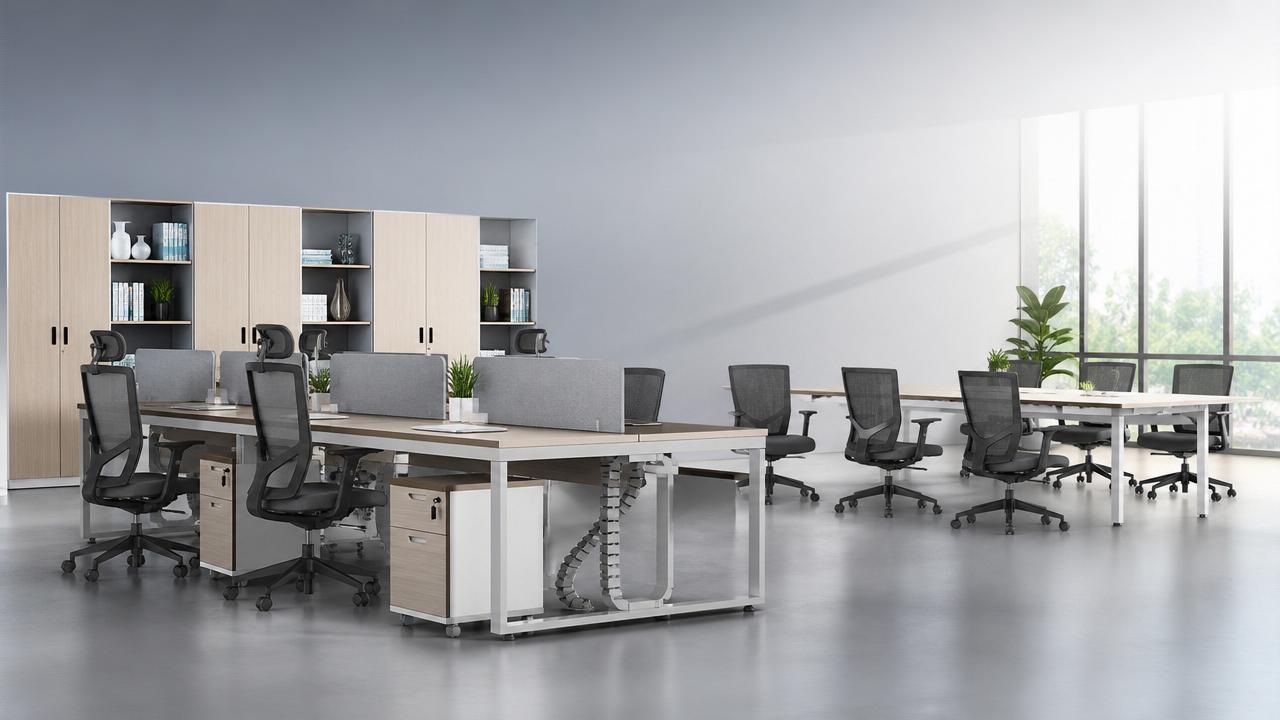
Open-plan layouts need compact workstation systems, integrated cable management, and acoustic elements. Bench desks can save space, but require screen panels or zoning support.
Choose office furniture sets that allow future seat increases without replacing the entire layout. Modular legs, shared power beams, and movable storage help.
Private Offices and Leadership Rooms
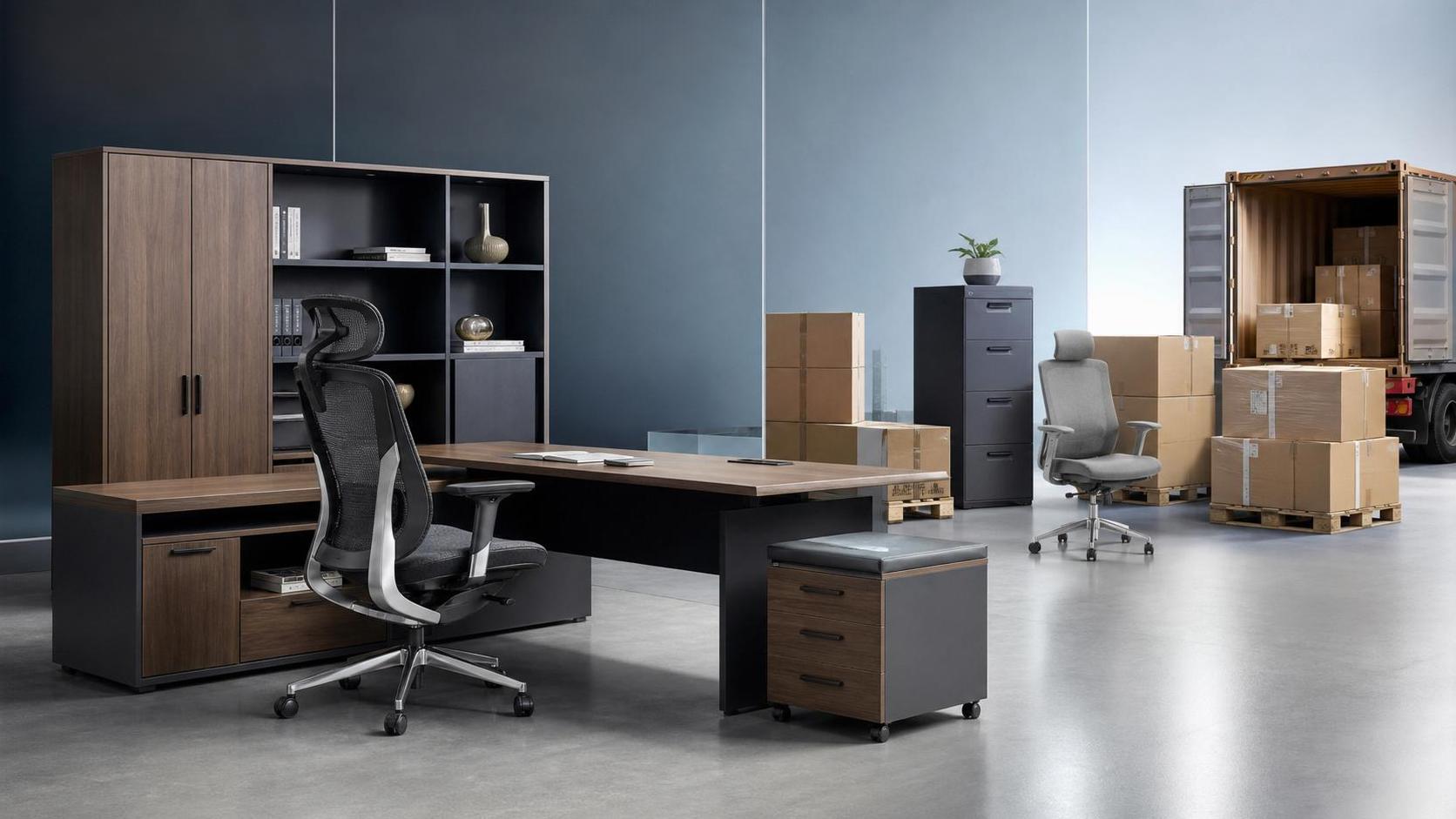
These rooms usually prioritize finish quality, visual presence, and visitor comfort. Larger desks, credenzas, and guest seating should still respect circulation and natural light.
In this setting, office furniture sets often carry brand symbolism. Veneer appearance, hardware feel, and craftsmanship details become more important.
Meeting Rooms and Hybrid Collaboration Areas
Conference tables now need technology integration, flexible seating counts, and clear sightlines for video calls. Table shape affects both movement and screen visibility.
Select office furniture sets with accessible power modules, durable edge finishes, and chairs suitable for sessions lasting from twenty minutes to two hours.
Reception and Waiting Areas
Reception furniture must project trust while withstanding heavy contact. Upholstery cleanability, table stability, and stain resistance matter as much as first impressions.
For these front-facing office furniture sets, choose finishes that align with the overall space language rather than looking disconnected from work zones.
Commonly Overlooked Risks
Ignoring installation conditions. Elevators, stair turns, narrow corridors, and phased occupancy can delay projects or damage large components before use begins.
Underestimating cable management. Attractive office furniture sets can quickly look disorganized if power, data, and charging routes are treated as an afterthought.
Choosing uniform sizes for mixed work styles. Teams handling calls, paperwork, design review, or focused analysis often need different desk depths and storage formats.
Skipping finish samples. Color chips on screens rarely show texture, reflectance, or how laminate and fabric respond to daylight and artificial lighting.
Failing to plan for replacement parts. If glides, hinges, casters, or arm pads are unavailable, minor damage can shorten the usable life of office furniture sets.
Practical Execution Steps
- Create a room-by-room inventory that lists headcount, tasks, storage needs, and technology requirements before requesting quotations.
- Prepare a dimensional plan with walls, columns, doors, and power points so proposed office furniture sets can be tested accurately.
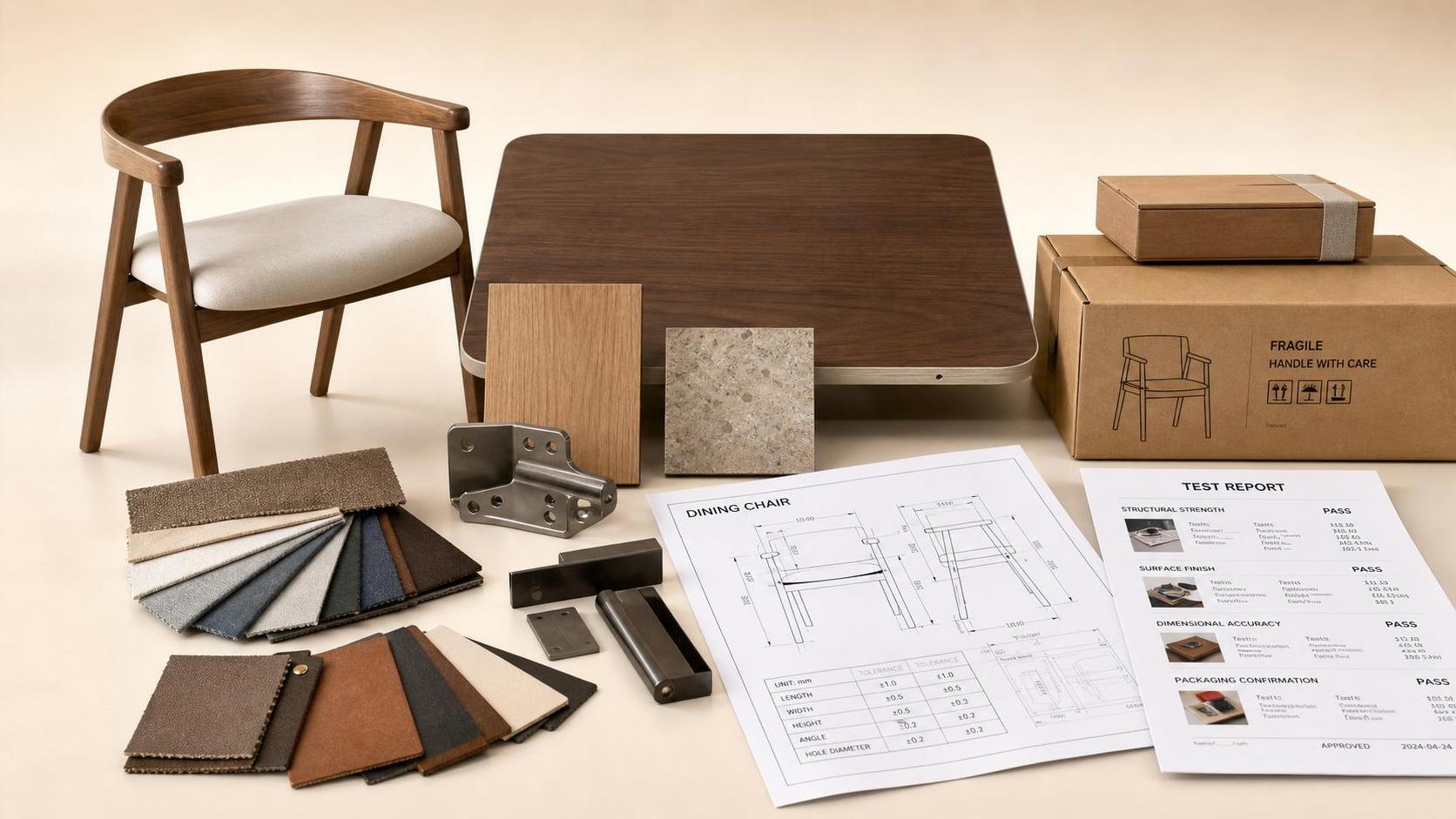
- Request finish boards, material specifications, and warranty documents together, rather than reviewing appearance and performance separately.
- Compare at least two layout options: one maximizing density and one prioritizing comfort, then evaluate trade-offs clearly.
- Pilot key items such as task chairs or shared desks in a live setting before scaling the full order.
Conclusion and Next Action
The best office furniture sets are not simply the cheapest or most stylish. They combine durable construction, sensible annualized cost, and layouts that improve how space actually works.
Start with a checklist, test lifespan assumptions, and verify each layout against movement, storage, and technology needs. That process reduces waste and protects long-term value.
For the next step, build a comparison sheet covering cost, warranty, material grade, modularity, and space efficiency. It will make evaluating office furniture sets faster, clearer, and more reliable.