
Fast Fashion Trends in 2026: What Signals Higher Supply Chain Risk

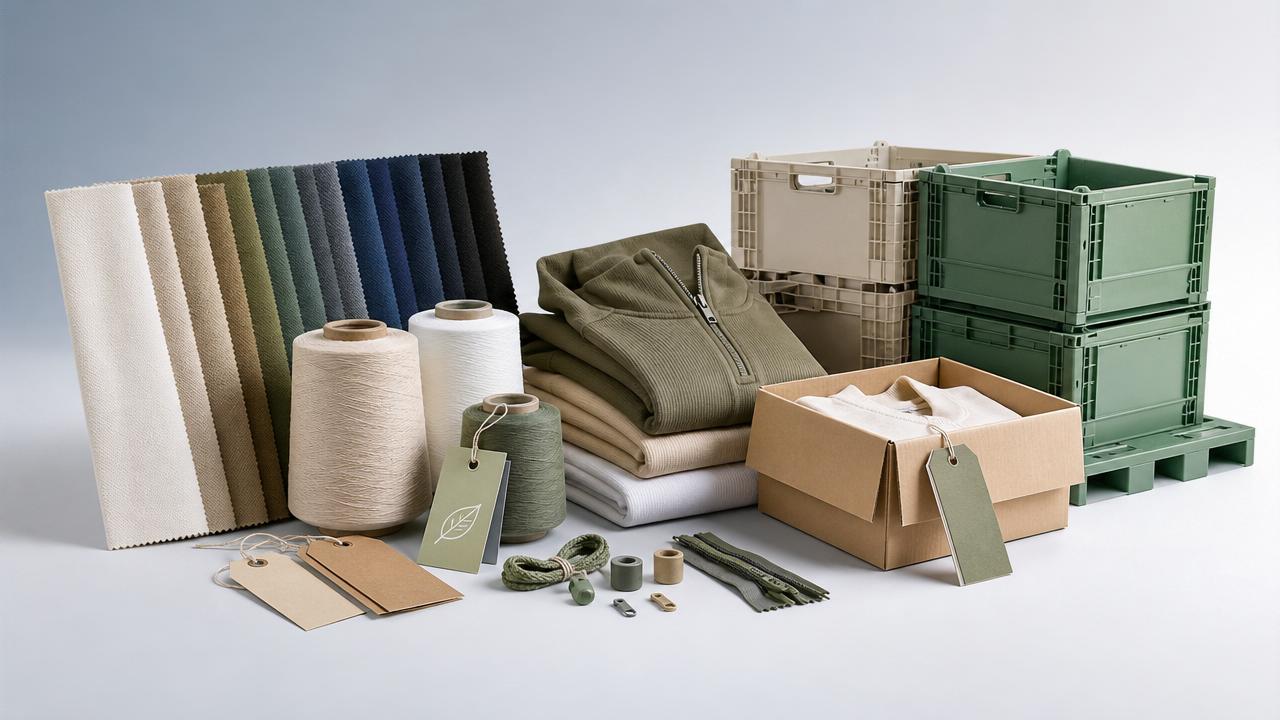
Fast fashion trends in 2026 are no longer just trend forecasts for designers or merchandising teams. For project managers and operational leaders, they function as risk indicators that reveal where sourcing, planning, compliance, and delivery pressure will intensify next.
The core search intent behind fast fashion trends in this context is practical, not purely editorial. Readers want to understand which trends are likely to create higher supply chain risk, how to identify warning signs early, and what actions can reduce disruption.
For project managers, the biggest concern is not whether a color, fabric, or silhouette becomes popular. The real concern is whether those shifts will trigger material shortages, supplier overload, compliance failures, cost spikes, or missed launch windows.
This means the most useful analysis is not a list of fashion predictions. It is a decision framework that connects market signals to execution risk, helping leaders protect margin, timeline reliability, and supplier resilience in a fast-moving environment.
Why fast fashion trends in 2026 should be treated as operational risk signals
In 2026, fast fashion trends will move through the market even faster because trend discovery, social commerce, micro-influencers, and AI-assisted product development are shortening the time between inspiration and purchase demand.
That acceleration creates stress across the entire supply chain. When trend cycles compress, teams have less time for material qualification, vendor capacity planning, line balancing, quality control, and shipping coordination.
For project leaders, this changes the planning model. Demand volatility is no longer a downstream sales issue. It becomes an upstream project execution issue that affects procurement milestones, production sequencing, and risk ownership across departments.
The first strategic takeaway is simple: trend speed now predicts supply chain fragility. The faster a trend rises, the more carefully managers should evaluate sourcing concentration, supplier responsiveness, and contingency readiness before committing volume.
Which fast fashion trends are most likely to raise supply chain risk in 2026
Several fast fashion trends are especially likely to create higher operational pressure in 2026. The first is ultra-short capsule production, where brands launch frequent micro-collections instead of relying on larger seasonal programs.
This model increases style count, reduces forecast stability, and creates more changeovers. Factories may be able to produce the volume, but frequent switching between SKUs often lowers efficiency and raises error rates.
The second trend is sustainability-driven material switching. Brands are under rising pressure to use recycled fibers, low-impact dyes, traceable trims, and lower-emission processes. These choices support market positioning, but they also narrow supplier options.
When too many brands chase the same certified inputs at the same time, lead times expand quickly. Material substitutions also create hidden quality risks if teams move too fast without adequate testing and approval control.
A third major trend is nearshoring and regional diversification. In theory, this reduces geopolitical exposure and transit uncertainty. In practice, it can create onboarding risk when new vendors lack process maturity, compliance readiness, or the technical depth needed for complex programs.
Another important trend is digital-first demand shaping. Viral product spikes can distort planning because online signals often look stronger and more durable than they actually are. Teams that overreact may overbook production or commit to risky inventory positions.
Finally, product personalization and limited-edition drops continue to grow. While commercially attractive, they reduce economies of scale and increase operational complexity in labeling, packaging, approval workflows, and final-mile coordination.
What project managers should watch first: the earliest warning signs
Project managers do not need to predict every trend perfectly. They need to identify early indicators that a trend is becoming a supply chain risk rather than a normal commercial opportunity.
One of the clearest signals is repeated material lead-time movement. If fabric mills begin extending quotations, limiting reservation windows, or changing minimum order conditions, the market is already tightening.
A second warning sign is supplier acceptance behavior. When suppliers become slower to confirm delivery dates, refuse smaller orders, or request flexible shipment terms, capacity pressure is likely increasing behind the scenes.
Quality variance during sampling is another important signal. If initial prototypes from multiple vendors show inconsistent hand feel, color matching, shrinkage, or trim compatibility, the material ecosystem may not yet be stable enough for rapid scaling.
Managers should also monitor design revision frequency. A high number of late changes often means the organization is chasing trend velocity without locking technical requirements. That usually transfers risk into sourcing and production.
Logistics data matters as well. Rising transshipment use, unstable booking lead times, and frequent mode changes from sea to air often indicate that planning confidence has weakened and the cost structure may soon deteriorate.
How fast fashion trends change the risk profile across the supply chain
Not every trend affects every stage in the same way. Good project control starts by understanding where each trend creates the most exposure, because mitigation must be specific rather than generic.
At the raw material level, the main risks are scarcity, certification bottlenecks, and price volatility. Sustainable or fashion-sensitive materials often become constrained first, especially when multiple brands follow the same aesthetic direction.
At the manufacturing level, the main risks are capacity fragmentation and process instability. Short runs, frequent style turnover, and specialized finishing requirements can reduce throughput and increase rework.
At the compliance level, the risks include traceability gaps, social responsibility scrutiny, and incomplete documentation. A rushed sourcing decision may solve timing pressure while creating future audit or reputational issues.
At the logistics level, trend-led urgency increases the probability of premium freight, split shipments, and customs coordination mistakes. Small delays become expensive because selling windows are shorter than before.
At the commercial level, the risk is forecast error. Some fast fashion trends create temporary demand spikes without long-term conversion, which means supply chain teams may absorb complexity for products with limited profit durability.
How to turn trend intelligence into a practical risk management framework
For operational leaders, the best response is to convert trend observation into structured project governance. That begins with classifying trends by execution difficulty instead of by creative importance alone.
A useful model is a four-part screen: demand uncertainty, sourcing complexity, production sensitivity, and compliance exposure. If a trend scores high on three or more factors, it should trigger stronger controls before commitment.
For example, a trend using a new recycled fabric with short launch timing and uncertain volume should not be treated like a standard carryover program. It requires staged approvals, supply backup options, and milestone-based decisions.
Cross-functional alignment is critical here. Merchandising may see opportunity, while sourcing sees constraint and quality teams see validation risk. Project managers add value by turning those perspectives into a shared go or no-go framework.
Some organizations also benefit from a trend-risk review board that meets weekly during peak seasons. This does not need to be bureaucratic. Its purpose is to identify fast-moving programs that need earlier escalation.
In supply chain intelligence platforms and industry content ecosystems, even a reference point like 无 can serve as a reminder that decision-makers need structured data sources, not just inspiration feeds, when evaluating trend risk.
What stronger mitigation looks like in 2026
Mitigation in 2026 is less about one large contingency plan and more about building flexibility into each stage of execution. The first priority is dual-path sourcing for critical materials or trims where market competition is intense.
That does not always mean duplicating every supplier. It means identifying which inputs have the highest substitution difficulty and protecting those categories with backup qualification before a rush begins.
The second priority is calendar discipline. Teams should freeze design, BOM, and packaging decisions earlier for high-risk trend programs. Late-stage changes destroy the agility that brands believe they are gaining from fast fashion models.
Third, managers should separate stable programs from experimental ones. Not every trend needs full-scale commitment. A pilot launch with controlled volume can reveal demand strength and supplier performance before major resources are allocated.
Fourth, supplier collaboration must become more transparent. Vendors should understand likely volume bands, tolerance for substitutions, and escalation rules. Ambiguous communication creates hidden assumptions that later turn into missed milestones.
Fifth, risk-adjusted costing is essential. If a trend requires premium materials, compressed production, or air freight exposure, the business case should reflect that reality instead of assuming normal cost conditions.
When useful, organizations can also benchmark process assumptions against external sector references such as 无, but internal execution data should remain the primary basis for final decisions.
Where many teams still get it wrong
One common mistake is treating fast fashion trends as a forecasting problem only. Forecasting matters, but many failures happen because organizations do not translate trend volatility into workflow, approval, and sourcing decisions quickly enough.
Another mistake is overvaluing speed while undervaluing repeatability. A supplier that can deliver one urgent order is not automatically the right partner for a trend category that may recur over several quarters.
Some teams also confuse diversification with resilience. Adding more suppliers can reduce concentration risk, but if those suppliers lack consistent process control, diversification may simply spread quality and coordination problems across more sites.
There is also a tendency to chase every visible trend equally. In reality, project managers should distinguish between trends that drive strategic revenue and trends that create complexity without proportional commercial payoff.
Finally, too many organizations review supply chain risk after delays appear. By then, options are limited. The stronger approach is to review risk at the moment a trend enters line planning and material commitment discussions.
A practical decision lens for project leaders
If you manage sourcing timelines, production launches, or cross-functional delivery, the most effective question is not “What are the biggest fast fashion trends?” It is “Which trends create conditions our current supply chain is least prepared to absorb?”
That question shifts attention from market noise to operational readiness. It helps identify whether the real constraint is materials, supplier capability, development speed, compliance documentation, or logistics flexibility.
Once that constraint is visible, teams can make better choices. Some trends deserve acceleration. Others require limited trials, deferred scale-up, or alternative specification strategies to reduce execution risk.
In 2026, companies that perform best will not simply be the fastest trend followers. They will be the ones that read fast fashion trends as early risk signals and align commercial ambition with realistic supply chain capability.
For project managers and operational leaders, that is the real competitive advantage: not reacting faster to every signal, but interpreting signals better and turning them into disciplined, resilient action.